MCQ
Which of the following statements is correct
  • A
    $S{F_4}$ is polar and non-reactive
  • B
    $S{F_6}$ is non-polar and very reactive
  • C
    $S{F_6}$ is a strong fluorinating agent
  • D
    $S{F_4}$ is prepared by fluorinating $SC{l_2}$ with $NaF$

Answer

$SF _6$ is good florianating reagent. $SF _6$ is chemically inert due to the reason that the six $F$ atoms protect the sulphur atom from attack by the reagents to such an extent that even thermodynamically most favorable reactions like hydrolysis do not occur, that is non reactive. $SF _6$ is non polar.

Need a full question paper?

Generate a complete, print-ready paper with questions like this in minutes — across 16+ boards, with answer keys.
Start Generating Free

Similar questions

$XeF_2$ reacts with $PF_5$ to give
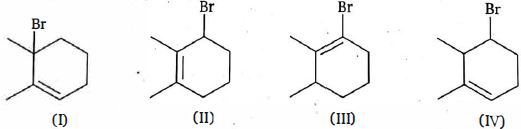
What is the sum of positions assigned to bromine while numbering the Parent Chain in the below compounds ?
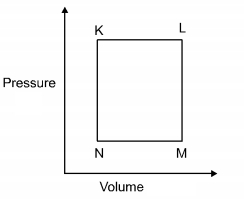
A fixed mass ' $m$ ' of a gas is subjected to transormation of states from $K$ to $L$ to $M$ to $N$ and back to $K$ as shown$Image$

$1.$ The succeeding operations that enable this transformation of states are

$(A)$ Heating, cooling, heating, cooling

$(B)$ Cooling, heating, cooling, heating

$(C)$ Heating, cooling, cooling, heating

$(D)$ Cooling, heating, heating, cooling

$2.$ The pair of isochoric processes among the transormation of states is

$(A)$ $K$ to $L$ and $L$ to $M$

$(B)$ $L$ to $M$ and $N$ to $K$

$(C)$ $L$ to $M$ and $M$ to $N$

$(D)$ $M$ to $N$ and $N$ to $K$

Give the answer question $1$ and $2.$
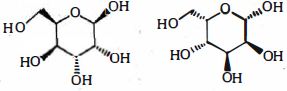
The following compounds differ in respect of 
The correct $IUPAC$ name of given compound is
One gram sample of $N{H_4}N{O_3}$ is decomposed in a bomb calorimeter. The temperature of the calorimeter increases by $ 6.12\, K$  the heat capacity of the system is  $1.23\, kJ/g/deg.$  What is the molar heat of decomposition for $N{H_4}N{O_3}$ ......$kJ/mol$
In acidic medium $Mn{{\overset{\Theta }{\mathop{O}}\,}_{4}}$ is an oxidising agent $Mn{{\overset{\Theta }{\mathop{O}}\,}_{4}}+8\overset{\oplus }{\mathop{H}}\,+5{{e}^{-}}\to M{{n}^{+2}}+4{{H}_{2}}O$ 

If $\mathop H\limits^ \oplus  $ ion concentration is doubled, electrode potential of the half cell will

${H_2}S$ acts only as a reducing agent while $S{O_2}$ can act both as a reducing and oxidizing agent because
What will be hydrogen ion concentration in moles $litr{e^{ - 1}}$ of a solution, whose $pH$ is $ 4.58$
The decreasing order of the basic character of the three amines and ammonia is