MCQ
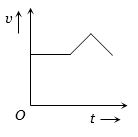
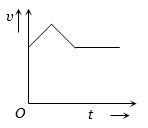
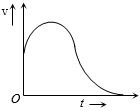
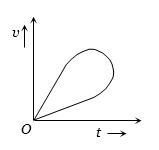
Which of the following velocity-time graphs is physically not possible?
  • A

  • B

  • C


Answer

Correct option: D.

d

Need a full question paper?

Generate a complete, print-ready paper with questions like this in minutes — across 16+ boards, with answer keys.
Start Generating Free

Similar questions

If the resultant of all the external forces acting on a system of particles is zero, then from an inertial frame, one can surely say that
The gravitational potential energy of a system consisting of two particles separated by a distance r is:
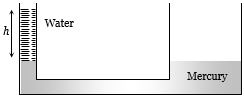
Two communicating vessels contain mercury. The diameter of one vessel is $n$ times larger than the diameter of the other. A column of water of height $ h$  is poured into the left vessel. The mercury level will rise in the right-hand vessel ($s =$ relative density of mercury and $\rho  = $ density of water) by
If the angular momentum of a rotating body is increased by $200\ \%$, then its kinetic energy of rotation will be increased by .......... $\%$
According to Newton, the viscous force acting between liquid layers of area $A$ and velocity gradient $\Delta v/\Delta z$ is given by $F = - \eta A\frac{{\Delta v}}{{\Delta z}}$ where $\eta $ is constant called coefficient of viscosity. The dimension of $\eta $ are
$S.I.$ unit of universal gas constant is
An empty balloon weighs $1\, g$. The balloon is filled with water to the neck and tied with  a massless thread. The weight of balloon alongwith water is $101\, g$. The balloon filled with  water is weighed when fully immersed. Then, its weight in water is ...... $g$
In which of the following decays the element does not change?

  1. $\alpha-\text{decay}$

  2. $\beta^+-\text{decay}$

  3. $\beta^--\text{decay}$

  4. $\gamma-\text{decay}$

Mark the wrong statement
A particle $P$ moving with speed $v$  undergoes a head -on elastic collision with another particle $Q$ of identical mass but at rest. After the collision