MCQ
Which of the following will show optical activity ?

  • $A, D$ and $ E$
  • B
    $A$ and $E$ only
  • C
    $B, C$ and $D$
  • D
    All except $C$

Answer

Correct option: A.
$A, D$ and $ E$
a
$(a)\, (1)$ Compounds which do not have plane & centre of symmetry are optically  active. 

$(2)\, 50/50$ mixture of diastereoisomers is also optically active.

Need a full question paper?

Generate a complete, print-ready paper with questions like this in minutes — across 16+ boards, with answer keys.
Start Generating Free

Similar questions

$\Delta {G^o}$ for the reaction $X + Y$  $\rightleftharpoons$ $ Z$  is $ -4.606 \,kcal$ . The value of equilibrium constant of the reaction at ${227\,^o}C$ is $(R = 2.0\,cal.\,mo{l^{ - 1}}{K^{ - 1}})$
The heat of formation of methane $C(s) + 2{H_2}(g)\, \to \,C{H_4}(g)$ at constant pressure is $ 18500\, cal $ at ${25\,^o}C$. The heat of reaction at constant volume would be
Which of the following statement is correct for the reaction ? $\ce{CaO(s) + CO_2(g) \rightarrow CaCO_3(s)}; \Delta_\text{r}\text{H}^\circ=-178.3\text{ kJ mol}^{-1}$
The number of given orbitals which have electron density along the axis is $..........$. $p _{ x }, p _{ y }, p _{ z }, d _{ xy }, d _{ yz }, d _{ xz }, d _z ^2, d _{ x ^2- y ^2}$
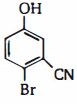
The $IUPAC$ name of the following compound is
Match List $I$ with List $II$

List $-I$

(Element)

  List $-II$ (Electronic Configuration)  
$A.$ $N$ $I.$ $[\mathrm{Ar}] 3 \mathrm{~d}^{10} 4 \mathrm{~s}^2 4 \mathrm{p}^5$
$B.$ $S$ $II.$ $[\mathrm{Ne}] 3 \mathrm{~s}^2 3 \mathrm{p}^4$
$C.$ $Br$ $III.$ $[\mathrm{He}] 2 \mathrm{~s}^2 2 \mathrm{p}^3$
$D.$ $Kr$ $IV.$ $[\mathrm{Ar}] 3 \mathrm{~d}^{10} 4 \mathrm{~s}^2 4 \mathrm{p}^6$

Choose the correct answer from the options given below:
Anhydrous aluminium chloride $(Al_2Cl_6)$ is covalent compound and soluble in water giving
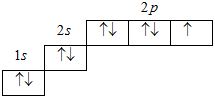
Which element is represented by the following electronic configuration
$2B(g) + 2C(g) \rightleftharpoons  3A(g) + heat$ ; necessary conditions to obtain high amount of $A$ are
A gas decolourises bromine in $CC{l_4}$ and forms a precipitate with ammoniacal silver nitrate. The gas is