MCQ
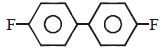
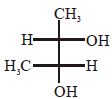
Which of the following would the optically active
  • A
    $CH_2=C=CH_2$
  • B

  • $CH_3-CH=C=CH-CH_3$
  • D

Answer

Correct option: C.
$CH_3-CH=C=CH-CH_3$
c

Need a full question paper?

Generate a complete, print-ready paper with questions like this in minutes — across 16+ boards, with answer keys.

Start Generating Free

Similar questions

The number of ions from the following that are expected to behave as oxidising agent is:

$\mathrm{Sn}^{4+}, \mathrm{Sn}^{2+}, \mathrm{Pb}^{2+}, \mathrm{Tl}^{3+}, \mathrm{Pb}^{4+}, \mathrm{Tl}^{+}$

For vaporization of water at $1$ atmospheric pressure, the values of $\Delta H$ and $\Delta S$ are $40.63 \,kJ\, mol^{-1}$ and $108.8\, J \,K^{-1}\, mol^{-1},$ respectively. The temperature when Gibb's energy change $(\Delta G)$ for this transformation will be zero, is ............ $\mathrm{K}$
$10\,\, mole$ of ideal gas expands isothermally and reversibly from a pressure of $10\,\, atm$ to $1\,\, atm$ at $300\,\, K$. What is the largest mass which can be lifted through a height of $100\,\, meter$  by energy obtained in this process
Which of the following will be most easily attacked by an electrophile
Identify the correct order of the size of the following:
Two electrons occupying the same orbital are distinguished by
Photoelectric effect is the phenomenon in which
Which of the following interaction lies in the range of $8 - 42\, kJ/mol$ ?
A $6.50$ molal solution of $KOH$ $(aq.)$ has a density of $1.89\, g\, cm ^{-3}$. The molarity of the solution is .......... $mol\, dm ^{-3} .$

(Round off to the Nearest Integer).

[Atomic masses: $K : 39.0\, u ; O : 16.0 \,u ; H : 1.0\, u ]$

Solid $KClO_3$ is taken in a container maintained at constant pressure of $1\,atm$. Upon heating following equilibrium is obtained

$2KCl{O_4}(s) \rightleftharpoons 2KCl(s) + 3{O_2}(g)$

If $\Delta {H^o} = 25\,kcal/mol$ and $\Delta {S^o} = 50\,cal/K$, at what temperature equilibrium will be established in the container. (Ignore variation of $\Delta {H^o}$ and $\Delta {S^o}$ with temperature.)......$K$