Question
i. Which one is more soluble in diethyl ether, anhydrous $\mathrm{AlCl}_3$ or hydrated $\mathrm{AlCl}_3$ ? Explain in terms of bonding?
ii. Unlike ordinary fire, thermite reaction can not be stopped by pouring water. Explain.
iii. What happens when $\mathrm{B}_2 \mathrm{O}_3$ is heated with Mg ?
Answer

i. Anhydrous $\mathrm{AlCl}_3$ is an electron deficient compound, therefore, more soluble in diethyl ether which donates a pair of electron whereas hydrated $\mathrm{AlCl}_3 \mathrm{AlCl}_3$ is not electron deficient due to donation of lone pair of electron by $\mathrm{H}_2 \mathrm{O}$.
ii. In therimate reaction $\mathrm{Fe}_2 \mathrm{O}_3$ supplies oxygen needed for reaction, therefore, cutting off supply of oxygen by water is not possible. At high temperature, 'Al' reacts with steam to form $\mathrm{H}_2$ which helps to spread fire.
iii. Boron metal is formed and MgO will be formed.
$\text{B}_2\text{O}_3\ +\ 3\text{Mg}\ \xrightarrow{\ \ \ \text{Heat}\ \ \ }\ 3\text{Mg}\ +\ 2\text{ B}$

Need a full question paper?

Generate a complete, print-ready paper with questions like this in minutes — across 16+ boards, with answer keys.

Start Generating Free

Similar questions

What is meant by hybridisation? Compound $\mathrm{CH}_2=\mathrm{C}=\mathrm{CH}_2$ contains sp or $\mathrm{sp}^2$ hybridised carbon atoms. Will it be a planar molecule?
The electronic configuration of some elements are given below:
a. $1 s^2, 2 s^2, 2 p^6, 3 s^2$
b. $1 s^2, 2 s^2, 2 p^6$
c. $1 s^2, 2 s^2, 2 p ^2$
d. $1 s^2, 2 s^2, 2 p ^6, 3 s^1$
e. $1 s^2, 2 s^2, 2 p^5$
Answer the following questions:
i. Name the elements.
ii. Which of these have the lowest Ionization enthalpy?
iii. Which is a halogen?
iv. Which is an alkali metal?
v. Which is an inert gas?
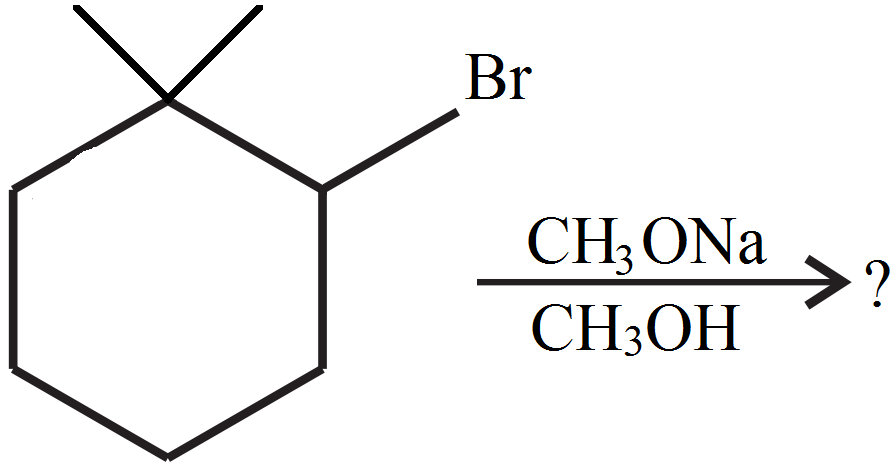
  1. Write the major product of the following reaction.
  1. Arrange the following in increasing order of acidic character.
$\ \ \ \ \ \ \ \ \ \ \ \ \text{CH}_3\ \text{O} \ \ \ \ \ \ \ \ \ \ \ \ \ \ \ \ \ \ \ \ \ \ \ \ \ \ \text{O}\\ \ \ \ \ \ \ \ \ \ \ \ \ \ | \ \ \ \ \ \ \ || \ \ \ \ \ \ \ \ \ \ \ \ \ \ \ \ \ \ \ \ \ \ \ \ \ \ \ ||\\\text{CH}_3-\text{C}-\text{C}-\text{OH},\ \text{CH}_3-\text{C}-\text{OH},\\ \ \ \ \ \ \ \ \ \ \ \ \ \ |\\ \ \ \ \ \ \ \ \ \ \ \ \ \text{CH}_3$ $ \ \ \ \ \ \ \ \ \ \ \ \ \ \ \ \ \ \ \ \ \ \ \ \ \ \text{O}\ \ \ \ \ \ \ \ \ \ \ \ \ \ \ \ \ \ \ \ \ \ \ \ \ \ \text{O}\\ \ \ \ \ \ \ \ \ \ \ \ \ \ \ \ \ \ \ \ \ \ \ \ \ \ || \ \ \ \ \ \ \ \ \ \ \ \ \ \ \ \ \ \ \ \ \ \ \ \ \ \ \ ||\\\text{CH}_3-\text{CH}_2-\text{C}-\text{OH},\ \text{CH}_3-\text{C}-\text{COOH}$
  1. What is the product obtained when but-2-ene reacts with $Br_2$​​​​​​​?
Convert:
  1. Ethylene to Nitrobenzene.
  2. Write short note on Markovnikov's Rule.
Balance the following redox reactions by ion-electron method:
$\text{Cr}_2\text{O}_7^{2-}+\text{SO}_2(\text{g})\rightarrow\text{Cr}^{3+}(\text{aq})+\text{SO}^{2-}_4(\text{aq})$ (in acidic solution).
Complete the following reactions:
  1. $\text{Zn}+\text{NaOH}\xrightarrow{\ \ \ \ \ \ \ }$
  2. $\text{MnO}_4^-+\text{H}_2\text{O}_2\xrightarrow{\ \ \ \ \ \ \ \ \ }$
  3. $\text{Ca(HCO}_3)_2+\text{Ca(OH)}_2\xrightarrow{\ \ \ \ \ \ \ \ \ \ }$
Chlorophyll present in green leaves of plants absorbs light at $4.620 \times 10^{14}Hz$. Calculate the wavelength of radiation in nanometer. Which part of the electromagnetic spectrum does it belong to?
Define the bond length.
In DNA and RNA, nitrogen atom is present in the ring system. Can Kjeldahl method be used for the estimation of nitrogen present in these? Give reasons.
How are silicones prepared? Write its two uses.