MCQ
Which one is polar
  • A
    $I_3^{-1}$
  • B
    $CO_3^{-2}$
  • C
    $XeF_4$
  • $PH_3$

Answer

Correct option: D.
$PH_3$
d
$PH_3$ is pyramidal with one $L.P$.

Need a full question paper?

Generate a complete, print-ready paper with questions like this in minutes — across 16+ boards, with answer keys.

Start Generating Free

Similar questions

A student needs to prepare a buffer solution of propanoic acid and its sodium salt with $pH$ $4.$ The ratio of $\frac{\left[ CH _{3} CH _{2} COO ^{-}\right]}{\left[ CH _{3} CH _{2} COOH \right]}$ required to make buffer is .....

Given : $K _{ a }\left( CH _{3} CH _{2} COOH \right)=1.3 \times 10^{-5}$

The boiling points of methanol, water and dimethyl ether are respectively $65\,^oC, 100\,^oC$ and $34.5\,^oC$. Which of the following best explains these wide  variations in $b.p.$?
In $Fe ( CO )_{5}$ and $Cr ( CO )_{6},$ how many $CO$ ligands can be replaced by $NO$?
During electrolysis of fused aluminium chloride $0.9\,gm$ of aluminium was deposited on the cathode. The volume of chlorine liberated at the anode will be .............. $\mathrm{litres}$
The standard electrode potential for $Cu^{+2}/Cu$ is $0.34\, volt$ calculate the reduction potential at $pH = 14$ for the above couple ............... $\mathrm{V}$  $[K_{sp}[Cu(OH)_2) = 1 \times 10^{-19}]$
A peptide synthesized by the reactions of one molecule each of Glycine, Leucine, Aspartic acid and Histidine will have ..... peptide linkages.
Arrange these compounds in decreasing order of reactivity for the nucleophilic addition reactions

$(I)\,\,HCHO$                                        $ (II)\,\,CH_3CHO$
$(III)$ Acetone                                      $\begin{array}{*{20}{c}}
  {\,\,\,\,\,\,\,\,\,\,\,\,\,O} \\ 
  {\,\,\,\,\,\,\,\,\,\,\,\,\,||} \\ 
  {(IV)\,\,\,Et - C - Et} 
\end{array}$
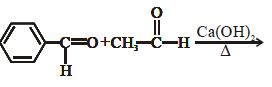
Acidified $K_2Cr_2O_7$ solution turns green when $Na_2SO_3$ is added to it. This is due to the formation of
Find the major product of given reaction
For $Na^+ , Mg^{2+}, F^-$ and $O^{2-}$; the correct order of increasing Ionic radii is