MCQ
Which one of the following reactions is $NOT$ possible?
- A
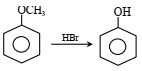
- ✓
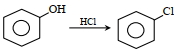
- C
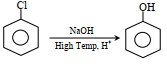
- D
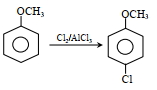

Generate a complete, print-ready paper with questions like this in minutes — across 16+ boards, with answer keys.
(Given : $\left.pK _{ a }\left( CH _{3} COOH \right)=4.76\right)$
$\log 2=0.30$ $\log 3=0.48$ $\log 5=0.69$ $\log 7=0.84$ $\log 11=1.04$
Assertion $(A)$ : Experimental reaction of $CH _{3} Cl$ with aniline and anhydrous $AlCl _{3}$ does not give $o$ and $p-methylaniline$.
Reason $(R)$ : The - $NH _{2}$ group of aniline becomes deactivating because of salt formation with anhydrous $AlCl _{3}$ and hence yields $m$-methyl aniline as the product.
In the light of the above statements, choose the most appropriate answer from the options given below.
$(A)$ Freezing of water to ice at $0^{\circ} C$
$(B)$ Freezing of water to ice at $-10^{\circ} C$
$(C)$ $N _{2}( g )+3 H _{2}( g ) \rightarrow 2 NH _{3}( g )$
$(D)$ Adsorption of $CO ( g )$ and lead surface
$(E)$ Dissolution of $NaCl$ in water
$(i)$ $C{H_3}C{H_2}C{H_2}C{H_3}$
$(ii)$ $C{H_3} - CH = CH - C{H_3}$
$(iii)$ $C{H_2} = CH - CH = C{H_2}$
$(iv)$ $H - C \equiv C - H$