MCQ
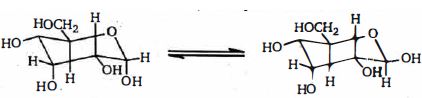
Which one of the statements conceming the equilibriurn shown is true ?
  • A
    The two structures are enantiomers of each other. They have equal but opposite  optical rotations and recemize slowly at room temperature
  • B
    The two structures are enantiomers of each other. They racemize too rapidly at  roorn temperature for their optical rotations to be measured
  • The two structures are diastereomers of each other. Their interconversion is called mutarotation
  • D
    The two structures are diastereomers of each other. Their interconversion does  not require breaking and making bonds, only a change in conformation
Answer

Correct option: C.
The two structures are diastereomers of each other. Their interconversion is called mutarotation
c
$(c)\, \alpha -D-$ glucose $\overset{Mutarotation}{\longleftrightarrow}$  $\beta - D- $glucose

Need a full question paper?

Generate a complete, print-ready paper with questions like this in minutes — across 16+ boards, with answer keys.

Start Generating Free

Similar questions

Methyl ethyl ketone is prepared by the oxidation of
The $IUPAC$ name of the Wilkinson's catalyst $[RhCl(PPh_3)_3]$ is
Which one is weakest base
${image}$

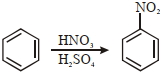
In the above reaction, $3.9\, g$ of benzene on nitration gives $4.92\, g$ of nitrobenzene. The percentage yield of nitrobenzene in the above reaction is............. $\%$. (Round off to the Nearest Integer).

(Given atomic mass: $C : 12.0\, u , H : 1.0\, u$$O : 16.0\, u , N : 14.0\, u )$

Which one of the following on reaction with lucas reagent gives white precipitate fastest
For reaction $A \to B$, rate constant ${K_1} = {A_1}{e^{ - E{a_1}/RT}}$ and for the reaction $X \to  Y$, rate constant ${K_2} = {A_2}{e^{ - E{a_2}/RT}}$ . If $A_1 = 10^8, A_2 =10^{10}$ and $E_{a_1} = 600\, cal/mole$, $E_{a_2} = 1800\, cal/mole$ then the temp at which $K_1 = K_2$ is (given : $R = 2\, cal\, K^{-1}\, mol^{-1}$)
When formaldehyde is heated with phenol in the presence of an alkali, the product formed is:
Consider the following sequence of reaction $A, B, C$ are
The electrochemical cell shown below is a concentration cell.

$M \mid M ^{2+}$ (saturated solution of a sparingly soluble salt, $\left.MX _2\right) \| M ^{2+}\left(0.001\right.$ mol dm $\left.d ^{-3}\right) \| M$ The emf of the cell depends on the difference in concetration of $M ^{2+}$ ions at the two electrodes. The emf of the cell at $298$ is $0.059 \ V$

$1.$ The solubility product $\left( K _{ sp } ; mol ^3 dm ^{-9}\right)$ of $MX _2$ at $298$ based on the information available the given concentration cell is (take $2.303 \times R \times 298 / F =0.059 \ V$ )

$(A)$ $1 \times 10^{-15}$ $(B)$ $4 \times 10^{-15}$

$(C)$ $1 \times 10^{-12}$ $(D)$ $4 \times 10^{-12}$

$2.$ The value of $\Delta G \left( kJ \ mol ^{-1}\right)$ for the given cell is (take $1 F =96500 \ C \ mol ^{-1}$ )

$(A)$ $-5.7$ $(B)$ $5.7$ $(C)$ $11.4$ $(D)$ $-11.4$

Give the answer question $1$ and $2.$

$\mathrm{CuSO}_4$ decolourises on addition of $\mathrm{KCN}$, the product is
