Question
Which statement/statement is/ are correct?
  1. An ammeter is connected in series in a circuit and a voltmeter is connected in parallel.
  2. An ammeter has a high resistance.
  3. A voltmeter has a low resistance.
  1. 1, 2, 3
  2. 1, 2
  3. 2, 3.
  4. 1.

Answer

  1. 1.

Explanation:

An ammeter is connected in series in a circuit and voltmeter is connected in parallel.

Need a full question paper?

Generate a complete, print-ready paper with questions like this in minutes — across 16+ boards, with answer keys.

Start Generating Free

Similar questions

If you focus the image of a distant object, whose shape is given below, on a screen using a convex lens,

the shape of the image of this object on the screen would be:
Inside the magnet, the field lines moves:
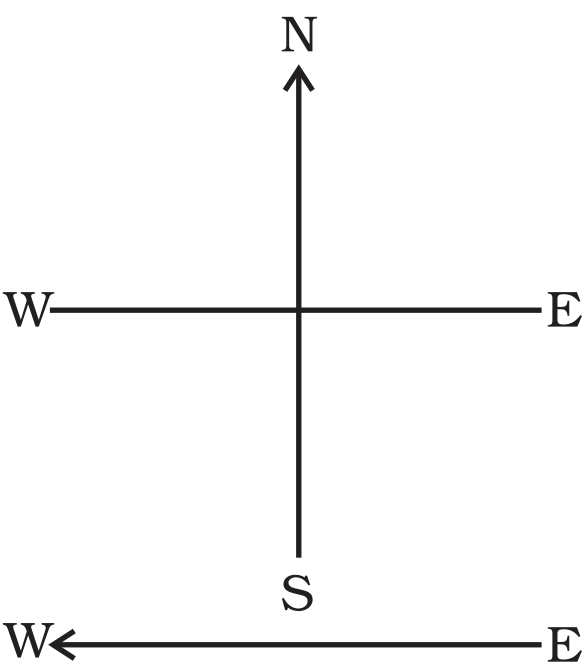
A constant current flows in a horizontal wire in the plane of the paper from east to west as shown in Figure. The direction of magnetic field at a point will be North to South:

A D.C. generator is based on the principle of:
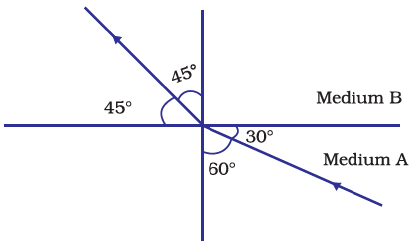
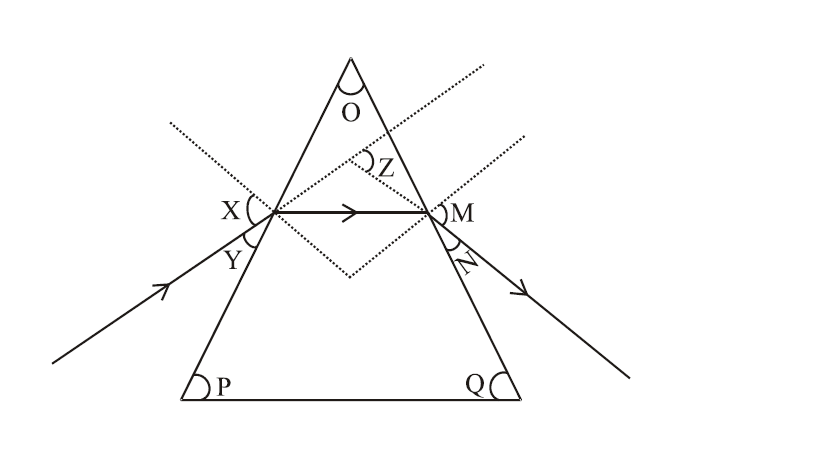
The path of a ray of light passing through a glass prism is shown below:

In this diagram the angle of prism, angle of incidence, angle of emergence and angle of deviation respectively have been represented by:
One atomic mass unit (u) is equivalent to an energy of:
  1. 931eV.
  2. 9.31MeV.
  3. 1MeV.
  4. 931MeV.
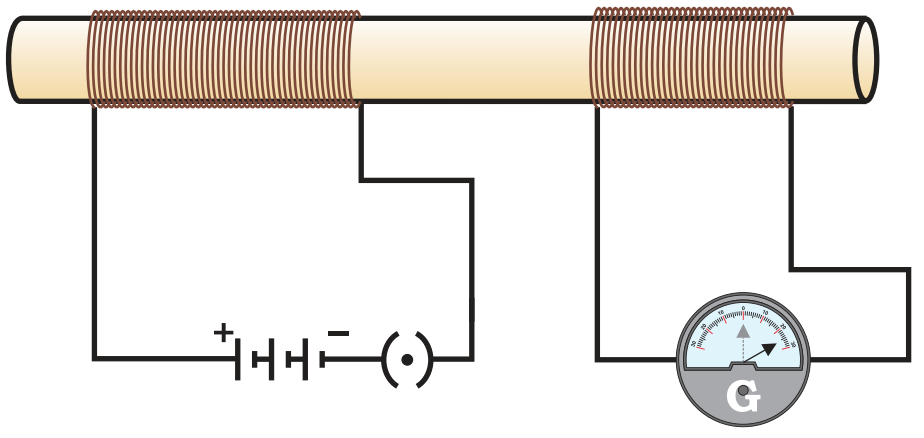
In the arrangement shown in Figure there are two coils wound on a non-conducting cylindrical rod. Initially the key is not inserted. Then the key is inserted and later removed. Then,

  1. The deflection in the galvanometer remains zero throughout.
  2. There is a momentary deflection in the galvanometer but it dies out shortly and there is no effect when the key is removed.
  3. There are momentary galvanometer deflections that die out shortly; the deflections are in the same direction.
  4. There are momentary galvanometer deflections that die out shortly; the deflections are in opposite directions.
Aqueous humour is a _________ and  vitreous humour is a _________?
The north pole of a long bar magnet was pushed slowly into a short solenoid connected to a galvanometer. The magnet was held stationary for a few seconds with the north pole in the middle of the solenoid and then withdrawn rapidly. The maximum deflection of the galvanometer was observed when the magnet was: