Question
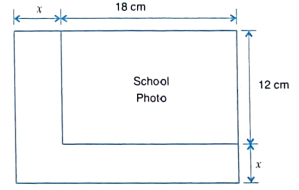
While designing the school year book, a teacher asked the student that the length and width of a particular photo is increased by $x$ units each to double the area of the photo. The original photo is 18 cm long and 12 cm wide.
Image
Based on the above information, answer the following questions:
(i) Write an algebraic equation depicting the above information.
(ii) Write the corresponding quadratic equation in standard form.
(iii) What should be the new dimensions of the enlarged photo?
(iv) Can any rational value of $x$ make the new area equal to $220 cm^2$ ?
Answer

(i) Original area of photo $=18 \times 12 cm^2=216 cm^2$
Area of photo by increasing length and breadth each by $x$ units.
$
=(18+x)(12+x)=216+30 x+x^2
$
It is given that the area of photo is doubled by increasing length and width each by $x$ uints.
$
\therefore \quad 216+30 x+x^2=2 \times 216
$
(ii) Simplifying equation (i), we obtain $x^2+30 x-216=0$.
This is the required quadratic equation in standard form.
$
\begin{array}{ll}
\text { (iii) } & x^2+30 x-216=0 \\
\Rightarrow & x^2+36 x-6 x-216=0 \\
\Rightarrow & x(x+36)-6(x+36)=0 \Rightarrow(x-6)(x+36)=0 \Rightarrow x-6=0 \Rightarrow x=6 \quad[\because x+36 \neq 0]
\end{array}
$
Hence, the new dimensions of the enlarged photo are
$
\text { Length }=18+x=(18+6) cm=24 cm, \text { Breadth }=12+x=(12+6) cm=18 cm
$
(iv) If new area is $220 cm^2$, then
$
\begin{array}{ll}
& 216+30 x+x^2=220 \Rightarrow x^2+30 x-4=0 \Rightarrow x=-\frac{-30 \pm \sqrt{916}}{2}=-15 \pm \sqrt{229} \quad[\because x>0] \\
\Rightarrow & x=-15 \pm \sqrt{229}
\end{array}
$
Clearly, $x$ is not rational. Hence, no rational value of $x$ can make new area equal to $220 cm^2$.

Need a full question paper?

Generate a complete, print-ready paper with questions like this in minutes — across 16+ boards, with answer keys.

Start Generating Free

Similar questions

HCF and LCM are widely used in number system especially in real numbers in finding relationship between different numbers and their general forms. Also, product of two positive integers is equal to the product of their HCF and LCM.

Based on the above information answer the following questions.

  1. A boy with collection of marbles realizes that if he makes a group of 5 or 6 marbles, there are always two marbles left, then p will be odd, even, prime or not prime?
  2. Find the least positive integer which on adding 1 is exactly divisible by 126 and 600.
  3. Find the largest possible positive integer that will divide 398, 436 and 542 leaving remainder 7, 11, 15 respectively.
    Or
    If A, B and Care three rational numbers such that 85C - 340A = 109, 425A + 85B = 146, then the sum of A, B and C is divisible by?
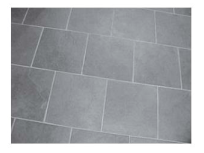
A rectangular floor area can be completely tiled with $200$ square tiles. If the side length of each tile is increased by $1$ unit, it would take only $128$ tiles to cover the floor.
Image
$(i)$ Assuming the original length of each side of a tile be $x$ units, make a quadratic equation from the above information.
$(ii)$ Write the corresponding quadratic equation in standard form.
$(iii) (a)$ Find the value of $x$, the length of side of a tile by factorisation.
OR
$(b)$ Solve the quadratic equation for $x$, using quadratic formula.
Real numbers are extremely useful in everyday life. That is probably one of the main reasons we all learn how to count and add and subtract from a very young age. Real numbers help us to count and to measure out quantities of different items in various fields like retail, buying, catering, publishing etc. Every normal person uses real numbers in his daily life. After knowing the importance of real numbers, try and improve your knowledge about them by answering the following questions on real life based situations.
  1. Two tankers contain 768 litres and 420 litres of fuel respectively. Find the maximum capacity of the container which can measure the fuel of either tanker exactly.
  2. Pens are sold in pack of 8 and notepads are sold in pack of 12. Find the least number of pack of each type that one should buy so that there are equal number of pens and notepads.
  3. Three people go for a morning walk together from the same place. Their steps measure 80cm, 85cm and 90cm respectively. What is the minimum distance travelled when they meet at first time after starting the walk assuming that their walking speed is same?
    Or
    ln a school Independence Day parade, a group of 594 students need to march behind a band of 189 members. The two groups have to march in the same number of columns. What is the maximum number of columns in which they can march?
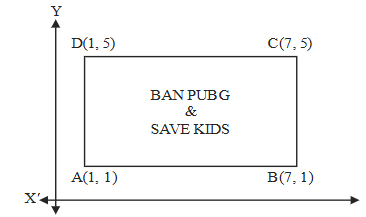
Use of mobile screen for long hours makes your eye sight weak and give you headaches. Children who are addicted to play $"\text{PUBG}"$ can get easily stressed out. To raise social awareness about ill effects of playing $\text{PUBG},$ a school decided to start $'\text{BAN PUBG}\ '$ campaign, in which student are asked to prepare campaign board in the shape of a rectangle. One such campaign board made by class $X$ student of the school is shown in the figure.
Image
Based on the above information, answer the following questions:
$(i)$ Find the coordinates of the point of intersection of diagonals $AC$ and $BD$ .
$(ii)$ Find the length of the diagonal $AC$ .
$(iii)\  (a$) Find the area of the campaign Board $\text{ABCD}$ .
OR
$(b)$ Find the ratio of the length of side $A B$ to the length of the diagonal $AC$.

Applications of Parabolas
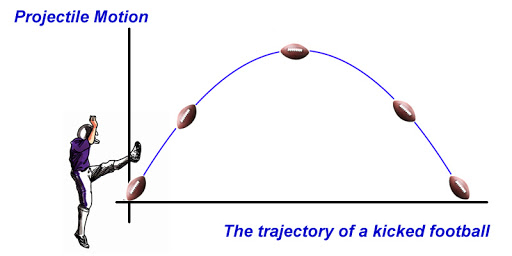
Parabola has many applications in our day-to-day life. For example, if an object (projectile) is thrown in space, then the path of the projectile is a parabola. If we know the equation of the path of a projectile by using various properties of parabola, we can obtain may important results like greatest height attained by the projectile, its horizontal range reached etc.
Parabola: A parabola is the graph that results from $p(x) = ax^2 + bx + c$ they are symmetric about a vertical line known as the axis of symmetry and runs through the maximum or minimum point of the parabola which is called the vertex.

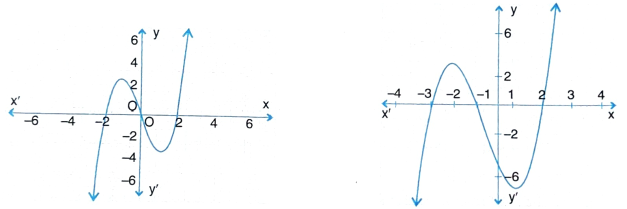
Graph of a quadratic polynomial is:
The number of zeroes that polynomial $p(x)=(x-2)^2+5$ can have is:
If a parabolic trajectory is represented by $x^2-4 x+3$, then its zeroes are:
Or
If one zero of a parabolic trajectory $p(y)=5 y^2-14 y+k$ is reciprocal of the other, the find the value of $k$ :
Read the following text carefully and answer the questions that follow:
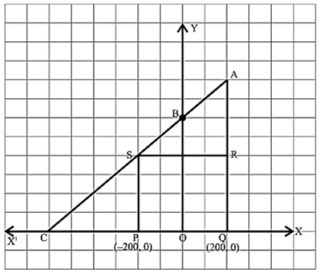
Jagdish has a field which is in the shape of a right angled triangle $\text{AQC.}$ He wants to leave a space in the form of a square $\text{PQRS}$ inside the field for growing wheat and the remaining for growing vegetables $($as shown in the figure$)$. In the field, there is a pole marked as $O.$
Image
$i.$ Taking $O$ as origin, coordinates of $P$ are $(-200, 0)$ and of $Q$ are $(200, 0). \text{PQRS}$ being a square, what are the coordinates of $R$ and $S\ ?$
$ii.$ What is the area of square $\text{PQRS}\ ?$
$iii.$ What is the length of diagonal $\text{PR}$ in square $\text{PQRS}\ ?$
OR
If $S$ divides $\text{CA}$ in the ratio $K : 1,$ what is the value of $K,$ where point $A$ is $(200, 800)\ ?$
Metallic silos are used by farmers for storing grains. Farmer Girdhar has decided to build a new metallic silo to store his harvested grains. It is in the shape of a cylinder mounted by a cone.
Dimensions of the conical part of a silo is as follows:
Radius of base $= 1.5 m$
Height $= 2 m$
Dimensions of the cylindrical part of a silo is as follows:
Radius $= 1.5 m$
Height $= 7 m$
On the basis of the above information answer the following questions.
$(i)$ Calculate the slant height of the conical part of one silo.
$(ii)$ Find the curved surface area of the conical part of one silo.
$(iii)(A)$ Find the cost of metal sheet used to make the curved cylindrical part of $1$ silo at the rate of $₹ 2000\ per\ m ^2$.
OR
$(iii) (B)$ Find the total capacity of one silo to store grains.
The great Stupa at Sanchi is one of the oldest stone structures in India, and an important Monument of Indian Architecture. It was originally commissioned by the emperor Ashoka in 3rd century BCE. Its nucleus was a simple hemispherical brick structure built over the relics of Buddha. It is a perfect example of combination of solid figures. A big hemispherical dome with a cuboidal structure mounted on it.
Image
(i) The volume of the hemispherical dome if the height of the dome 21 m, is (Take $\pi=22 / 7)$
(a) $19404 m^3$$\quad$ (b) $2000 m^3$$\quad$ (c) $15000 m^3$$\quad$ (d) $19000 m^3$
(ii) The formula for finding the volume of a hemi-sphere of radius r is
(a) $\frac{2}{3} \pi r^3$$\quad$ (b) $\frac{4}{3} \pi r^3$$\quad$ (c) $4 \pi r^2$$\quad$ (d) $2 \pi r^2$
(iii) The total surface area of the combined structure i.e. hemispherical dome with radius 14 m and cboidal shaped top with dimensions 8m * 6m * 4m is
(a) $1200 m^2$$\quad$ (b) $1232 m^2$$\quad$ (c) $1392 m^2$$\quad$ (d) $1932 m^2$
(iv) The plastic cloth required to cover the hemispherical dome, if the radius of its base is 14 m, is
(a) $1222 m^2$$\quad$ (b) $1184 m^2$$\quad$ (c) $1200 m^2$$\quad$ (d) $1400 m^2$