Questions

Case study (4 Marks)

Take a timed test

7 questions · self-marked practice — reveal the answer and mark yourself.

Question 14 Marks
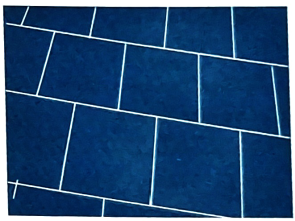
A rectangular floor area can be completely tiled with 200 square tiles. If the side leng th of each tile is increased by 1 unit, it would take only 128 tiles to cover the floor
Image
(i) Assuming the original length of each side of a tile be $x$ units, make a quadratic equation from the above information.
(ii) Write the corresponding quadratic equation in standard form.
(iii) (a) Find the value of $x$, the length of side of tile by factorisation.
OR
(b) Solve the quadratic equation for $x$, using quadratic formula.
Answer
(i) Area of rectangular floor when 200 square tiles of side $x$ units cover the floor completely is $200 x^2$.
When 128 tiles of side $(x+1)$ units cover the floor completely, the area of floor is $128(x+1)^2$, Therefore, $200 x^2=128(x+1)^2$.
(ii) We have,
$
200 x^2=128(x+1)^2 \Rightarrow 72 x^2-256 x-128=0 \Rightarrow 9 x^2-32 x-16=0
$
(iii) (a) $9 x^2-32 x-16=0$
$
\begin{array}{ll}
\Rightarrow & 9 x^2-36 x+4 x-16=0 \\
\Rightarrow & (x-4)(9 x+4)=0 \Rightarrow x-4=0 \Rightarrow x=4
\end{array}
$
$
[\because 9 x+4 \neq 0]
$
OR
(b) $9 x^2-32 x-16=0$
$
x=\frac{32 \pm \sqrt{(-32)^2+4 \times 9 \times 16}}{18}=\frac{32 \pm \sqrt{1600}}{18}=\frac{32 \pm 40}{18}=4,-\frac{4}{9} \Rightarrow x=4 \qquad [\because x > y]
$
View full question & answer
Question 24 Marks
Two schools 'P' and 'Q' decided to award prizes to their students for two games of Hockey ₹$ x$ per student and Cricket ₹ y per student. School 'P' decided to award a total of ₹ 9,500 for the two games to 5 and 4 students respectively; while school 'Q' decided to award ₹ 7,370 for the two games to 4 and 3 students respectively.
Image
(i) Represent the following information algebraically (in terms of $x$ and $y$ ).
(ii) What is the prize amount for hockey?
(iii) Prize amount of which game is more and by how much?
(iv) What will be the total prize amount if there are 2 students each from two games?
Answer
(i) Given information can be exhibited in the following tabular form:
Hockey (x)Cricket (y)Total money awarded
School P54₹ 9,500
School Q43₹ 7,370
Money awarded by school $P$ to 5 students of hockey and 4 students of cricket is $5 x+4 y$ and total money for both games is ₹ 9,500 .
$
\therefore \quad 5 x+4 y=9500\qquad\ldots (i)
$
Similarly, for school $Q$, we obtain
$
\therefore \quad 4 x+3 y=7370\qquad\ldots(ii)$
(ii) Multiplying (i) by 3 and (ii) by 4 and subtracting, we obtain
$
\begin{array}{ll}
& (15 x+12 y)-(16 x+12 y)=3 \times 9500-4 \times 7370 \\
\Rightarrow & -x=28500-29480 \Rightarrow-x=-980 \Rightarrow x=980
\end{array}
$
Putting $x=980$ in (i), we obtain
$5 \times 980+4 y=9500 \Rightarrow 4 y=4600 \Rightarrow y=1150$
$\therefore \quad$ Total prize amount for hockey $=(5 x+4 x)=9 x=$₹$(9 \times 980)=$₹$ 8820$
(iii) Total prize amount for cricket $=4 y+3 y=7 y=$₹$(7 \times 1150)=$₹$ 8050$
Clearly, prize amount for hockey is more by $=$₹$(8820-8050)=$₹$ 770$
(iv) Total prize amount for two students in each game $=$₹$(2 x+2 y)=$₹$ 2(x+y)$
$
=$₹$ 2(980+1150)=$₹$ 4260
$
View full question & answer
Question 34 Marks
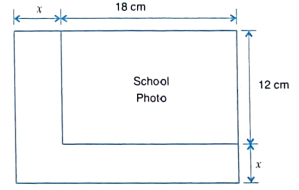
While designing the school year book, a teacher asked the student that the length and width of a particular photo is increased by $x$ units each to double the area of the photo. The original photo is 18 cm long and 12 cm wide.
Image
Based on the above information, answer the following questions:
(i) Write an algebraic equation depicting the above information.
(ii) Write the corresponding quadratic equation in standard form.
(iii) What should be the new dimensions of the enlarged photo?
(iv) Can any rational value of $x$ make the new area equal to $220 cm^2$ ?
Answer
(i) Original area of photo $=18 \times 12 cm^2=216 cm^2$
Area of photo by increasing length and breadth each by $x$ units.
$
=(18+x)(12+x)=216+30 x+x^2
$
It is given that the area of photo is doubled by increasing length and width each by $x$ uints.
$
\therefore \quad 216+30 x+x^2=2 \times 216
$
(ii) Simplifying equation (i), we obtain $x^2+30 x-216=0$.
This is the required quadratic equation in standard form.
$
\begin{array}{ll}
\text { (iii) } & x^2+30 x-216=0 \\
\Rightarrow & x^2+36 x-6 x-216=0 \\
\Rightarrow & x(x+36)-6(x+36)=0 \Rightarrow(x-6)(x+36)=0 \Rightarrow x-6=0 \Rightarrow x=6 \quad[\because x+36 \neq 0]
\end{array}
$
Hence, the new dimensions of the enlarged photo are
$
\text { Length }=18+x=(18+6) cm=24 cm, \text { Breadth }=12+x=(12+6) cm=18 cm
$
(iv) If new area is $220 cm^2$, then
$
\begin{array}{ll}
& 216+30 x+x^2=220 \Rightarrow x^2+30 x-4=0 \Rightarrow x=-\frac{-30 \pm \sqrt{916}}{2}=-15 \pm \sqrt{229} \quad[\because x>0] \\
\Rightarrow & x=-15 \pm \sqrt{229}
\end{array}
$
Clearly, $x$ is not rational. Hence, no rational value of $x$ can make new area equal to $220 cm^2$.
View full question & answer
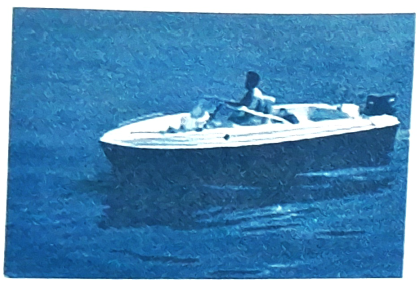
Question 44 Marks
Answer
(i) (c): Speed of motorboat $=20 km / hr$ and, Speed of stream $=x km / hr$ $\therefore \quad$ Speed upstream of the motorboat $=(20-x) km / hr$
(ii) (a): Speed of motorboat $=20 km / hr$ and, Speed of stream $=x km / hr$ $\therefore \quad$ Speed downstream of the motorboat $=(20+x) km / hr$
(iii) (c): Time taken by the motorboat to cover 15 km upstream $=\frac{15}{20-x}$ hours Time taken by the motorboat to cover 15 km downstream $=\frac{15}{20+x}$ hours.
$
\therefore \frac{15}{20-x}-\frac{15}{20+x}=1 \Rightarrow \frac{15(20+x-20+x)}{(20-x)(20+x)}=1 \Rightarrow 15 \times 2 x=400-x^2 \Rightarrow x^2+30 x-400=0
$
(iv) (b): The speed of the current is given by
$
\therefore x^2+30 x-400=0 \Rightarrow x^2+40 x-10 x-400=0 \Rightarrow(x+40)(x-10)=0 \Rightarrow x-10=0 \Rightarrow x=10
$
View full question & answer
Question 54 Marks
Johan and Jayant are very close friends. They decided to go to Ranikhet with their families in Separate cars. Johan's car travels at a speed of $x km / hr$ while Jayant's car travels $5 km / hr$ faster than Johan's car. Johan took 4 hours more than Jayant to complete the Journey of 400 km .
Image

(i) The distance covered by Jayant's car in two hours is
(a) $2(x+5) km$ $\qquad$ (b) $(x-5) km$
(c) $2(x+10) km$ $\qquad$ (d) $(2 x+5) km$
(ii) The quadratic equation describing the speed of Johan's car is
(a) $x^2-5 x-500=0$ $\qquad$ (b) $x^2+4 x-400=0$
(c) $x^2+5 x-500=0$ $\qquad$ (d) $x^2-4 x+400=0$
(iii) The speed of Johan's car is (in km/hour)
(a) 20 $\qquad$ (b) 15 $\qquad$ (c) 25 $\qquad$ (d) 10
(iv) The speed of Jayant's car in $km / hr$ is
(a) 25 $\qquad$ (b) 20 $\qquad$ (c) 30 $\qquad$ (d) 15
View full question & answer
Question 64 Marks
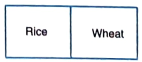
Raghav has a field with total area of $1260 m^2$. He uses it to grow wheat and rice. The land used to grow wheat i.e. wheatland is rectangular in shape while the riceland is in the shape of a square as shown in the following figure. The length of wheatland is 3 metre more than twice the length of riceland.
Image
(i) If the length of the riceland is $x$ metre, then total length of the field (in metres) is
(a) $(2 x+2)$ $\qquad$ (b) $3 x+3$ $\qquad$ $\qquad$ (c) $4 x+4$ $\qquad$ (d) $3 x+5$
(ii) The perimeter of the field is
(a) $8 x+6$ $\qquad$ (b) $6 x+8$ $\qquad$ (c) $3 x+4$ $\qquad$ (d) $4 x+3$
(iii) If the total area of the field is $1260 m^2$, then the value of $x$ is
(a) 10 $\qquad$ (b) 15 $\qquad$ (c) 20 $\qquad$ (d) 25
(iv) The area of the wheat land is
(a) $400 m^2$ $\qquad$ (b) $760 m^2$ $\qquad$ (c) $820 m^2$ $\qquad$ (d) $860 m^2$
Answer
(i) (b) (ii) (a) (iii) (c) (iv) (d)
View full question & answer
Question 74 Marks
India is one of the largest importers of crude oil. Oil companies produce crude oil in barrels. Suppose the maximum oil produced by company is 300 barrels and profit made from sale of these barrels is given by the function $P(x)=-10 x^2+3500 x-66,000$, where $P(x)$ is profit in rupees and $x$ is the number of barrels produced and sold. Based on the above information answers the following questions:
(i) When no barrel is produced, then the profit or loss is
(a) Profit ₹ 22,000 $\qquad$ (b) Profit ₹ 44,000
(c) Loss ₹ 66,000 $\qquad$ (d) Loss ₹ 88,000
(ii) How many barrels should the company produce to achieve break even points?
(a) 10 $\qquad$ (b) 20 $\qquad$ (c) 30 $\qquad$ (d) 40
(iii) On producing 100 barrels, the company
(a) earns profit of ₹ 185,000 $\qquad$ (b) earns profit of ₹ 184,000
(c) is in loss of ₹ 185,000 $\qquad$ (d) is in loss of ₹ 184,000
(iv) If the company produces 400 barrels, then it is in
(a) profit of ₹ 266,000 $\qquad$ (b) loss of ₹ 266,000
(c) profit of ₹ 342,000 $\qquad$ (d) loss of ₹ 342,000
Answer
(i) (c) (ii) (b) (iii) (c) (iv) (b)
View full question & answer
Case study (4 Marks) - Maths STD 10 Questions - Vidyadip