Question
Who first proposed that light was wave-like in character?

Answer

  1. Huygens
Explanation:
In 1678, Dutch physcist, christian Huygens beived that light was made up of waves vibrating up and down perpendicular to the direction of the light travels, and therefore formulated a way of visualising wave propagation. This became known as Huygens Principe.

Need a full question paper?

Generate a complete, print-ready paper with questions like this in minutes — across 16+ boards, with answer keys.
Start Generating Free

Similar questions

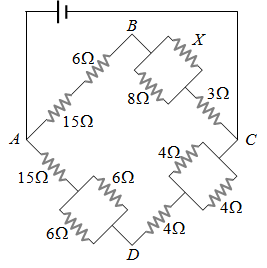
In the figure given the value of $X$  resistance will be, when the $p.d.$ between $B$ and $D$ is zero
A metal sheet is placed in front of a strong magnetic pole. A force needed to:
Assertion :   Gauss theorem is not applicable in magnetism.
Reason    : Mono magnetic pole does not exist.(a) If both assertion and reason are true and the reason is the correct explanation of the assertion.(b) If both assertion and reason are true but reason is not the correct explanation of the assertion.(c) If assertion is true but reason is false.(d) If the assertion and reason both are false.


The coordination number of Cu  is (a) 1(b) 6 (c) 8  (d) 12
       
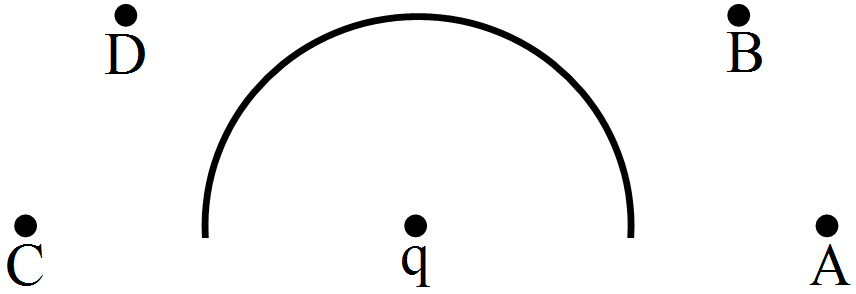
Figure shows a charge q placed at the centre of a hemisphere. A second charge Q is placed at one of the positions A, B, C and D. In which position(s) of this second charge, the flux of the electric field through the hemisphere remains unchanged?
Mass of earth has been determined through
Material A has critical angle $\mathrm{i}_{\mathrm{A}}$,  and material B has critical angle $i_B\left(i_B>i_A\right)$. Then which of the following is true
$(i)$ Light can be totally internally reflected when it passes from $B$ to $A$
$(ii)$ Light can be totally internally reflected when it passes from $A$ to $B$
$(iii)$ Critical angle for total internal reflection is $i_B-i_A$ 
$(iv)$ Critical angle between $A$ and $B$ is $\sin ^{-1}\left(\frac{\sin i_A}{\sin i_B}\right)$
Two coils have a mutual inductance $0.005 H$. The current changes in the first coil according to equation $I = I _0 \sin$
$\Omega t$, where $I _0=10 A$ and $\omega=100 \pi rad s ^{-1}$. The maximum value of emf in the second coil is
When a wire of uniform cross$-$section a, length $I$ and resistance $R$ is bent into a complete circle, resistance between any two of diametrically opposite points will be
A charge moving with velocity v in X-direction is subjected to a field of magnetic induction in the negative X-direction. As a result, the charge will(a) Remain unaffected(b) Start moving in a circular path Y-Z plane(c) Retard along X-axis(d) Move along a helical path around X-axis