Question
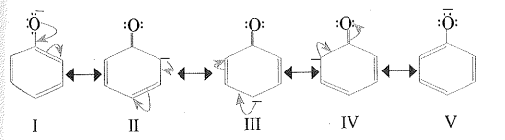
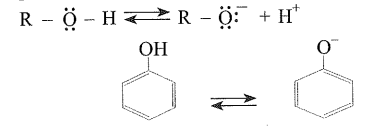
Why a compound in which hydroxyl group attached to an aromatic ring is more acidic than the one in which hydroxyl group attached to an alkyl group?

Need a full question paper?

Generate a complete, print-ready paper with questions like this in minutes — across 16+ boards, with answer keys.

Start Generating Free

Similar questions

Match the items of Column I and Column II.
 
Column I
 
Column II
(i)
Diamond.
(a)
Short interval of time.
(ii)
Instantaneous rate.
(b)
Ordinarily rate of conversion is imperceptible.
(iii)
Average rate.
(c)
Long duration of time.
An organic compound (A) has characteristic odour. On treatment with NaOH, it forms compounds (B) and (C). Compound (B) has molecular formula C7H8O which on oxidation gives back (A). The compound (C) is a sodium salt of an acid. When (C) is treated with soda-lime, it yields an aromatic compound (D). Deduce the structures of (A), (B), (C) and (D). Write the sequence of reactions involved.
The following data were obtained during the first order thermal decomposition of SO2Cl2 at a constant volume:
SO2Cl2(g)$\rightarrow$SO2(g) + Cl2(g)
Experiment
Time/s-1
Total pressure/atm
1
2
0
100
0.4
0.7
Calculate the rate constant.
(Given: log4 = 0.6021, log2 = 0.3010)
How are the following conversions carried out?
Propanol to propan-2-ol
How would you account for the following:
Cr2+ is reducing in nature while with the same d-orbital configuration (d4) Mn3+ is an oxidising agent.
Henry’s law constant for CO2 in water is 1.67 x 10⁸ Pa at 298 K. Calculate the quantity of CO2 in 500 mL of soda water when packed under 2.5 atm CO2 pressure at 298 K.
Explain the following reaction of $C _2 H _5 OH$ :
(a) Schotten Baumann reaction
(b) Reaction with concen. $HNO _3$
(c) Reaction with excess of $NH _3$
(d) Reduction with Red P and HI
A special thermometer (Beckmann thermometer) is used to determine molecular weight by freezing point depression method instead of ordinary thermometer. Why?
  1. Explain the following giving suitable examples:
  1. Sandmeyer’s reaction.
  2. Coupling reaction of a diazonium salt.
  1. Explain the observed Kb order:

Et2NH>Et3N>EtNH2 in aqueous solution.
Give the products of following carbonyl compounds when oxidised with acidic $KMnO _4$ or acidic $K _2 Cr _2 O _7$.
(i) $CH _3 CHO$
(ii) $CH _3 COCH _3$
Image