Question
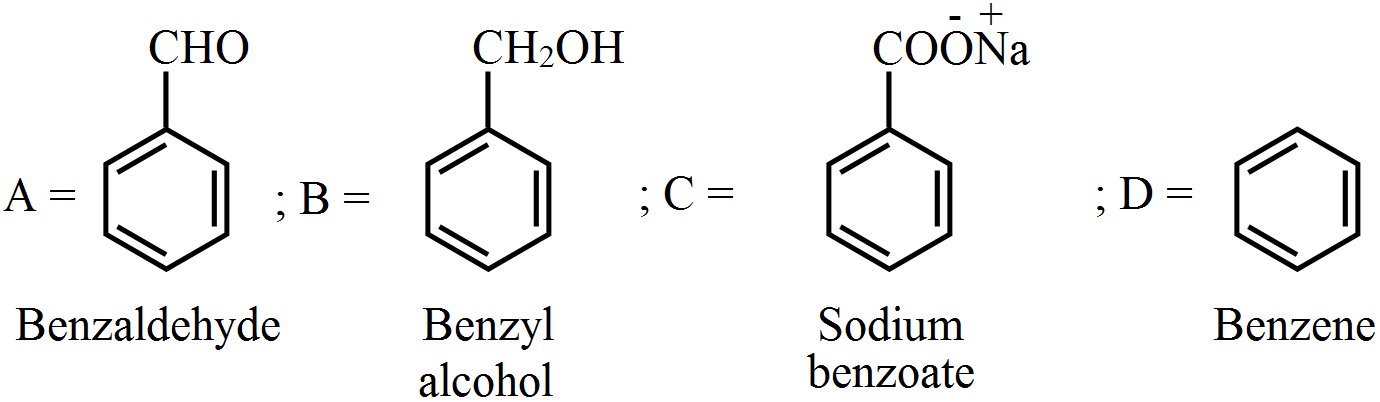
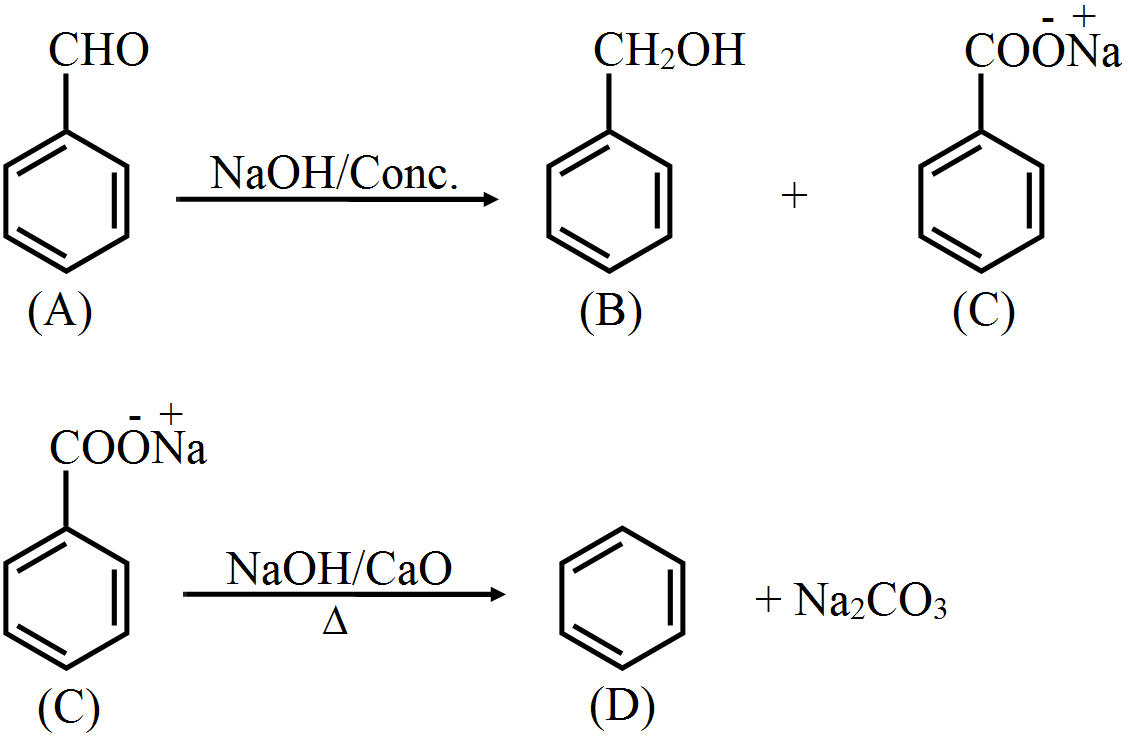
An organic compound (A) has characteristic odour. On treatment with NaOH, it forms compounds (B) and (C). Compound (B) has molecular formula C7H8O which on oxidation gives back (A). The compound (C) is a sodium salt of an acid. When (C) is treated with soda-lime, it yields an aromatic compound (D). Deduce the structures of (A), (B), (C) and (D). Write the sequence of reactions involved.
Need a full question paper?

Generate a complete, print-ready paper with questions like this in minutes — across 16+ boards, with answer keys.

Start Generating Free

Similar questions

For a first order reaction, show that time required for 99% completion is twice the time required for the completion of 90% of reaction.
Explain the following cases giving appropriate reasons: 
  1. Nickel does not form low spin octahedral complexes.
  2. The $\pi$-complexes are known for the transition metals only.
  3. Co2+ is easily oxidised to Co3+ in the presence of a strong ligand.
Define the term solution. How many types of solutions are formed? Write briefly about each type with an example.
Write the structure of the alkene formed by dehydrohalogenation of 1-bromo-1-methylcyclohexane with alcoholic KOH.
What is Solubility? Explain Solubility of a solid in a liquid.
Calculate the half-life of a first order reaction from their rate constants given below:
  1. 200 s–1
  2. 2 min–1
  3. 4 years–1
Determine the formula for the half life of a first order reaction and prove that the half life of a first order reaction does not depends on the initial concentration of the reactant.
Explain measurement and calculation of resistance and conductivity of electrolytic solution.
Why Haloarenes undergo electrophilic substitution reactions at o and p - position? Why it is less reactive than benzene ?