Question
Why do transition elements form coloured compounds explain?

Answer

Transition elements and their compounds form coloured ions and complexes because they have incomplete $d$-sub-sell and due to the approach of anions $d$-orbitals of transition metals split into 2 sets of lower and higher energy so electrons absorb certain amount of energy and jump into orbitals of higher energy. To gain energy they absorb certain radiations from visible light and emit out the remainder as coloured light. So they look coloured.

Need a full question paper?

Generate a complete, print-ready paper with questions like this in minutes — across 16+ boards, with answer keys.

Start Generating Free

Similar questions

Match the structures of compounds given in Column $I$ with the classes of compounds given in Column $II.$
  Column I   Column II
$(i)$ $\text{CH}_3-\text{CH}-\text{CH}_3\\ \ \ \ \ \ \ \ \ \ \ \ \ \ |\\ \ \ \ \ \ \ \ \ \ \ \ \ \text{X}$ $(a)$ Aryl halide
$(ii)$ $\text{CH}_2==\text{CH}-\text{CH}_2-\text{X}$ $(b)$ Alkyl halide
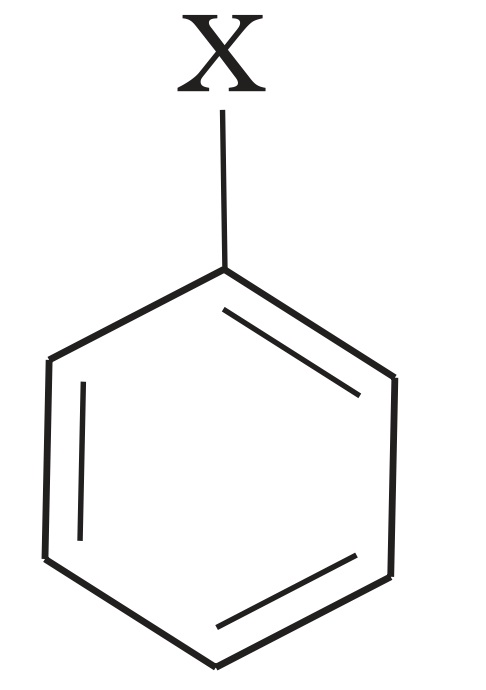
$(iii)$ $(c)$ Vinyl halide
$(iv)$ $\text{CH}_2==\text{CH}-\text{X}$ $(d)$ Allyl halide
The chemistry of corrosion of iron is essentially an electrochemical phenomenon. Explain the reactions occurring during the corrosion of iron in the atmosphere.
Glucose is an aldohexose monosaccharide. Why does it react with hydrogen cyanide to form cyanohydrin but does not react with sodium hydrogen sulphite?
Give plausible explanation for each of the following:Cyclohexanone forms cyanohydrin in good yield but $2, 2, 6 -$ trimethylcyclohexanone does not.
Explain the following with an example
(i) Reaction of phenol with zine dust.
(ii) Oxidation reaction of phenol.
Two isomeric compounds $(A$ and $B)$ have $\ce{ C_4H_{11}N}$ molecular formula react with $\ce{HNO_2}$ and forms compounds $(C)$ and $(D). C$  is hardly oxidised but it reacts immediately with Lucas reagent whereas $D$ reacts with Lucas reagent in $5$ minutes and it also gives haloform reaction. Identify $\ce{A, B, C}$ and $\ce{D}$.
Explain Hell-Volhard-Zelinsky reaction of carboxylic acids.
Compare the chemistry of the actinoid with that of lanthanoids with reference to: Electronic configuration:
Write the equation to prepare Frankland reagent and tetramethyl lead from haloalkane.
A galvanic cell has electrical potential of 1.1V. If an opposing potential of 1.1V is applied to this cell, what will happen to the cell reaction and current flowing through the cell?