Question
Why do we have different units for the same physical quantity?

Answer

Because, bodies differ in order of magnitude significantly in respect to the same physical quantity. For example, interatomic distances are of the order of angstroms, inter-city distances are of the order of km, and interstellar distances are of the order of light year.

Need a full question paper?

Generate a complete, print-ready paper with questions like this in minutes — across 16+ boards, with answer keys.
Start Generating Free

Similar questions

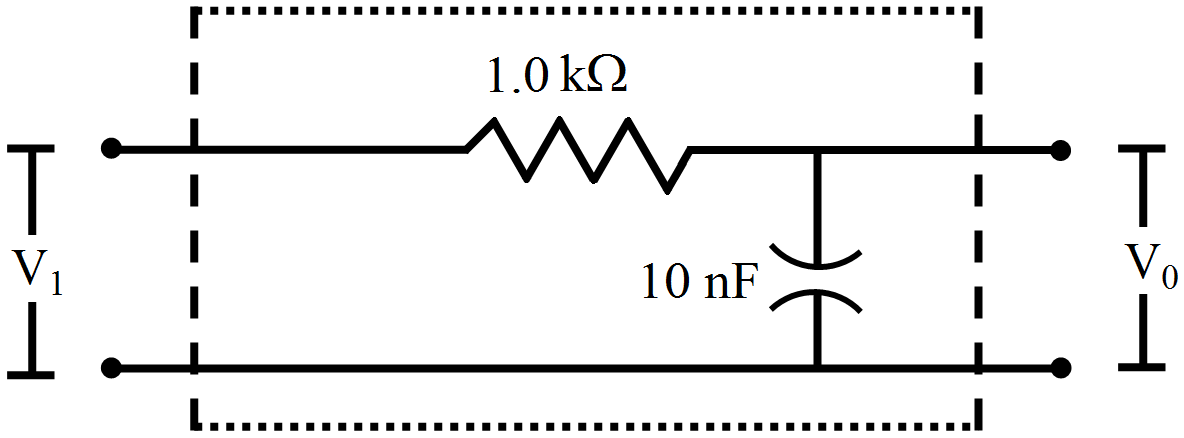
Figure shows a typical circuit for a low$-$pass filter. An $A C$ input $V_i=10 \mathrm{mV}$ is applied at the left end and the output $V_0$ is received at the right end. Find the output voltage for $v=10 \mathrm{kHz}, 1.0 \mathrm{MHz}$ and $10.0 MHz$ . Note that as the frequency is increased the output decreases and, hence, the name low$-$pass filter.
Pressure decreases as one ascends the atmosphere. If the density of air is $\rho,$ what is the change in pressure dp over a differential height dh?
An electric bulb, when connected across a power supply of $220V,$ consumes a power of $60W.$ If the supply drops to $180V,$ what will be the power consumed? If the supply is suddenly increased to $240V,$ what will be the power consumed?
On what factors the amount of heat flowing from hot face to the cold face depends? How?
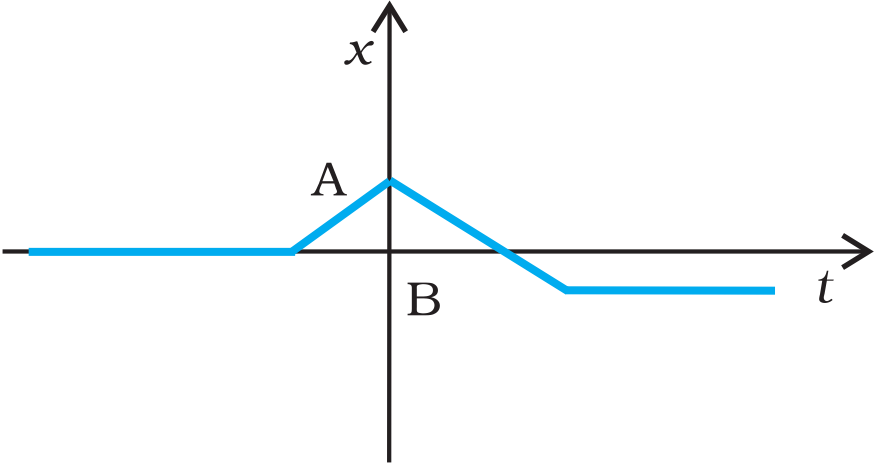
Suggest a suitable physical situation for of the following graphs.
Show that Newton's third law of motion is contained in the second law.
A hydrogen atom in state $n = 6$ makes two successive transitions and reaches the ground state. In the first transition a photon of $1.13eV$ is emitted. $(a)$ Find the energy of the photon emitted in the second transition $(b)$ What is the value of n in the intermediate state?
A particle of mass $0.1kg$ is held between two rigid supports by two springs of force constants $8N/ m$ and $2N/ m$. If the particle is displaced along the direction of the length of the springs, calculate its frequency of vibration.
Define impulse. A cricket ball of mass $150gm$ moving with speed of $12m/ s$ is hit by a bat so that the ball is turned back with a velocity of $20m/ s$. Calculate the impulse received by the ball.
An electric bulb of volume 250 cc was sealed during manufacturing at a pressure of $10^{-3} \mathrm{~mm}$ of mercury at $27^{\circ} \mathrm{C}$. Compute the number of air molecules contained in the bulb. Avogadro constant $=6 \times 10^{23} \mathrm{~mol}^{-1}$, density of mercury $=13600 \mathrm{~kg} / \mathrm{m}^{-3}$ and $\mathrm{g}=10 \mathrm{~ms}^{-2}$.