Question
Why does the rate of photosynthesis decrease at higher temperatures?

Answer

Temperature does not influence light reactions of photosynthesis but affects the enzyme controlled dark reactions. The optimum temperature for photosynthesis is 18 to 35°C. When temperature is increased from minimum to optimum, the rate of photosynthesis doubles for every 10°C rise in temperature. Above the optimum temperature, the rate of photosynthesis shows an initial increase for short duration but later declines.

Need a full question paper?

Generate a complete, print-ready paper with questions like this in minutes — across 16+ boards, with answer keys.
Start Generating Free

Similar questions

Explain anaerobic breakdown of glycogen in muscles and its effect.
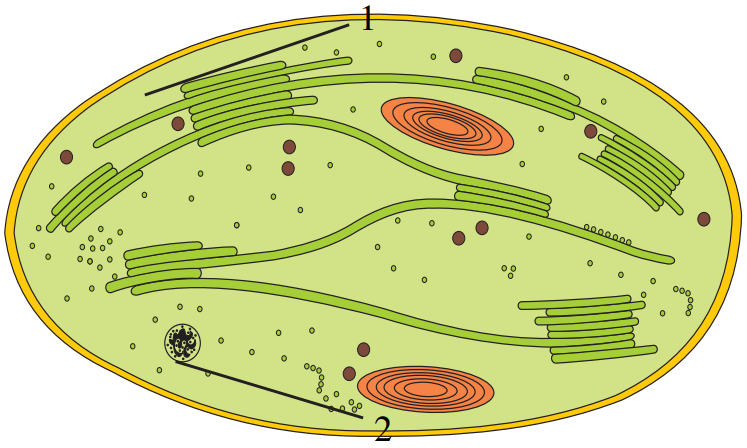
Examine the figure.
  1. Is this structure present in animal cell or plant cell?
  2. Can these be passed on to the progeny? How?
  3. Name the metabolic processes taking place in the places marked (1) and (2).
Draw a diagram of alimentary canal of cockroach and label any six parts in it. (Description is not required)
During a painting class, the teacher asked students to draw a sketch and paint it by using only green colour. Ravi could not find green colour in his colour box and was scolded by the teacher who could easily see the green colour in the box. Suddenly teacher realised that Ravi was not able to identify the green colour and he could realise the fact that Ravi may be lacking the ability to differentiate colours. After school was over, teacher reported this matter to Ravi's parents.
  1. Did Ravi lack knowledge of colours?
  2. How do you perceive the colour of an object?
  3. Discuss the function of cones.
  4. What values did teacher possess?
In a given habitat we have 20 plant species and 20 animal species. Should we call this as ‘diversity’ or ‘biodiversity’? Justify your answer.
What is meant by coronary artery disease?
Write short note on the following, Hypertension.
What is hemodialysis? Describe the various stages of its process.
Draw the sectional view of coelomate, pseudocoelomate and acoelomate.

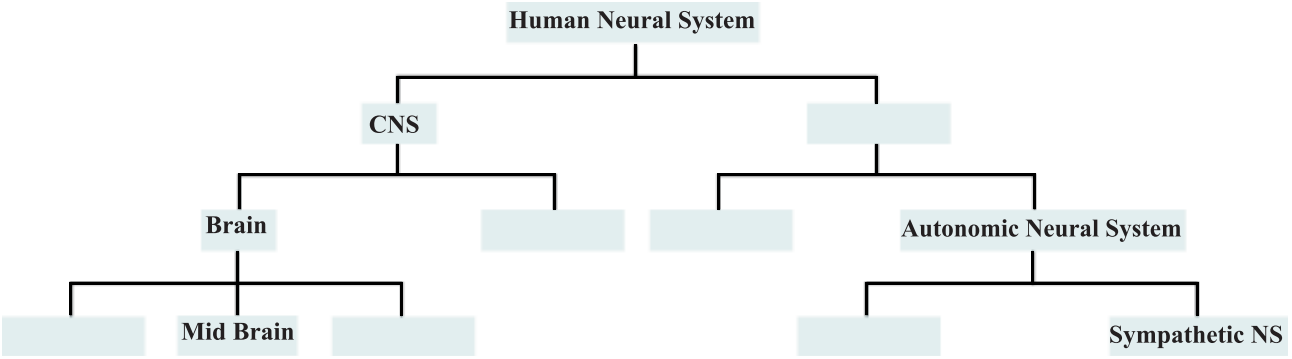
The major parts of the human neural system is depicted below. Fill in the empty boxes with appropriate words.