Question
Write a script to create a list of 5 integers and then
(a) Create a copy of this list using copy() method
(b) Display both the lists
(c) Input an integer from the user and insert it in the first list at a specific location. The location should also be input from the user. Use insert() method for insertion.
(d) Display both the lists

Answer

Get the step-by-step solution for this question inside the Vidyadip app.

Get the answer in the app

Need a full question paper?

Generate a complete, print-ready paper with questions like this in minutes — across 16+ boards, with answer keys.

Start Generating Free

Similar questions

Write a python program using function to check whether a number is Armstrong or not. The function will accept a number as parameter.

Consider the following tables Product and Client. Write SQL commands for the statements (i) to (iv) and give outputs for SQL queries (v) to (viii)

TABLE: PRODUCT

P_ID Product Name Manufacturer Price
TP01 Talcom Powder LAK 40
FW05 FaceWash ABC 45
BS01 Bath Soap ABC 55
SH06 Shampoo XYZ 120
FW12 Face Wash XYZ 95

TABLE: CLIENT

C_ID ClientName City P_ID
01 Cosmetic Shop Delhi FW05
06 Total Health Mumbai BS01
12 Live Life Delhi SH06
15 Pretty Woman Delhi FW12
16 Dreams Bangalore TP01

(i) To display the details of those Clients whose City is Delhi

(ii) To display the details of Products whose Price is in the range of 50 to 100 (Both values included)

(iii) To display the ClientName, City from Table Client, and ProductName and Price from table Product, with their corresponding matching P_ID

(iv) To increase the Price of all Products by 10

(v) SELECT DISTINCT CITY FROM Client;

(vi) SELECT Manufacturer, MAX(Price), Min(Price), Count(*) FROM Product GROUP BY Manufacturer;

(vii) SELECT ClientName, ManufacturerName FROM Product, Client WHERE Client.Prod_Id = Product.P_Id;

Write a python program using function to accept a list as parameter and return the sum of all the list elements.
Consider the following DEPT and EMPLOYEE tables. Write SQL queries for (i) to (iv) and find outputs for SQL queries
(v) to (viii).

Table: DEPT

DCODE DEPARTMENT LOCATION
D01 INFRASTRUCTURE DELHI
D02 MARKETING DELHI
D03 MEDIA MUMBAI
D05 FINANCE KOLKATA
D04 HUMAN RESOURCE MUMBAI

Table: EMPLOYEE

ENO NAME DOJ DOB GENDER DCODE
1001 George K 2013-09-02 1991-09-01 MALE D01
1002 Ryma Sen 2012-12-11 1990-12-15 FEMALE D03
1003 Mohitesh 2013-02-03 1987-09-04 MALE D05
1007 Anil Jha 2014-01-17 1984-10-19 MALE D04
1004 Manila Sahai 2012-12-09 1986-11-14 FEMALE D01
1005 R SAHAY 2013-11-18 1987-03-31 MALE D02
1006 Jaya Priya 2014-06-09 1985-06-23 FEMALE D05

Note: DOJ refers to date of joining and DOB refers to date of Birth of employees.

(i) To display Eno, Name, Gender from the table EMPLOYEE in ascending order of Eno.

(ii) To display the Name of all the MALE employees from the table EMPLOYEE.

(iii) To display the Eno and Name of those employees from the table EMPLOYEE who a born between ‘1987‐01‐01 ’and ‘1991‐12‐01 ’.

(iv) To count and display FEMALE employees who have joined after ‘1986‐01‐01 ’.

(v) Select count(*),dcode from employee group by dcode having count(*)>1;

(vi) Select distinct department from dept;

(vii) Select name, department from employee e, dept d where e.dcode=d.dcode and en0 <1003;

(viii) select max(doj), min(dob) from employee;

Write the Pseudocode to sort the list using Insertion sort – to sort a list A in ascending order
Write a menu driven program to do the following option on binary file “Student”. The program should implement through list which contains student number, student name and marks. Student Menu ------------------ 1) Add New Student 2) Display student details 3) Search student 4) Update a Record 5) Delete a Record 6) Save & Quit
Write a python program using method to create the list of numeric values and search the number in the list using Binary Search Technique.
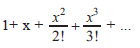
Write python program using function to find the sum of first n terms of the following series:

where n and x have to be input from the user. The function should have two parameter n and x and return the sum of the series.

Write SQL queries for (i) to (iv) and find outputs for SQL queries (v) to (viii), which are based on the tables.


Table: VEHICLE

Code VTYPE PERKM
101 VOLVO BUS 160
102 AC DELUXE BUS 150
103 ORDINARY BUS 90
105 SUV 40
104 CAR 20

Note:

•PERKM is Freight Charges per kilometer

•VTYPE is Vehicle Type

NO NAME TDATE KM CODE NOP
101 Janish Kin 2015-11-13 200 101 32
103 Vedika sahai 2016-04-21 100 103 45
105 Tarun Ram 2016-03-23 350 102 42
102 John Fen 2016-02-13 90 102 40
107 AhmedKhan 2015-01-10 75 104 2
104 Raveena 2015-05-28 80 105 4
106 Kripal Anya 2016-02-06 200 101 25

Note:

•NO is Traveller Number

•KM is Kilometer travelled

•NOP is number of travellers travelled in vehicle

•TDATE is Travel Date

(i) To display NO, NAME, TDATE from the table TRAVEL in descending order of NO.

(ii) To display the NAME of all the travellers from the table TRAVEL who are travelling by vehicle with code 101 or 102.

(iii) To display the NO and NAME of those travellers from the table TRAVEL who travelled between ‘2015-12-31 ’and ‘2015-04-01 ’.

(iv) To display all the details from table TRAVEL for the travellers, who have travelled distance more than 100 KM in ascending order of NOP.

(v) SELECT COUNT (*), CODE FROM TRAVEL GROUP BY CODE HAVING COUNT(*)>1;

(vi) SELECT DISTINCT CODE FROM TRAVEL;

(vii) SELECT A.CODE,NAME,VTYPE FROM TRAVEL A,VEHICLE B WHERE A.CODE=B. CODE AND KM <90;

(viii) SELECT NAME,KM*PERKM FROM TRAVEL A, VEHICLE B WHERE A.CODE=B.CODE AND A.CODE=‘105 ’;
Write definition of a function EvenSum(NUMBERS) to add those values in the list of NUMBERS, which are odd on position.