Question
Write about the various theories of evolution.

Answer

Main theories of evolution are:
  1. Lamarckism or Theory of Inheritance of Acquired characters.
  2. Darwinism or Theory of Natural Selection.
  3. Mutation theory of De Vries.
  4. Neo-Darwinism or Modern concept or Synthetic theory of evolution.

Need a full question paper?

Generate a complete, print-ready paper with questions like this in minutes — across 16+ boards, with answer keys.
Start Generating Free

Similar questions

Try to trace the various components of human evolution (hint: brain size and function, skeletal structure, dietary preference, etc.)
  1. Trace the succession of plants on a dry bare rock.
  2. How does phosphorus cycle differ from carbon cycle?
  1. How does the study of fossils help to understand evolution?
  2. How did SL Miller provide an experimental evidence in favour of Oparin and Haldane's hypothesis? Explain.
How have pest-resistant plants been produced using biotechnology? Explain.

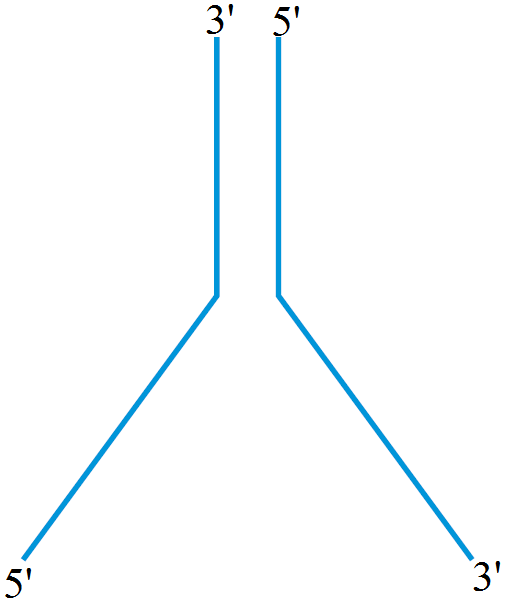
  1. Identify the structure shown above.
  2. Redraw the structure as a replicating fork and label the parts.
  3. Write the source of energy for this replication and list the enzymes involved in this process.
  4. Mention the difference in the synthesis based on the polarity of the two template strands.
Categorise the following plants into hydrophytes, halophytes, mesophytes and xerophytes. Give reasons for your answers.
  1. Salvinia.
  2. Opuntia.
  3. Rhizophora.
  4. Mangifera.
Explain the Law of Dominance using a Monohybrid cross.
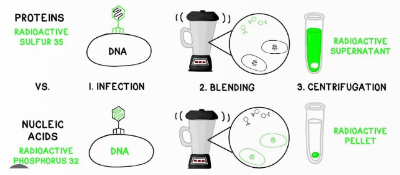
In 1952, Alfred Hershey and Martha Chase took an effort to find the genetic material in organisms. Their experiments led to an unequivocal proof to DNA as genetic material.
Image

Answer the following questions based on Hershey and Chases's experiments:
i. Name the kind of virus they worked with and why?
ii. Why did they use two types of culture media to grow viruses in? Explain.
iii. What was the need for using a blender and later a centrifuge during their experiments? OR
iv. State the conclusion drawn by them after the experiments.
Human female is not fertile after menopause whereas males can produce gametes at any age after puberty. Analyse the statement and schematically represent a comparison between gametogenesis in males and females.
Match the items in Column I with those in Column II
S.No.
Column I
S.No.
Column II
(A)
Standing crop
(i)
The amount of mineral nutrients in the soil at a given time
(B)
Standing state
(ii)
Sedementary cycle
(C)
Climax community
(iii)
Herbivores and carnivores
(D)
Primary producers
(iv)
In near equilibrium with the environment
(E)
Phosporus cycle
(v)
Mass of living matter in a trophic level at a given time
(F)
Secondary producers
(vi)
Phytoplanktons