Question
Write down four general characters of phylum Echinodermata. Give two examples.

Answer

  1. Simple animals may be a star like, spherical or elongated.
  2. Body is triploblastic, coelomate, unsegmented and radially symmetrical.
  3. Body lacks head but has oral and aboral surfaces. Oral surface of the body has five radial areas called ambulacra.
  4. Body wall is covered with spiny hard calcareous (calcium carbonate) plates (ossicles) that forms a rigid or flexible endoskeleton.
Example: Echinus (sea urchin) and Asterias (star fish).

Need a full question paper?

Generate a complete, print-ready paper with questions like this in minutes — across 16+ boards, with answer keys.

Start Generating Free

Similar questions

Discuss the method of separating a mixture containing chalk powder, iron fillings and naphthalene.
How will you separate common salt, sand and iron filings from their mixture?
Distinguish between compounds and mixtures.
Write the cations and anions present, if any, in the following:
  1. $CH_3COONa$
  2. $NaCl$
  3. $H_2$
  4. $NH_4NO_3$
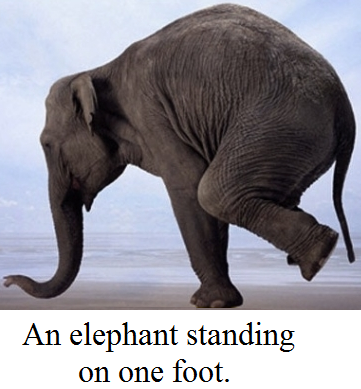
An elephant weighing $40,000\ N$ stands on one foot of area $1000\ cm^2$ whereas a girl weighing $400\ N$ is standing on one ‘stiletto’ heel of area $1\ cm^2.$

  1. Which of the two, elephant or girl, exerts a larger force on the ground and by how much?
  2. What pressure is exerted on the ground by the elephant standing on one foot?
  3. What pressure is exerted on the ground by the girl standing on one heel?
  4. Which of the two exerts larger pressure on the ground: elephant or girl?
  5. What is the ratio of pressure exerted by the girl to the pressure exerted by the elephant?
i. Draw a neat and labelled diagram of the apparatus used to separate components of blue-black ink. Name the process and state the principle involved.
ii. Identify, the physical and chemical changes from the following.
a. Burning of magnesium in air.
b. Tarnishing of silver spoon.
c. Sublimation of iodine.
d. Electrolysis of water.
i. Suppose the mass of the earth somehow increases by 10% without any change in its size. What would happen to your weight?
ii. Suppose the radius of the earth becomes twice of its present radius without any change in its mass. What will happen to your weight?
How will the equations of motion for an object moving with a uniform velocity change$?$
A ball of mass $200\ g$ falls from a height of $5$ metres. What is its kinetic energy when it just reaches the ground? $(8 = 9.8m/s).$
How will you separate a mixture containing kerosene and petrol (difference in their boiling points is more than $25^\circ\ C$), which are miscible with each other?