Question
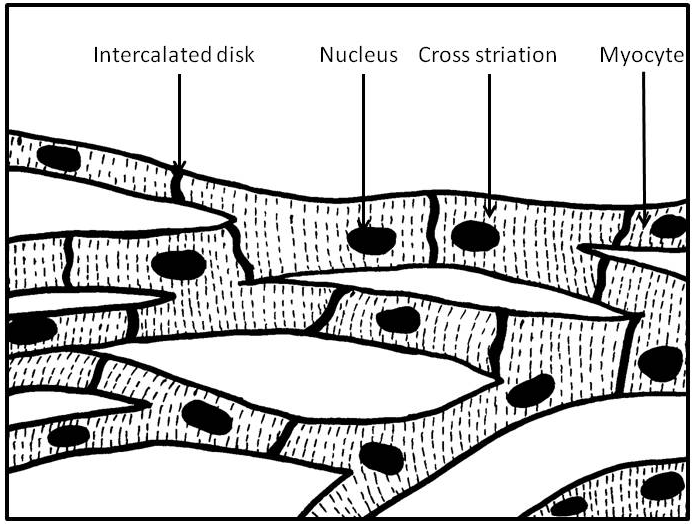
Write important functional differences between striated and smooth muscle tissues. Draw a labeled diagram of the muscle tissue that shows rhythmic contraction and relaxation throughout the life.

Need a full question paper?

Generate a complete, print-ready paper with questions like this in minutes — across 16+ boards, with answer keys.

Start Generating Free

Similar questions

Write an activity of show that the rate of diffusion of liquids decreases with increase in density of the liquids.
Describe the various cropping patterns.

Explain the mechanism of compost formation.

Carry out the following osmosis experiment:
Take four peeled potato halves and scoop each one out to make potato cups, one of these potato cups should be made from a boiled potato. Put each potato cup in a trough containing water. Now,
  1. Keep cup A empty.
  2. Put one teaspoon sugar in cup B.
  3. Put one teaspoon salt in cup C.
  4. Put one teaspoon sugar in the boiled potato cup D.
Keep these for two hours. Then observe the four potato cups and answer the following:
  1. Explain why water gathers in the hollowed portion of B and C.
  2. Why is potato A necessary for this experiment?
  3. Explain why water does not gather in the hollowed out portions of A and D.
Explain various types of irrigation systems in India. How can efficiency of applied water be increased in agriculture.
Three different vibrating objects produce three types of sounds X, Y and Z. Sounds X and Y cannot be heard by a man having normal range of hearing but sound Z can be heard easily. The sound X is used in hospitals to break kidney stones of a patient into fine grains whioch then get flushed out with urine. The sound Y is similar to that which is produced during an earthquake before the main shock wave is generated.
  1. What type of sounds are (i) X, (ii) Y, and (iii) Z?
  2. Name one device which can produce sound like X.
  3. Name one device in a science laboratory which can produce sound like Y.
  4. Name one device in our homes which can produce sound like Z.
  5. What is the frequency range of sounds like Z?
The electronic configuration of an element Z is 2, 8, 8.
  1. What is the atomic number of the element?
  2. State whether element Z is a metal or a non-metal.
  3. What type of ion (if any) will be formed by an atom of element Z? Why?
  4. What is special about the outermost electron shell or the atom of this element?
  5. Give the name and symbol of element Z.
  6. Name the group of elements to which Z belongs.
Explain how, nitrogen, oxygen and argon gases are separated form air.
Iron filings and sulphur were mixed together and divided into two parts, ‘A’ and ‘B’. Part ‘A’ was heated strongly while Part ‘B’ was not heated. Dilute hydrochloric acid was added to both the Parts and evolution of gas was seen in both the cases. How will you identify the gases evolved?
Describe the structure and functions of nucleus.