Question
Write short note on the following:
  1. Golgi apparatus.
  2. Mitochondria.

Answer

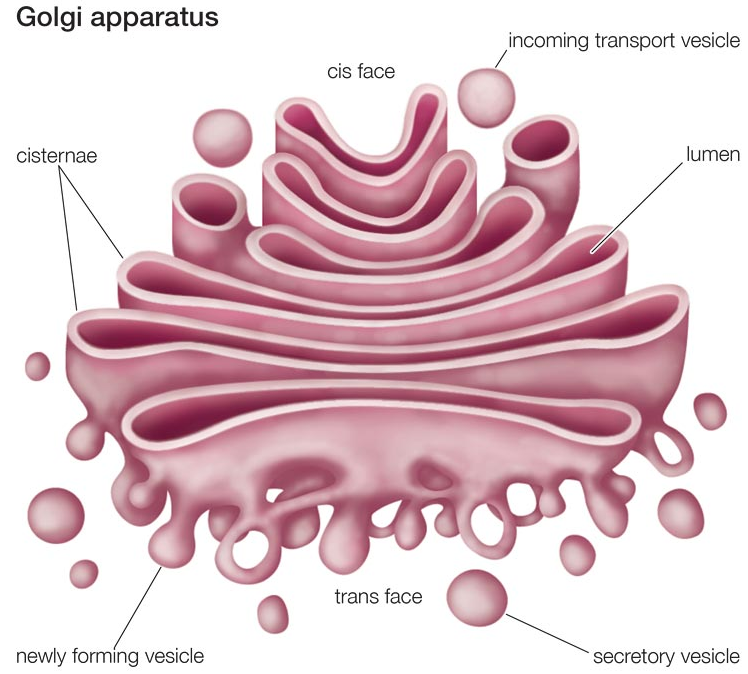
  1. Golgi apparatus consists of a set of membrane-bounded, fluid filled vesicles, vacuoles and flattened cisternae. Cisternae are usually stacked together (placed one above the other) in parallel rows. Golgi apparatus exists as an extensive network near the nucleus in the animal cells. However, the plant cells contain many freely distributed subunits of Golgi apparatus, called dictyosomes.
The Golgi apparatus arises from the membrane of the smooth endoplasmic reticulum, which in turn originates from the rough endoplasmic reticulum.
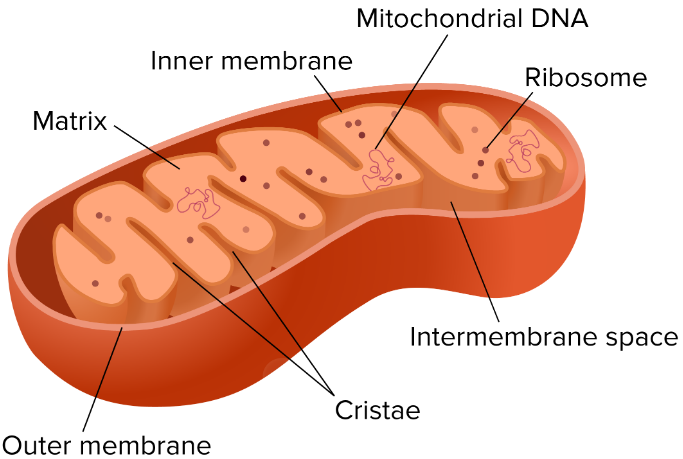
  1. The mitochondria are tiny bodies of varying shapes and size. Each mitochondria is bounded by a double membrane envelope. Outer membrane is porous. The inner membrane is thrown into folds. These folds are called cristae and are studded with small rounded bodies known as $F_1$ particles or oxysomes. The interior cavity of the mitochondria is filled with a proteinaceous matrix which contains a few small-sized ribosomes, a circular DNA molecule and phosphate granules. Mitochondria are sites of cellular respiration.

Need a full question paper?

Generate a complete, print-ready paper with questions like this in minutes — across 16+ boards, with answer keys.
Start Generating Free

Similar questions

Classify connective tissue and give one example of each type.
  1. Draw a neat diagram of Hydra.
  2. Label mesoglea and gastrovascular cavity.
  3. Name the group of animals it belongs to.
  4. Name one species of this group that lives in colonies.
How bee colony works? What values can be seen in the organization of bee colony?
Write down four main characters of angiosperms.
Write an essay on crop protection management.
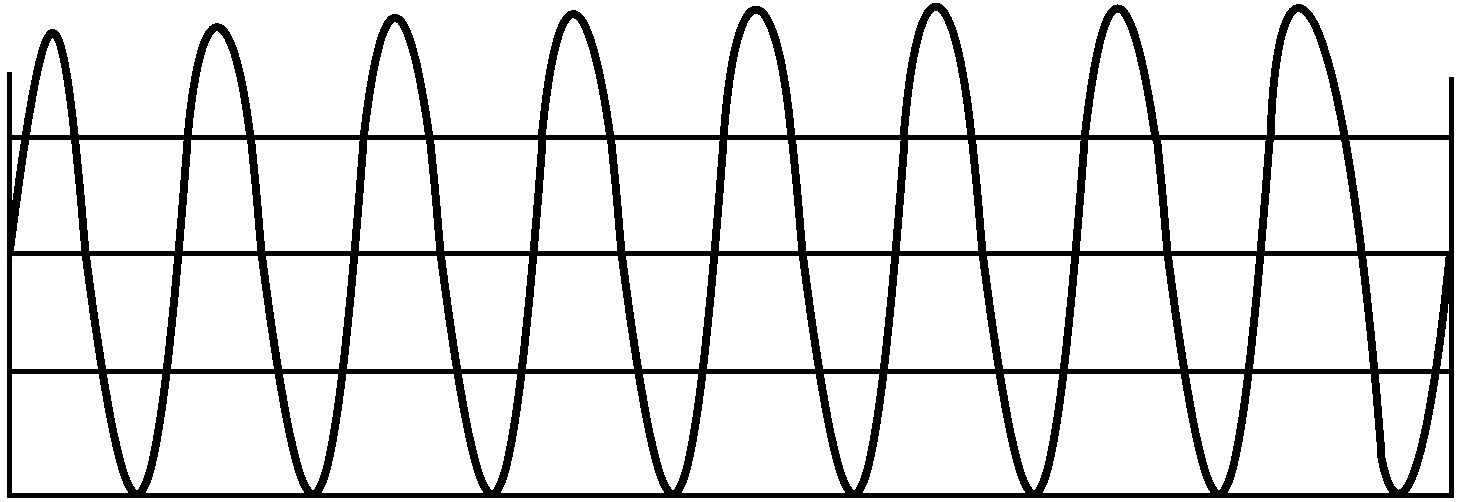
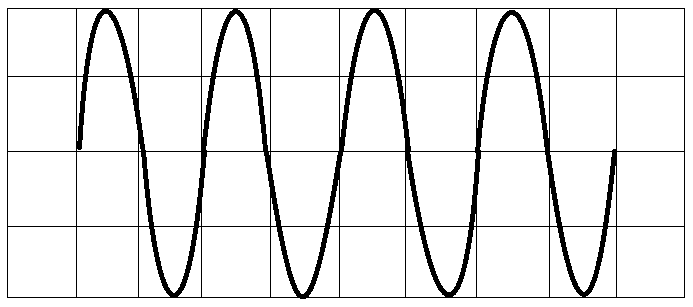
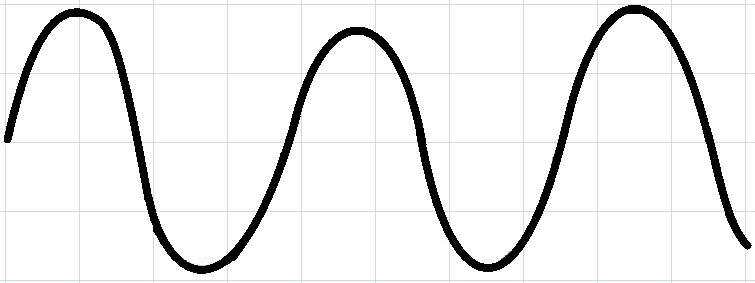
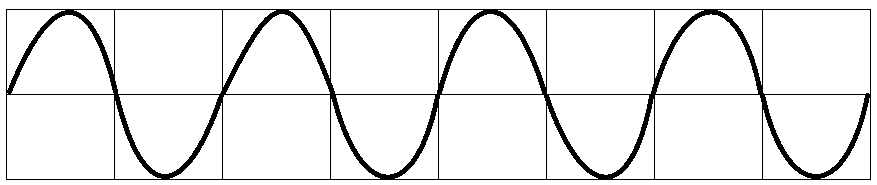
Consider the following sound waves marked $A, B, C$ and $D:$
  1. Which two waves represent sounds of the same loudness but different pitch$?$
  1. Which two waves represent sounds of the same frequency but different loudness?
  1. State whether all these sound waves have been produced by the same vibrating body or different vibrating bodies?
  1. Which vibrating body/bodies could have generated the sound waves shown here$?$
Give two examples each of longitudinal waves and transverse waves.
The weight of any person on the moon is about 1/6 times that on the earth. He can lift a mass of 15 kg on the earth. What will be the maximum mass, which can be lifted by the same force applied by the person on the moon?

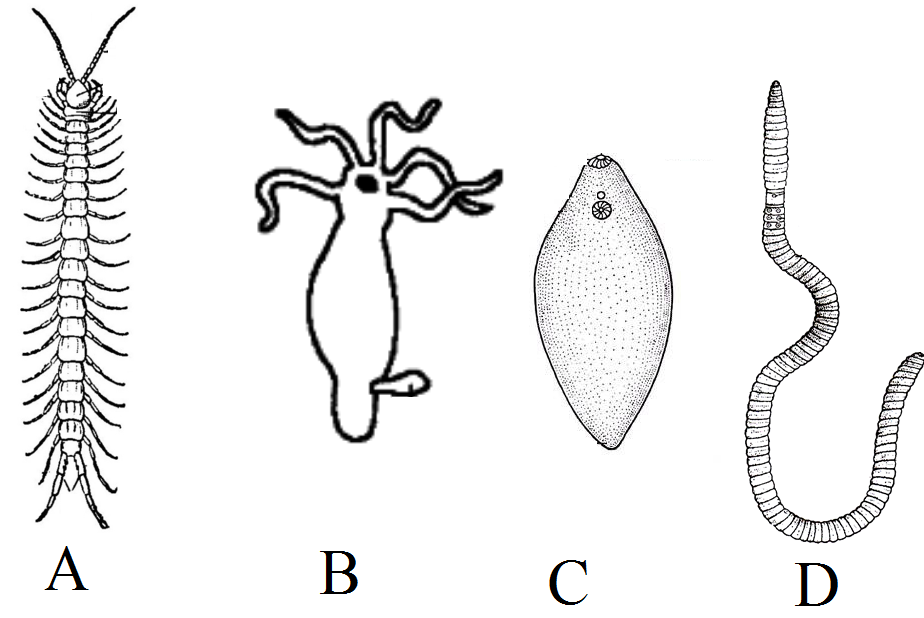
  1. Identify figure $A$ to $D.$
  2. Which one of them is $(i)$ diplobalstic; $(ii)$ Coelomate$?$
  3. Which triplobalstic animal is $(i)$ Acoelomate; $(ii)$ Coelomate$?$
  4. Which one belong to phylum $(i)$ Cnidaria; $(ii)$ Platyhelminthes; $(iii)$ Annelids; $(iv)$ Arthropoda$?$
  5. Which one of them has $(i)$ Organ level organization$?\ (ii)$ Organ system level organization$?$
  6. Which one of them has excretory organs in the form of $(i)$ Flame cells; $(ii)$ Nephridia$?$
  7. Which one of them has trachea as the respiratory organ$?$
Discuss:
  1. Principles of treatment.
  2. Vaccination.