Question
Classify connective tissue and give one example of each type.

Answer

The connective tissue is specialized to connect and anchor various body organs.
There are five types of connective tissues:
  1. Areolar: This tissue is a loose and cellular connective tissue. Its matrix consists of white collagen fibre and yellow elastic fibre. It joins skin to muscles, fills spaces inside organs and is found around muscles, blood vessels and nerves.
  2. Dense Regular Connective tissue: It is fibrous connective tissue having densely packed fibres and cells. It is the principal component of tendons, ligaments and aponeuroses.
  3. Adipose tissue: It is an aggregation of fat cells or adipocytes. The fat cells are arranged into lobules separated by partitions of collagen and elastin fibres. These are found abundant below the skin, between the internal organs and in yellow bone marrow.
  4. Skeletal tissue: It is a supporting tissue which includes cartilage and bone. Both these tissues form the endoskeleton of a vertebrate body. Cartilage is located in ear pinna, nose tip, epiglottis etc. Bone forms the endoskeleton in human beings and provides shape to the body.
  5. Fluid tissue: It links the different parts of the body and maintains continuity in the body. It includes blood and lymph.

Need a full question paper?

Generate a complete, print-ready paper with questions like this in minutes — across 16+ boards, with answer keys.

Start Generating Free

Similar questions

Describe the characteristics used in hierarchial classification of organisms.
An electron moving with a velocity of $5 \times 104m s^{-1}$ enters into a uniform electric field and acquires a uniform acceleration of $104m s^{–2}$ in the direction of its initial motion. Calculate the time in which the electron would acquire a velocity double of its initial velocity. How much distance the electron would cover in this time?
How is an ion different from an atom? How is cation different from anion?
A truck of mass $500\ kg$ moving at $4\ m/s$ collides with another truck of mass $1500\ kg$ moving in the same direction at $2\ m/s$. What is their common velocity just after the collision if they move off together$?$
i. Suppose the mass of the earth somehow increases by $10 \%$ without any change in its size. What would happen to your weight?
ii. Suppose the radius of the earth becomes twice of its present radius without any change in its mass. What will happen to your weight?
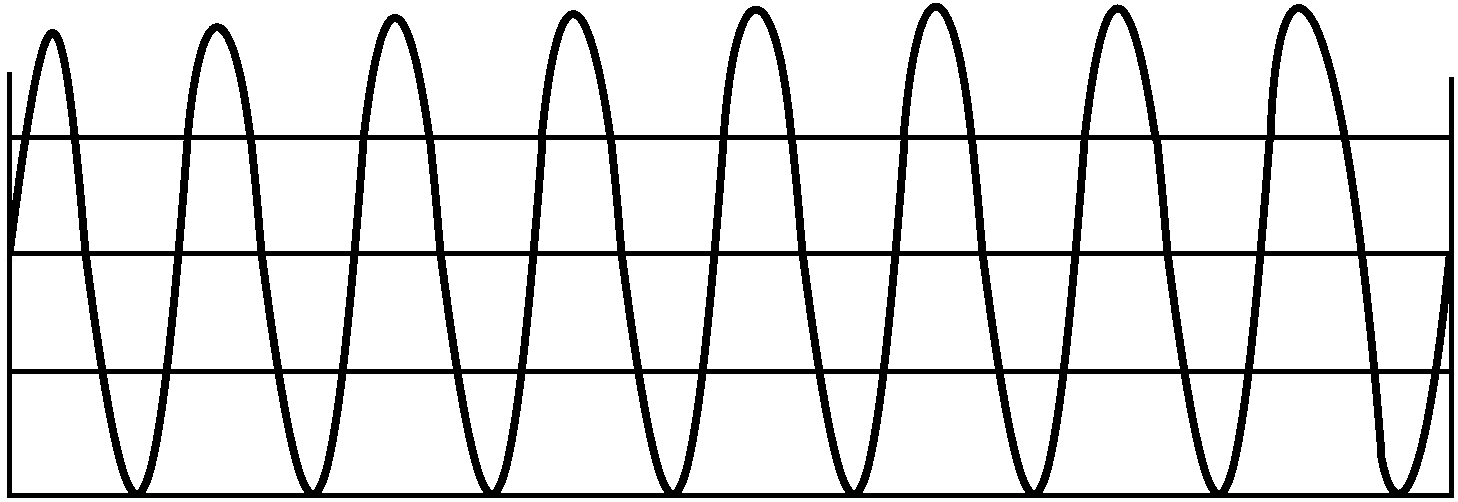
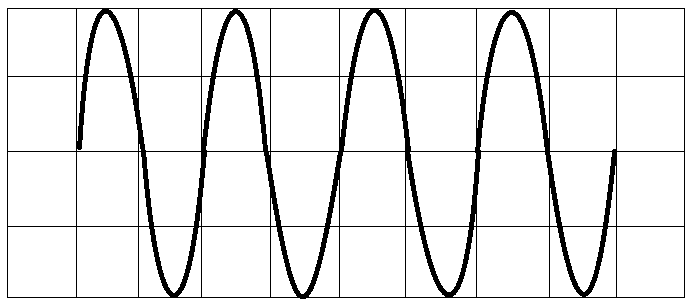
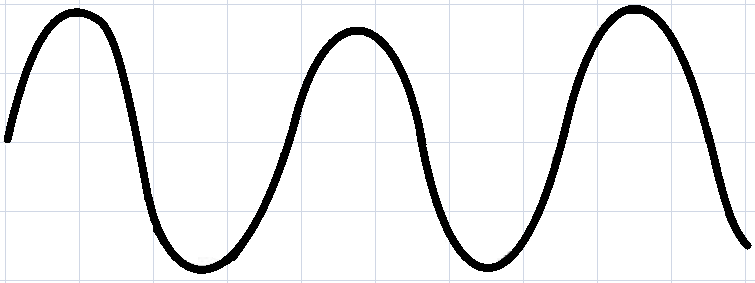
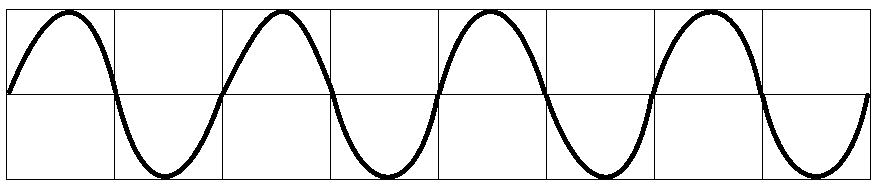
Consider the following sound waves marked $A, B, C$ and $D:$
  1. Which two waves represent sounds of the same loudness but different pitch$?$
  1. Which two waves represent sounds of the same frequency but different loudness?
  1. State whether all these sound waves have been produced by the same vibrating body or different vibrating bodies?
  1. Which vibrating body/bodies could have generated the sound waves shown here?
There are four substances $W, X, Y$ and $Z.$ The substance $W$ is a dark violet solid having diatomic molecules. A solution of $W$ in alcohol is used as a common antiseptic $C.$ The substance $X$ is a white solid which is usually recovered from sea water on a large scale. The substance $Y$ is a white solid which is insoluble in water and used in the form of small balls for the safe storage of woollen clothes. The substance $Z$ is a yet another white solid which is used in making commonly used dry cells.
  1. Name $(i) W (ii) X (iii) Y$ and $(iv) Z.$
  2. Out of $W, X, Y$ and $Z,$ which substance/ substances can undergo sublimation$?$
  3. Which substances organic in nature$?$
  4. What is the name of substance $C?$
  5. Which substance belongs to the halogen family$?$
A ball of mass $200g$ falls from a height of $5$ metres. What is its kinetic energy when it just reaches the ground$? (8 = 9.8m/s$).
All the living organisms are basically made up of $C, N, S, P, H$ and $O$. How do they enter the living forms? Discuss.