Question
Write short notes on:
  1. Mitochondria.
  2. Plastids.

Answer

  1. Mitochondria: The mitochondria are tiny bodies of varying shapes and size. Each mitochondria is bounded by a double membrane envelope. Outer membrane is porous. The inner membrane is thrown into folds. These folds are called cristae and are studded with small rounded bodies known as $F_1$ particles or oxysomes. The interior cavity of the mitochondria is filled with a proteinaceous matrix which contains a few small-sized ribosomes, a circular $DNA$ molecule and phosphate granules. Mitochondria are sites of cellular respiration.
  2. Plastids: Plastids occur in most plant cells and are absent in animal cells. They have their own genome and ribosomes. There are three types of plastids: chromoplasts, chloroplasts and leucoplasts.

Need a full question paper?

Generate a complete, print-ready paper with questions like this in minutes — across 16+ boards, with answer keys.

Start Generating Free

Similar questions

Iron filings and sulphur were mixed together and divided into two parts, $A$ and $B$. Part $A$ was heated strongly while part $B$ was not heated. Dilute hydrochloric acid was added to both the parts and evolution of gas was seen in both the cases. How will you identify the gases evolved?
Give an illustrated account of nucleus.
Show by using the graphical method that:

$\text{s}=\text{ut}+\frac{1}{2}\text{at}^2$

where the symbols have their usual meanings.
Name the following:
  1. Smallest cell organelle.
  2. Largest cell organelle.
  3. ER studded with ribosomes.
  4. Functional segments of the DNA molecule.

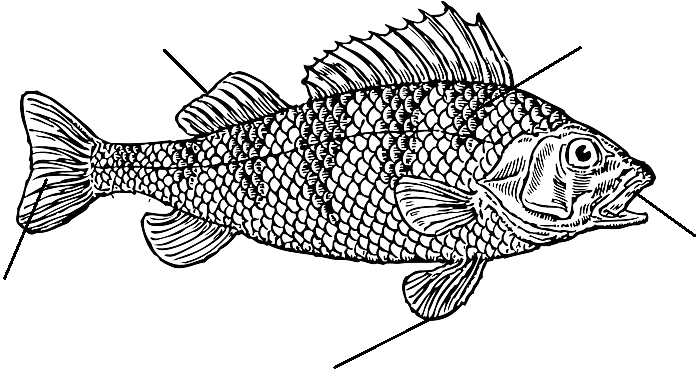
  1. Identify the figure and write down its class.
  2. Label $A, B, C,$ and $D.$
  3. What if its respiratory organs$?$
  4. What type of adaptation this creature has$?$
  5. What type of endoskeleton it has$?$
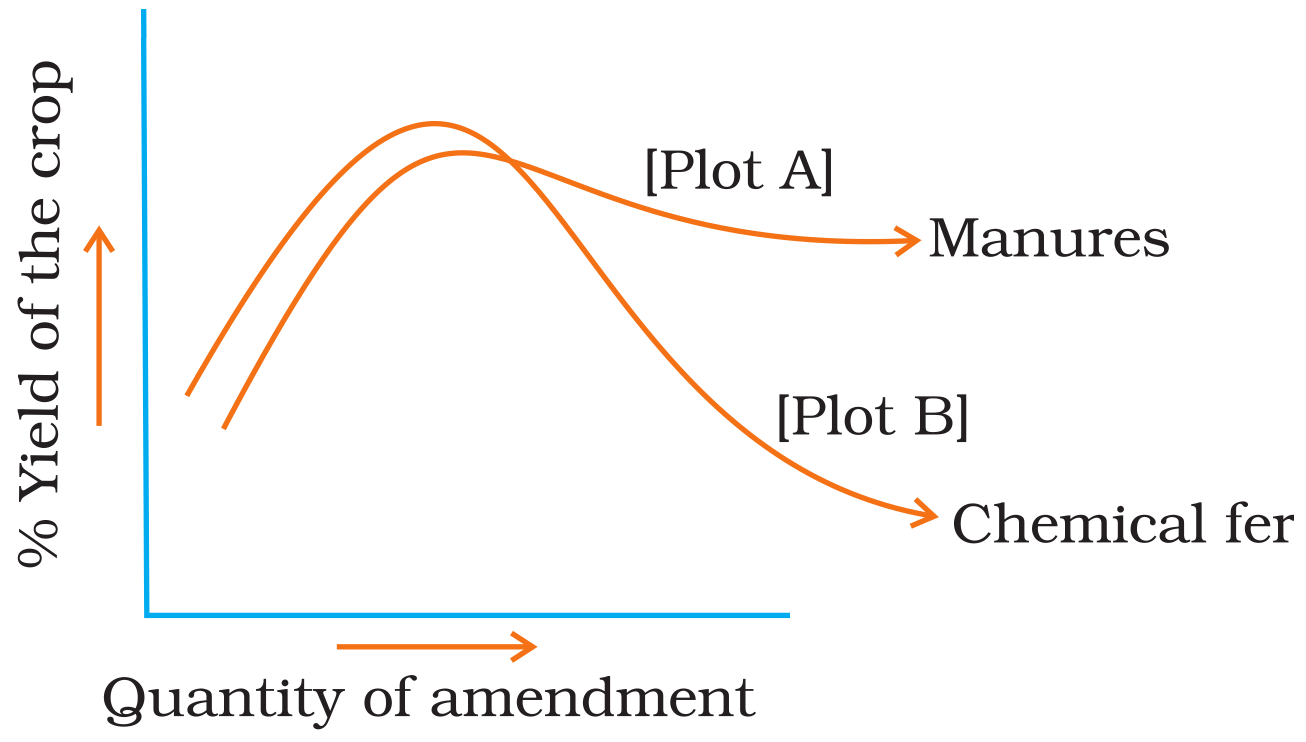
Figure shows the two crop fields $[$Plots $A$ and $B]$ have been treated by manures and chemical fertilizers respectively, keeping other environmental factors same. Observe the graph and answer the following questions.
  1. Why does plot $B$ show sudden increase and then gradual decrease in yield$?$
  2. Why is the highest peak in plot $A$ graph slightly delayed$?$
  3. What is the reason for the different pattern of the two graphs$?$
Differentiate between parenchyma, collenchyma and sclerenchyma on the basis of their cell wall.
Explain giving reasons: Social harmony and good economic conditions are necessary for good health.
i. Under which category of mixtures will you classify alloys and why?
ii. Whether a solution is always liquid or not. Comment.
iii. Can a solution be heterogeneous?
Three different vibrating objects produce three types of sounds $X, Y$ and $Z.$ Sounds $X$ and $Y$ cannot be heard by a man having normal range of hearing but sound $Z$ can be heard easily. The sound $X$ is used in hospitals to break kidney stones of a patient into fine grains whioch then get flushed out with urine. The sound $Y$ is similar to that which is produced during an earthquake before the main shock wave is generated.
  1. What type of sounds are $(i) X, (ii) Y,$ and $(iii) Z?$
  2. Name one device which can produce sound like $X.$
  3. Name one device in a science laboratory which can produce sound like $Y.$
  4. Name one device in our homes which can produce sound like $Z.$
  5. What is the frequency range of sounds like $Z?$