Question
Write short notes on:
(1) Distillation (2) Sublimation (3) Magnetic separation (4) Sedimentation (5) Filtration (6) Evaporation
(1) Distillation (2) Sublimation (3) Magnetic separation (4) Sedimentation (5) Filtration (6) Evaporation
2. Sublimation: It is a process in which some solids on heating are transformed directly to vapour without passing through the liquid state, (i) It is used to separate a mixture of solids. The vapours are cooled separately, (ii) Used to separate ammonium chloride, iodine, camphor and sulphur from any mixture.
3. Magnetic separation: A mixture with iron fillings as one of the components can be separated using magnet to attract the iron particles away from the mixture.
4. Sedimentation: (i) It is a process of separating an insoluble solid from a liquid in which it is suspended, by allowing it to settle to the bottom of the container, e.g. Muddy water contains heavier particles like sand and soil, (ii) Leave this muddy water undisturbed for some time, (iii) The heavier soil and sand particles settle down and the clear upper water is poured out by decantation.
5. Filtration: It is used for separating insoluble solids from a liquid, e.g. mixture of chalk and water is poured through a filter paper in a funnel while the water gets collected in the beaker below, chalk is retained in the filter paper.
6. Evaporation: It is used for recovering dissolved solid substances from solutions by evaporation e.g. sugar can be recovered from sugar-water.
Generate a complete, print-ready paper with questions like this in minutes — across 16+ boards, with answer keys.
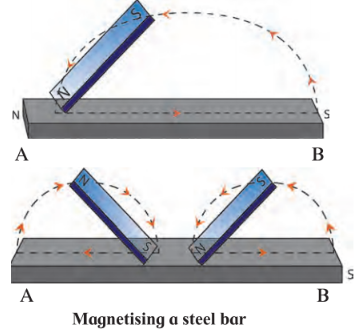
1.Name the methods shown.
2.Give 2 points of difference between the methods.
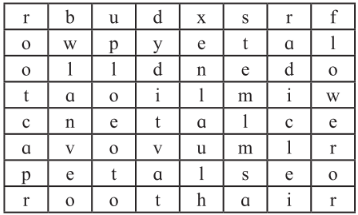
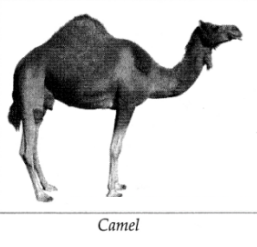
1.What habitat does this camel live in?
2.State any 2 of its body adaptations to survive in desert?
3.How does a camel protect itself from sand storms or winds carrying sand?