Question
- Write structures of different isomeric amines corresponding to the molecular formula, $C_4H_{11}N.$
- Write IUPAC names of all the isomers.
- What type of isomerism is exhibited by different pairs of amines?
| Isomers | IUPAC Name | |
| 1. | $\text{CH}_3-\text{CH}_2-\text{CH}_2-\text{CH}_2-\text{NH}_2$ | Butan$-1$ amine or butanamine |
| 2. | $ \ \ \ \ \ \ \ \ \ \ \ \ \ \ \ \ \ \ \ \ \ \ \ \ \text{NH}_2\\ \ \ \ \ \ \ \ \ \ \ \ \ \ \ \ \ \ \ \ \ \ \ \ \ \ \ \ \ |\\\text{CH}_3-\text{CH}_2-\text{CH}-\text{CH}_3$ | Butan $- 2 -$ amine. |
| 3. | $ \ \ \ \ \ \ \ \ \ \ \ \ \ \ \text{CH}_3\\ \ \ \ \ \ \ \ \ \ \ \ \ \ \ \ \ |\\\text{CH}_3-\text{CH}-\text{CH}_2-\text{NH}_2$ | $2 -$ Methylpropanamine |
| 4. | $ \ \ \ \ \ \ \ \ \ \ \text{CH}_3\\ \ \ \ \ \ \ \ \ \ \ \ \ \ |\\\text{CH}_3-\text{C}-\text{NH}_2\\ \ \ \ \ \ \ \ \ \ \ \ \ \ \ |\\ \ \ \ \ \ \ \ \ \ \ \ \text{CH}_3$ | $2 -$ Methylpropan$ - 2 -$ amine |
| 5. | $\text{CH}_3-\text{CH}_2-\text{CH}_2-\text{NH}-\text{CH}_2$ | $N -$ Ethylethanamine |
| 6. | $\text{CH}_3-\text{CH}_2-\text{CH}_2-\text{NH}-\text{CH}_3$ | $N -$ Methylpropanamine |
| 7. | $ \ \ \ \ \ \ \ \ \ \ \ \ \ \ \text{CH}_3\\ \ \ \ \ \ \ \ \ \ \ \ \ \ \ \ \ |\\\text{CH}_3-\text{CH}-\text{NH}-\text{CH}_3$ | $N -$ Methylpropan $- 2 -$ amine |
| 8. | $ \ \ \ \ \ \ \ \ \ \ \ \ \ \ \ \ \ \ \ \ \ \ \text{CH}_3\\ \ \ \ \ \ \ \ \ \ \ \ \ \ \ \ \ \ \ \ \ \ \ \ \ \ \ |\\\text{CH}_3-\text{CH}_2-\text{N}-\text{CH}_3$ | $N, N - $Dimethylethanamine |
Generate a complete, print-ready paper with questions like this in minutes — across 16+ boards, with answer keys.
|
Column I
|
|
Column II
|
|
|
(i)
|
$CH_3-o-CH_3$
|
(a)
|
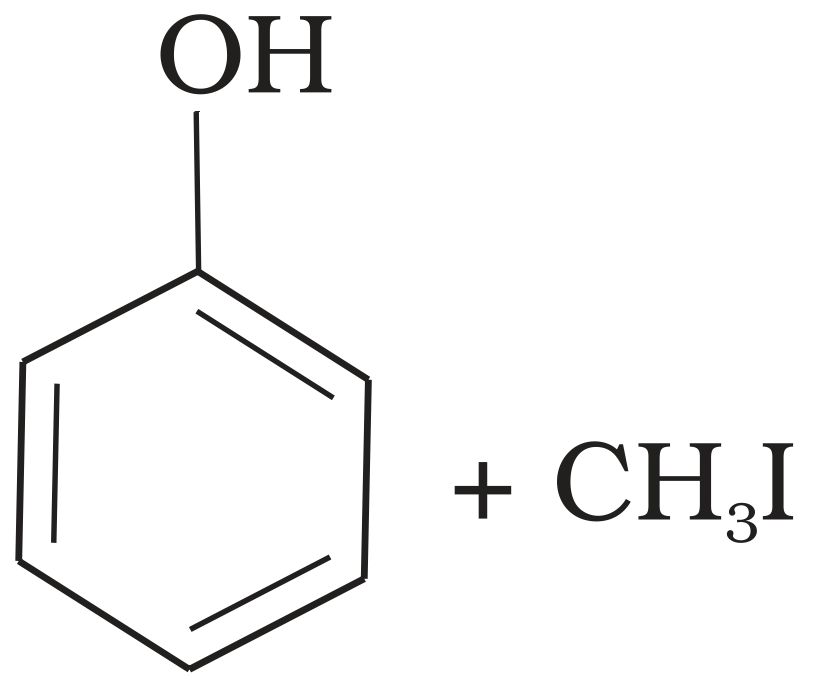 |
|
(ii)
|
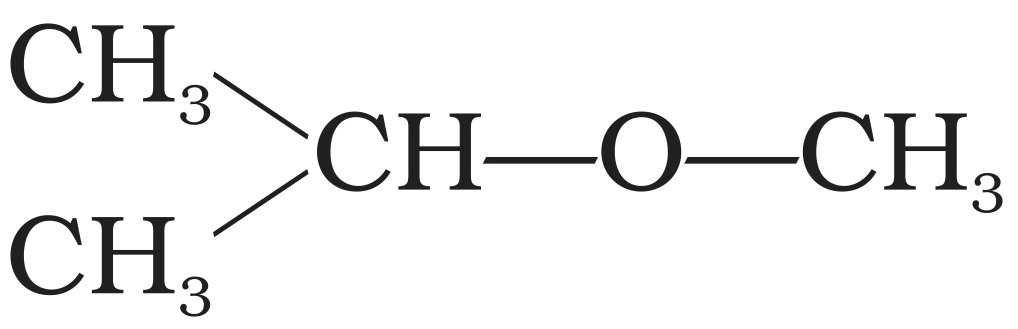 |
(b)
|
$\ \ \ \ \ \ \ \ \ \ \ \ \ \text{CH}_3 \\ \ \ \ \ \ \ \ \ \ \ \ \ \ \ | \\ \text{CH}_3-\text{C}-\text{I}+\text{CH}_3\text{OH} \\ \ \ \ \ \ \ \ \ \ \ \ \ \ \ | \\ \ \ \ \ \ \ \ \ \ \ \ \ \ \text{CH}_3$
|
|
(iii)
|
$\ \ \ \ \ \ \ \ \ \ \ \ \ \text{CH}_3 \\ \ \ \ \ \ \ \ \ \ \ \ \ \ \ | \\ \text{H}_3\text{C}-\text{C}-\text{O}-\text{CH}_3 \\ \ \ \ \ \ \ \ \ \ \ \ \ \ \ | \\ \ \ \ \ \ \ \ \ \ \ \ \ \ \text{CH}_3$
|
(c)
|
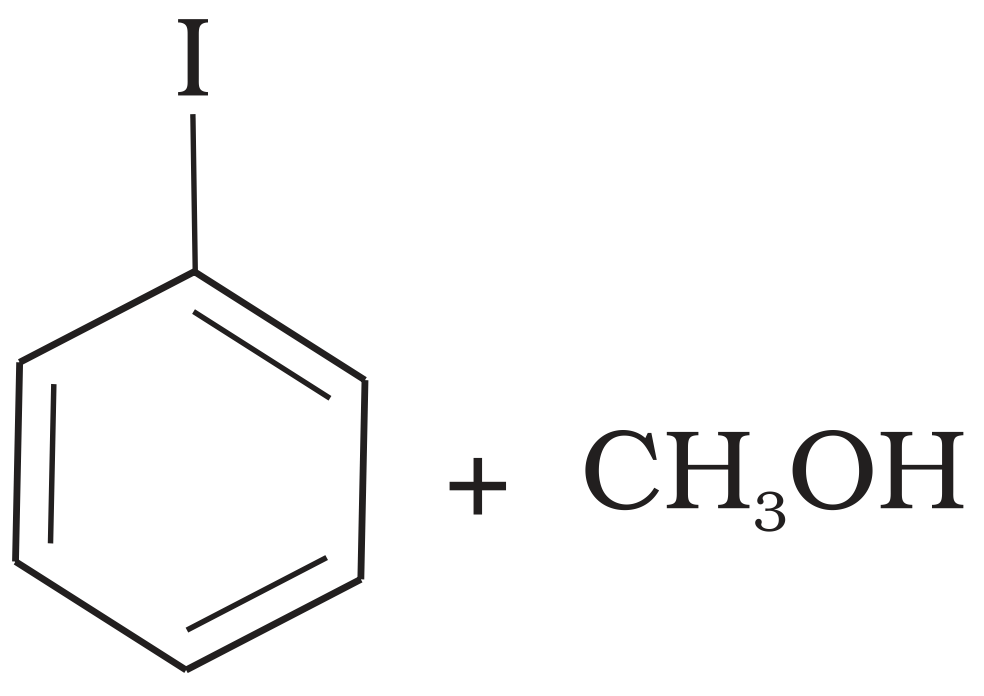 |
|
(iv)
|
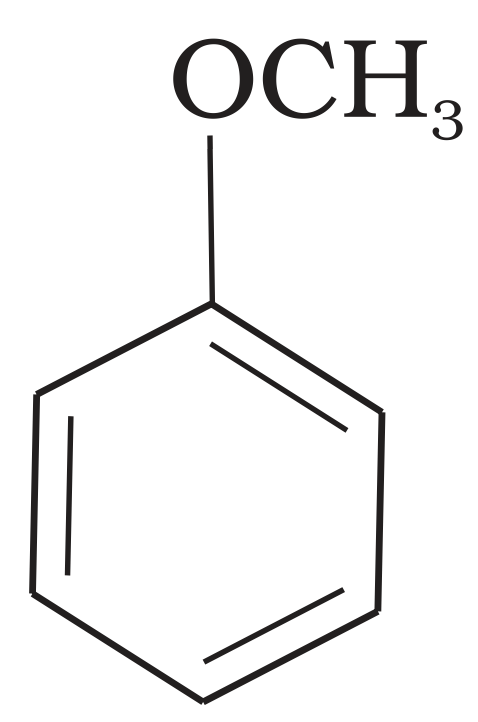 |
(d)
|
$CH_3-OH + CH_3-I$
|
|
|
|
(e)
|
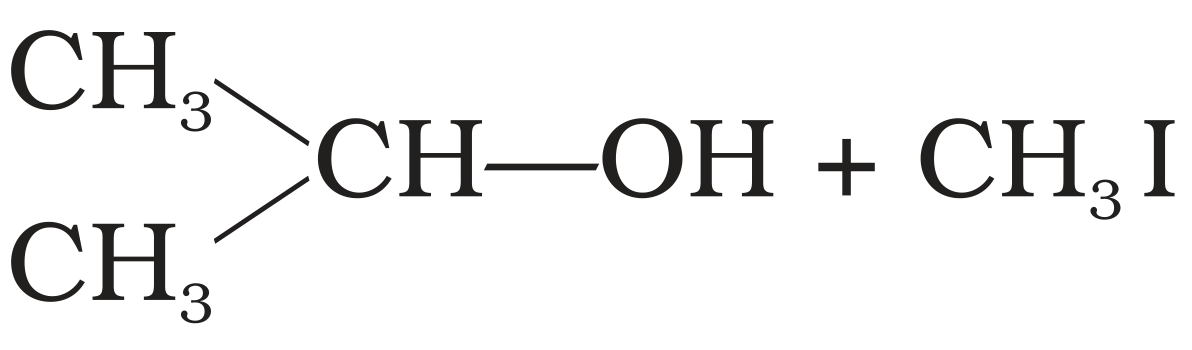 |
|
|
|
(f)
|
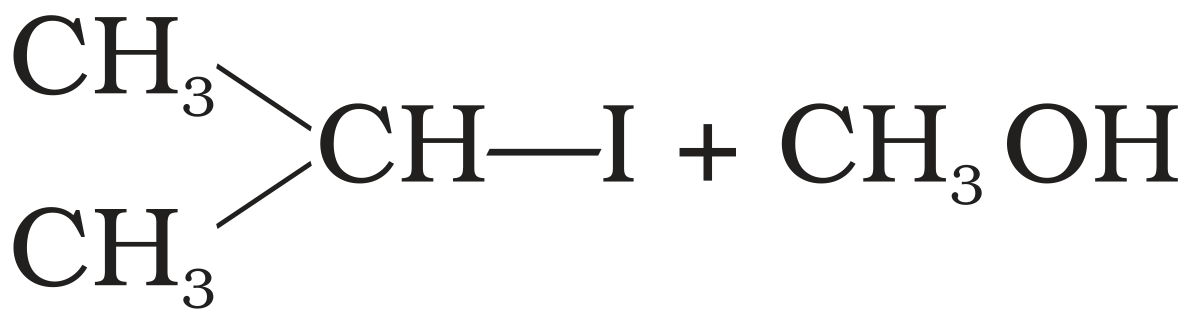 |
|
|
|
(g)
|
$\ \ \ \ \ \ \ \ \ \ \ \ \ \text{CH}_3 \\ \ \ \ \ \ \ \ \ \ \ \ \ \ \ | \\ \text{CH}_3-\text{C}-\text{OH}+\text{CH}_3\text{I} \\ \ \ \ \ \ \ \ \ \ \ \ \ \ \ | \\ \ \ \ \ \ \ \ \ \ \ \ \ \ \text{CH}_3$
|