Question
Write the basic features of the photon picture of electromagnetic radiation on which Einstein's photoelectric equation is based.

Answer

The basic features of the photon picture of e.m. radiation are as follows:
i. Light is composed of discrete packets of energy called quanta or photons.
ii. Each photon carries an energy $E (=h \nu)$ and momentum $p (= h / \lambda)$, which depend on the frequency $\nu$ of the incident radiation and not on its intensity.
iii. During the collision of a photon with an electron, the total energy of the photon gets absorbed by the electron.
iv. Photoelectric emission from the metal surface occurs due to the absorption of a photon by an electron.

Need a full question paper?

Generate a complete, print-ready paper with questions like this in minutes — across 16+ boards, with answer keys.
Start Generating Free

Similar questions

A $40\ cm$ wire having a mass of $3.2g$ is stretched between two fixed supports $40.05\ cm$ apart. In its fundamental mode, the wire vibrates at $220\ Hz$. If the area of cross-section of the wire is $1.0mm^2$, find its Young's modulus.
Establish a relationship between electric current and drift velocity. Draw the direction of electron flowing in a circuit by drawing an electric circuit.
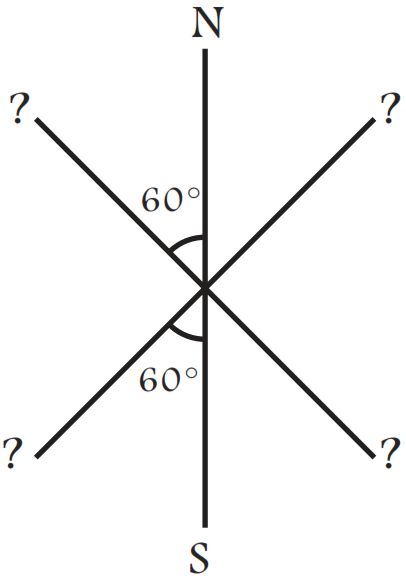
Three identical bar magnets are rivetted together at centre in the same plane as shown in Fig. This system is placed at rest in a slowly varying magnetic field. It is found that the system of magnets does not show any motion. The north-south poles of one magnet is shown in the Fig. Determine the poles of the remaining two.
What is an electric cell? Describe its construction. How many types of electric cells are there? By defining electromotive force of a cell, establish an expression for internal resistance of cell in any circuit and state factors on which internal resistance depends.
A person travels on a spaceship moving at a speed of $\frac{5\text{c}}{13}$
  1. Find the time interval calculated by him between the consecutive birthday celebrations of his friend on the earth.
  2. Find the time interval calculated by the friend on the earth between the consecutive birthday celebrations of the traveller.
A concave mirror has a focal length of $20\ cm$. Find the position or positions of an object for which the imagesize is double of the object$-$size.
In an accelerator experiment on high$-$energy collisions of electrons with positrons, a certain event is interpreted as annihilation of an electron$-$positron pair of total energy $10.2\ BeV$ into two $γ-$rays of equal energy. What is the wavelength associated with each $γ-$ray? $(1\ BeV = 10^9\ eV)$.
Suppose A and B in the previous problem change their positions in such a way that the line joining them becomes perpendicular to the direction of wind while maintaining the separation x. What will be the time lag B finds between seeing and hearing the drum beating by A?
(a) Which of the following can be a source for origin of electromagnetic waves? Give reason.
(i) A charge moving with constant speed
(ii) Charge undergoing circular motion
(iii) Fixed charge.
(b) Name that part of electromagnetic spectrum with which waves of frequency
(i) $10^{20} Hz$,
(ii) $10^9 Hz$ associated.
What physical quantity is the same for $X-$rays of wavelength $10^{-10} m,$ red light of wavelength $6800 \mathring A$ and radiowaves of wavelength $500m$?