Question
  1. Write the basic nuclear process involved in the emission of$\beta^{+}$ in a symbolic form, by a radioactive nuclear.
  2. in the reactions given below:
  1. $^{11}_{6}\text{C}\rightarrow ^{\text{z}}_{\text{y}}\text{B} + \text{x} + \text{v}$
  2. $^{12}_{6}\text{C}\rightarrow ^{12}_{6}\text{C}\rightarrow^{20}_{\text{a}}\text{Ne} + ^{c}_{b}\text{He}$

Find the values of x,y, and z and a,b and c.
Answer

  1. Basic nuclear reaction.

$\text{P}\rightarrow\text{n} + \text{e}^{+} + \text{v}$

  1.  
  1. $\text{x} = \beta^{+}/^{o}_{1}\text{e} , \text{y} = 5 , \text{z} =11 $
  2. $\text{a} = 10 , \text{b}= 2 , \text{c} = 4.$

Need a full question paper?

Generate a complete, print-ready paper with questions like this in minutes — across 16+ boards, with answer keys.

Start Generating Free

Similar questions

A 2.00m long rope, having a mass of 80g, is fixed at one end and is tied to a light string at the other end. The tension in the string is 256N.
  1. Find the frequencies of the fundamental and the first two overtones.
  2. Find the wavelength in the fundamental and the first two overtones.
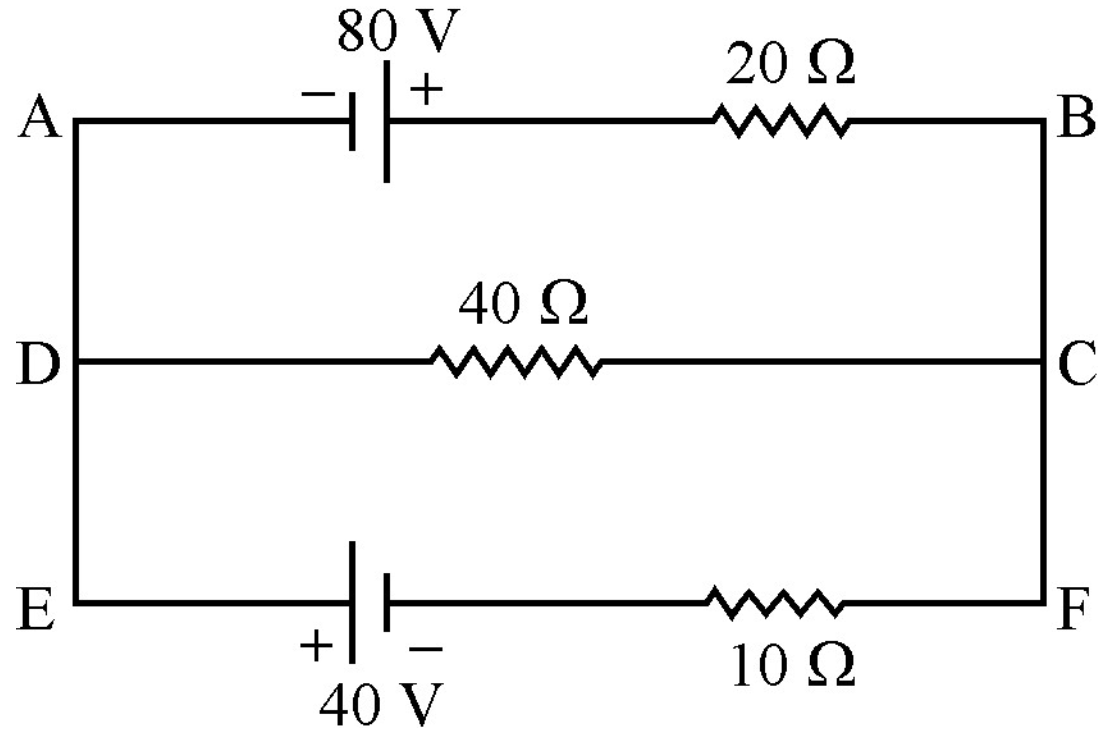
Using Kirchhoff’s rules, calculate the current through the $40\Omega$ and $20\Omega$ resistors in the following circuit:

If a piece of paper is placed at the position of a virtual image of a strong light source, will the paper burn after sufficient time? What happens if the image is real? What happens if the image is real but the source is virtual?
Can an electromagnetic wave be polarised?
Three simple harmonic motions of equal amplitudes A and equal time periods in the same direction combine. The phase of the second motion is 60° ahead of the first and the phase of the third motion is 60° ahead of the second. Find the amplitude of the resultant motion.
A person standing on a platform finds that a train moving with velocity 0.6c takes one second to pass by him. Find:
  1. The length of the train as seen by the person and.
  2. The rest length of the train.
Two large, thin metal plates are parallel and close to each other. On their inner faces, the plates have surface charge densities of opposite signs and of magnitude 17.0 × 10⁻²² C/m2 . What is E:
  1. In the outer region of the first plate,
  2. In the outer region of the second plate, and
  3. Between the plates?
A thin prism is made of a material having refractive indices 1.61 and 1.65 for red and violet light. The dispersive power of the material is 0.07. It is found that a beam of yellow light passing through the prism suffers a minimum deviation of 4.0° in favourable conditions. Calculate the angle of the prism.
Is the colour of 620nm light and 780nm light same? Is the colour of 620nm light and 621nm light same? How many colours are there in white light?
What is the radius of curvature of the parabola traced out by the projectile in the previous problem at a point where the particle velocity makes an angle $\frac{\theta}{2}$ with the horizontal?