Question
Write the differences between mass and weight of an object.

Answer

 
Mass
Weight
1.
The mass of an object is the quantity of matter contained in it.
The weight of an object is the force with which it is attracted towards the centre of the earth.
2.
SI unit of mass is kilogram $(kg).$
SI unit of mass is newton $(N).$
3.
The mass of an object is constant.
The weight of an object is not constant. It changes with the change in acceleration due to gravity.
4.
The mass of an object can never be zero.
The weight of an object can be zero.

Need a full question paper?

Generate a complete, print-ready paper with questions like this in minutes — across 16+ boards, with answer keys.
Start Generating Free

Similar questions


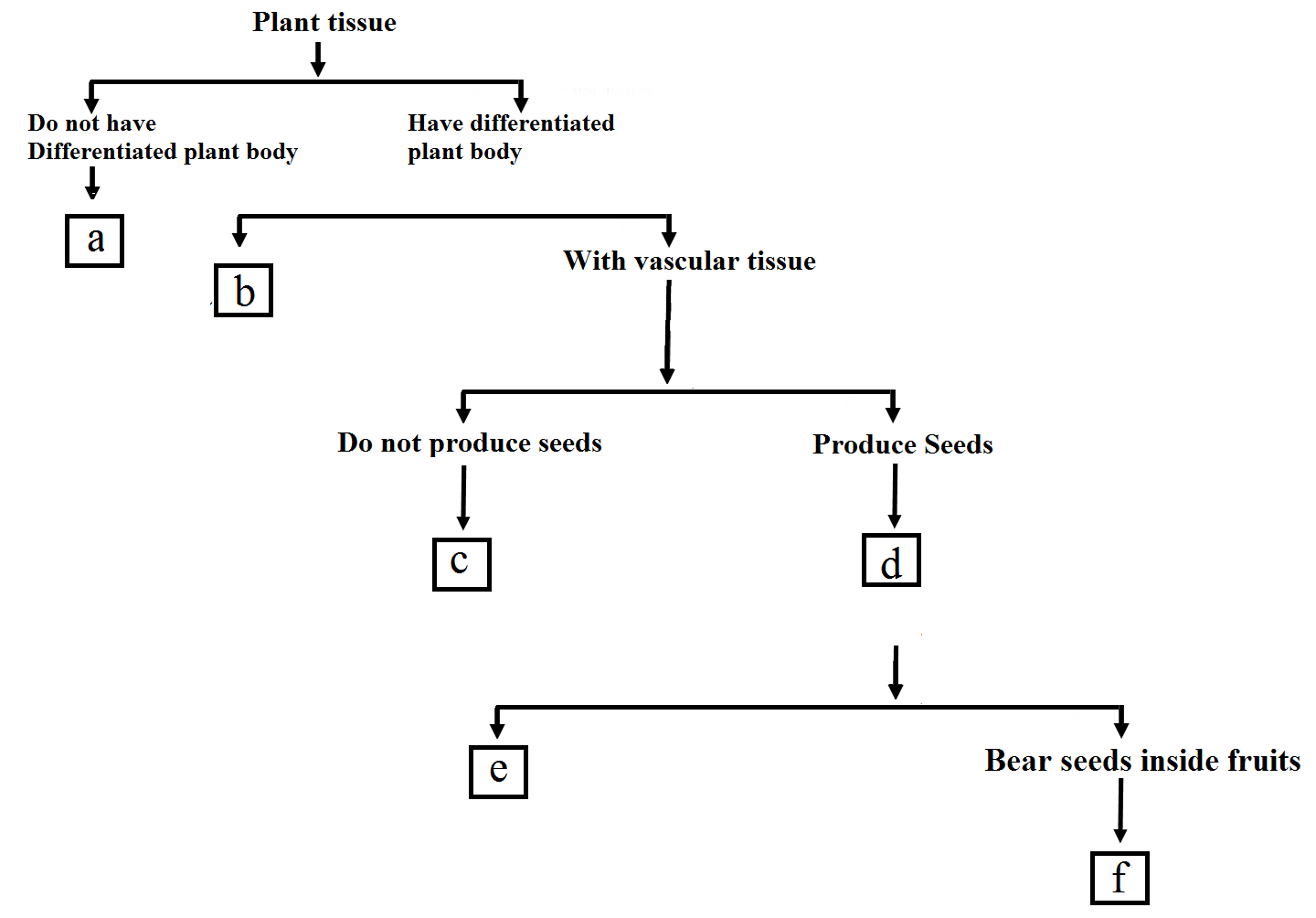
In the given classification scheme fill in the boxes with appropriate plant groups:
Discuss the method of separating a mixture containing chalk powder, iron fillings and naphthalene.
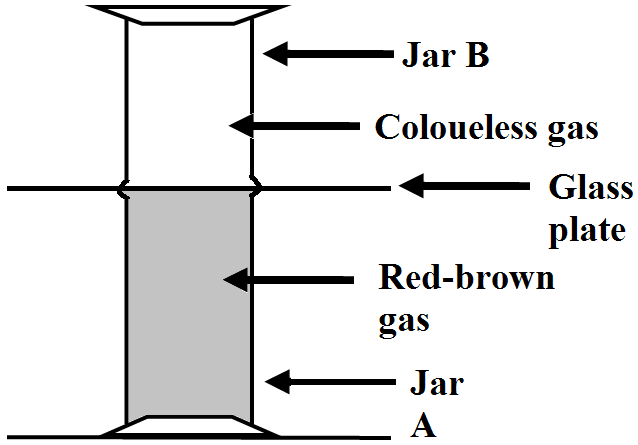
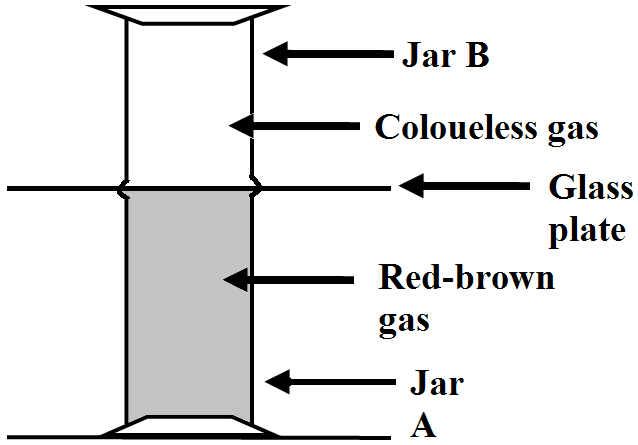
Look at the diagram on the right side. Jar $A$ contains are d-brown gas whereas Jar $B$ contains a colourless gas. The two gas jars are separated by a glass plate placed between them:
  1. What will happen when the glass plate between the two jars is pulled away$?$
  2. What name is given to the phenomenon which takes place$?$
  3. Name the brown gas which could be in jar $A.$
  4. Which is the colorless gas most likely to be present in jar $B?$
  5. Name one coloured solid and one colourless liquid which can show the same phenomenon.
Look at the diagram on the right side. Jar $A$ contains are d-brown gas whereas Jar $B$ contains a colourless gas. The two gas jars are separated by a glass plate placed between them:
  1. What will happen when the glass plate between the two jars is pulled away?
  2. What name is given to the phenomenon which takes place?
  3. Name the brown gas which could be in jar $A$.
  4. Which is the colorless gas most likely to be present in jar $B$?
  5. Name one coloured solid and one colourless liquid which can show the same phenomenon.

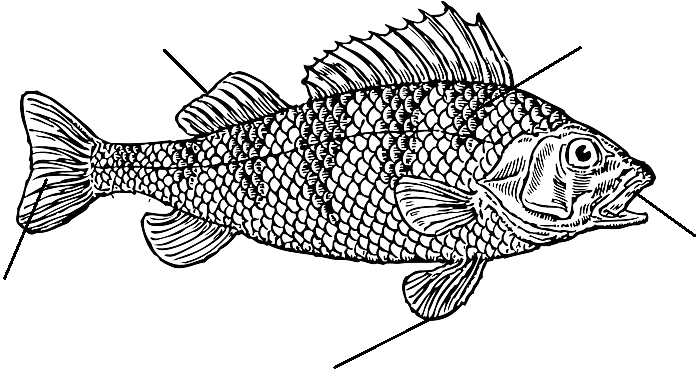
  1. Identify the figure and write down its class.
  2. Label $A, B, C,$ and $D.$
  3. What if its respiratory organs$?$
  4. What type of adaptation this creature has$?$
  5. What type of endoskeleton it has$?$
Discuss:
  1. Principles of treatment.
  2. Vaccination.
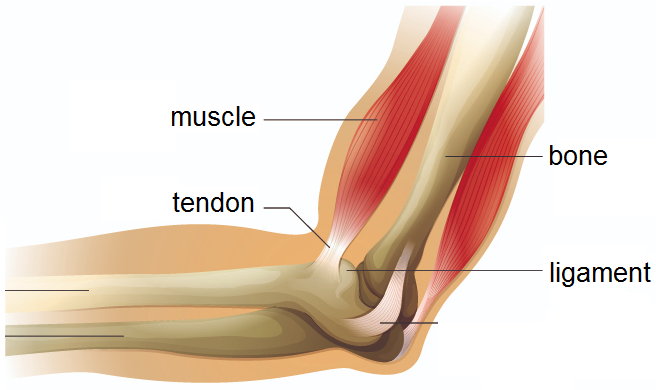
  1. Identify $A, B, C$ and $D.$
  2. Write the functions of $A, B, C$ and $D.$
  3. Write the difference between $A$ and $D.$
State and explain Kepler’s laws of planetary motion. Draw diagrams to illustrate these laws.
Discuss the various methods which are used to control plant diseases.
A car is travelling at $20m/s$ along a road. A child runs out into the road $50m$ ahead and the car driver steps on the brake pedal. What must the car's deceleration be if the car is to stop just before it reaches the child?