Question
Write the Kepler's laws.

Answer

  1. Kepler’s first law: The orbit of a planet is an ellipse with the sun at one of the foci.
  2. Kepler’s second law: The line joining the planet and the sun sweeps equal areas in equal intervals of time.
  3. Kepler’s third law: The square of the orbital period of revolution of a planet around the Sun is directly proportional to the cube of the mean distance of the planet from the Sun.

Need a full question paper?

Generate a complete, print-ready paper with questions like this in minutes — across 16+ boards, with answer keys.

Start Generating Free

Similar questions

Give three examples of each: Diseases endangering the social health.
Define angle of incidence and angle of refraction.
Find the power of a convex lens of focal length 40 cm.
A p.d. of 6V is applied to two resistors of $3 Ω$ and $6 Ω$ connected in parallel. Calculate:
The combined resistance.
The current flowing in the main circuit.
The current flowing in the $3 Ω$ resistor.
Answer the questions based on Modern Periodic table.
(i) On going through the Modern Periodic table (fig 2.1) it is seen that the elements Li, Be, B, C, N, O, F and Ne belong to the period-2. Write down the electronic configuration.
(ii) Is the number of valence electrons same for all these elements?
(iii) Is the number of shell the same in these ?
Displacement reaction
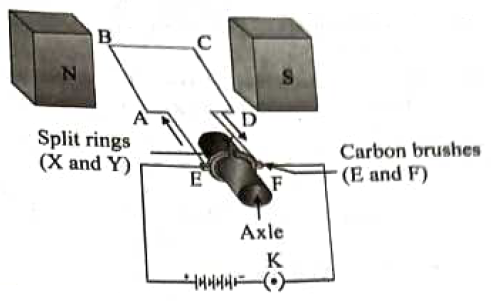
Observe the following diagram and answer the questions glven below :
I. Identify the device shown in the figure.
II. On which rule is the working of the above device based?
iii. Give any two uses of this device.
Image
What is the difference between a reflex action and walking?
Draw a neat labelled diagram : Translation and Translocation
Choose the correct option from the bracket and complete the stanza.
(colour blind, actual, conical, light-sensitive, rodlike, colours)
The retina in our eyes is made up of many _______ cells. These cells are shaped like a rod and like a cone. The _______ cells respond to the intensity of light and give information about the brightness or dimness of the object to the brain. The _______ cells respond to the colour and give information about the colour of the object to the brain. Brain processes all the information received and we see the _______ image of the object. Rod like cells respond to the faint light also but ______ cells do not. Some people lack conical cells responding to certain colours. These persons cannot recognize those colours or cannot distinguish between different ______. These persons are said to be ______.