Question
Write the law of conservation of charge. Give one example.

Answer

The total charge of the electrically isolated system is always conserved.
$\rightarrow$ When bodies are charged by rubbing, there is transfer of electrons from one bod to the other; no new charges are either created or destroyed.
$\rightarrow$ When we rub two bodies, what one body gains in charge the other body lose .
$\rightarrow $ Within an isolated system consisting of many charged bodies, due to interactions among the bodies, charges may get redistributed but remains conserved.
$\rightarrow $ It is not possible to create or destroy net charge carried by any isolated system, although the charge carrying particles may be created or destroyed in a process.
$\rightarrow $ When a neutron turns into a proton and an electron the proton and electron thus created have equal and opposite charges and the total charge is zero before and after the creation.
$\begin{array}{ll} 
& { }_0 n^1 \rightarrow{ }_1 p^1+-{ }_1 e^0 \\
\therefore & 0=+e+(-e)
\end{array}$
$\rightarrow$ Conservation of charge is a universal phenomena.

Need a full question paper?

Generate a complete, print-ready paper with questions like this in minutes — across 16+ boards, with answer keys.
Start Generating Free

Similar questions

Give explanation of linearly pofarized, unpolarized and plane polarized wave.
Define current sensitivity and voltage sensitivity of a galvanometer.
Increasing the current sensitivity may not necessarily increase the voltage sensitivity of a galvanometer. Justify.
As the wavelength is increased from violet to red, the luminosity:
  1. Continuously increases.
  2. Continuously decreases.
  3. Increases then decreases.
  4. Decreases then increases.
N small conducting liquid droplets, each of radius r, are charged to a potential V each. These droplets coalesce to form a single large drop without any charge leakage. Find the potential of the large drop.
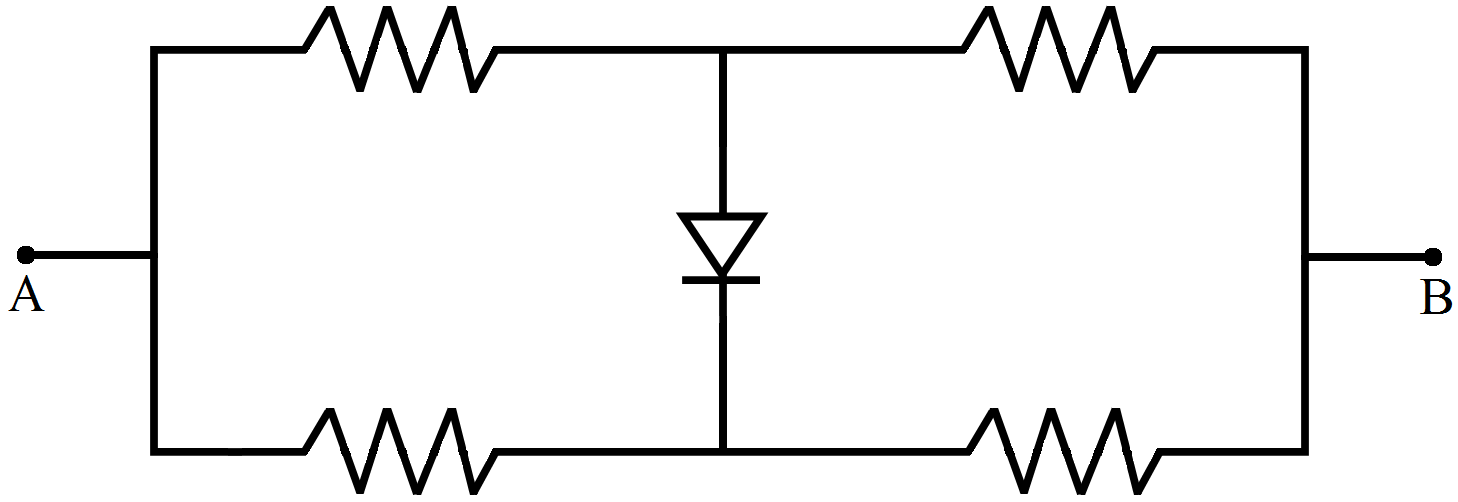
Each of the resistances shown in figure. has a value of $20\Omega.$ Find the equivalent resistance between A and B. Does it depend on whether the point A or B is at higher potential?

In a long straight wire, a current of 5 A is flowing. How much magnetic field will be produced at a distance of 10 cm from it? Which rule will give the direction of the field?
Define the phenomenon of total internal reflection.
Consider a gold nucleus to be a sphere of radius 6.9 fermi in which protons and neutrons are distributed. Find the force of repulsion between two protons situated at largest separation. Why do these protons not fly apart under this repulsion?
When are two objects just resolved? Explain. How can the resolving power of a compound microscope be increased? Use relevant formula to support your answer.
Write the formula for the potential energy of a dipole in an electric field and find its minimum and maximum values.