Questions

2 Marks Questions

Take a timed test

12 questions · self-marked practice — reveal the answer and mark yourself.

Question 12 Marks
Boron has two stable isotopes, ${ }_5^{10} B$ and ${ }_5^{11} B$. Their respective masses are $10.01294 u$ and $11.00931 u$ , and the atomic mass of boron is $10.811 u$ . Find the abundances of ${ }_3^{10} B$ and ${ }_3^{11} B$.
Answer
Self
View full question & answer
Question 22 Marks
Work function of Zn is 3.74 eV . If the sphere of Zn is illuminated by the X rays of wavelength 12 Å, the maximum potential produced on the sphere is ..... $\left(h=6.625 \times 10^{-34} J s \right)$
Answer
Self
View full question & answer
Question 52 Marks
Explain recombination coeflicient of intrinsic semiconductor and obtain the relation $n_t^2=n_{ c } n_{ h }$.
Answer
Self
View full question & answer
Question 82 Marks
Discuss sign convention of distances for reflection by spherical mirror and refraction by spherical lens.
Answer
Self
View full question & answer
Question 112 Marks
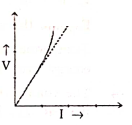
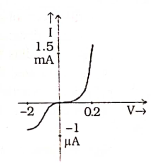
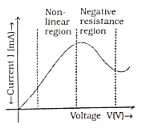
Write limitations of Ohm's law.
View full question & answer
Question 122 Marks
Write the law of conservation of charge. Give one example.
Answer
The total charge of the electrically isolated system is always conserved.
$\rightarrow$ When bodies are charged by rubbing, there is transfer of electrons from one bod to the other; no new charges are either created or destroyed.
$\rightarrow$ When we rub two bodies, what one body gains in charge the other body lose .
$\rightarrow $ Within an isolated system consisting of many charged bodies, due to interactions among the bodies, charges may get redistributed but remains conserved.
$\rightarrow $ It is not possible to create or destroy net charge carried by any isolated system, although the charge carrying particles may be created or destroyed in a process.
$\rightarrow $ When a neutron turns into a proton and an electron the proton and electron thus created have equal and opposite charges and the total charge is zero before and after the creation.
$\begin{array}{ll} 
& { }_0 n^1 \rightarrow{ }_1 p^1+-{ }_1 e^0 \\
\therefore & 0=+e+(-e)
\end{array}$
$\rightarrow$ Conservation of charge is a universal phenomena.
View full question & answer