Question
Write the molecular orbital configuration of $\text{N}_2$.Calculate its bond order and predict its magnetic behaviour.

Answer

$\text{N}_2(14)=\sigma\text{ls}^2\ \sigma*\text{ls}^2\ \sigma2\text{s}^2\ \sigma2\text{s}^2\ \pi2\text{p}_\text{x}^2\ \pi2\text{p}_4^3\ \pi2\text{p}^2_\text{z}$
$\text{B.O.}=\frac12(10-4)=\frac62=3$
It is diamagnetic in nature.

Need a full question paper?

Generate a complete, print-ready paper with questions like this in minutes — across 16+ boards, with answer keys.
Start Generating Free

Similar questions

Calculate the amount of $KCIO _3$ needed to supply sufficient oxygen for burning 112 L of CO gas at NTP.
Complete the following reactions:
  1. $\text{SO}_3+\text{D}_2\text{O}\xrightarrow{\ \ \ \ \ \ \ \ \ }$
  2. $2\text{Na}+2\text{D}_2\text{O}\xrightarrow{\ \ \ \ \ \ \ \ }$
  3. $\text{P}_2\text{O}_5+\text{D}_2\text{O}\xrightarrow{\ \ \ \ \ \ \ \ \ }$
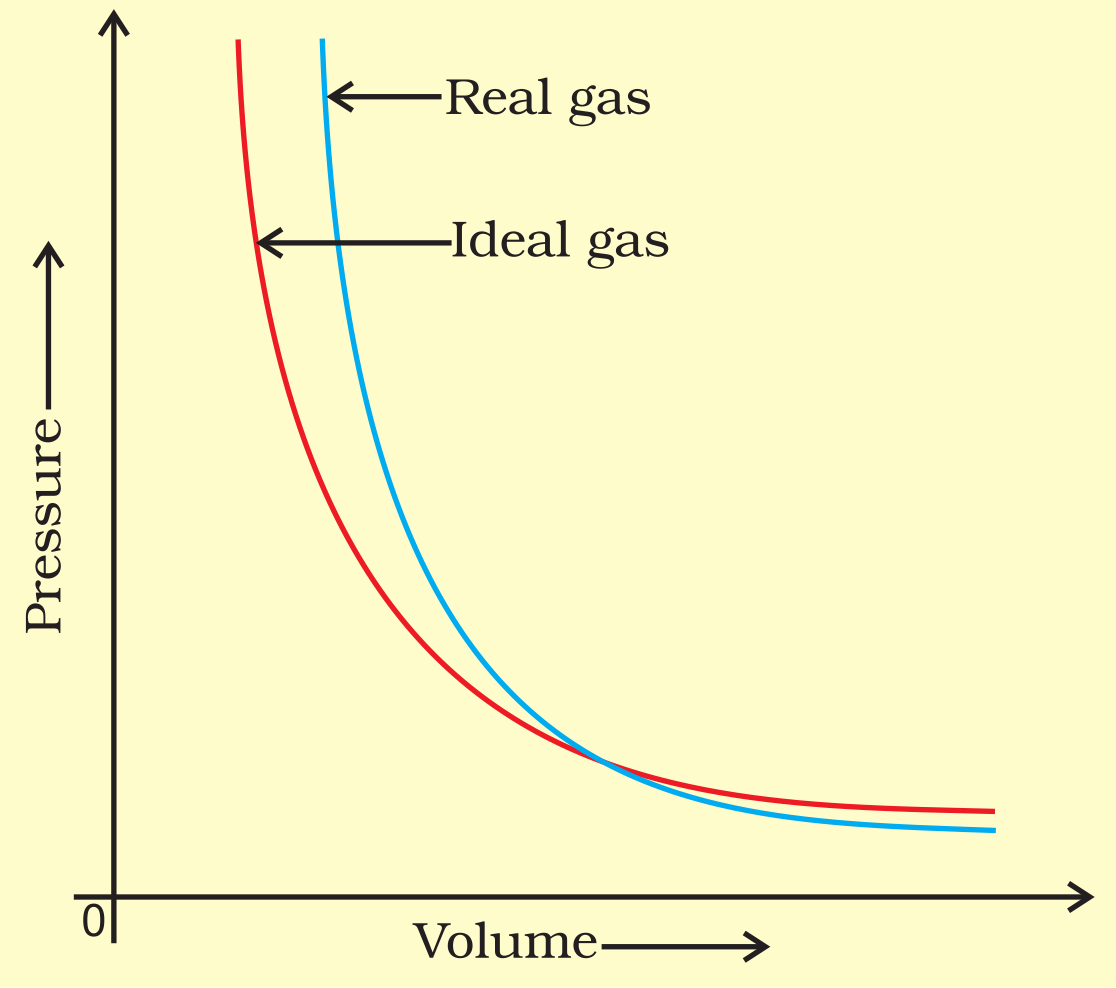
Pressure versus volume graph for a real gas and an ideal gas are shown in Fig. Answer the following questions on the basis of this graph.
  1. Interpret the behaviour of real gas with respect to ideal gas at low pressure.
  2. Interpret the behaviour of real gas with respect to ideal gas at high pressure.
  3. Mark the pressure and volume by drawing a line at the point where real gas behaves as an ideal gas.
Using molecular orbital theory, compare the bond energy and magnetic character of $\mathrm{O}_2^{+}$and $\mathrm{O}_2^{-}$.
Calculate the percentage of copper in a sample of $\mathrm{CuCl}_2$.
(Atomic mass of $\mathrm{Cu}=63.5 \mathrm{u}, \mathrm{Cl}=35.5 \mathrm{u}$ )
A sample of pure $PCl _5$ was introduced into an evacuated vessel at 473 K . After equilibrium was attained, concentration of $PCl _5$ was found to be $0.5 \times 10^{-1} mol L ^{-1}$. If value of $K _{ c }$ is $8.3 \times 10^{-3}$, what are the concentrations of $PCl _3$ and $Cl _2$ at equilibrium?
$PCl_5(g) \rightleftharpoons PCl_3(g)+Cl_2(g)$
Which of the two: $\mathrm{O}_2 \mathrm{NCH}_2 \mathrm{CH}_2 \mathrm{O}$ - or $\mathrm{CH}_3 \mathrm{CH}_2 \mathrm{O}$ - is expected to be more stable and why?
For the reaction, $\mathrm{N}_2(\mathrm{g})+3 \mathrm{H}_2(\mathrm{g}) \rightleftharpoons 2 \mathrm{NH}_3(\mathrm{g})$, the partial pressures of $\mathrm{N}_2$ and $\mathrm{H}_2$ are 0.80 and 0.40 atmosphere respectively at equilibrium. The total pressure of the system is 2.80 atmosphere. What is $\mathrm{K}_{\mathrm{p}}$ for the above reaction?
What happens when:
  1. Mg is burnt in air?
  2. $\mathrm{Cl}_2(\mathrm{g})$ reacts with slaked lime?
Write chemical equations for the reactions involved.
A sugar syrup of weight 214.2 g contains 34.2 g of sugar $\left( C _{12} H _{22} O _{11}\right)$. Calculate
i. molal concentration, and
ii. mole fraction of sugar in the syrup