Question
  1. Write the resonance structures for CO2.
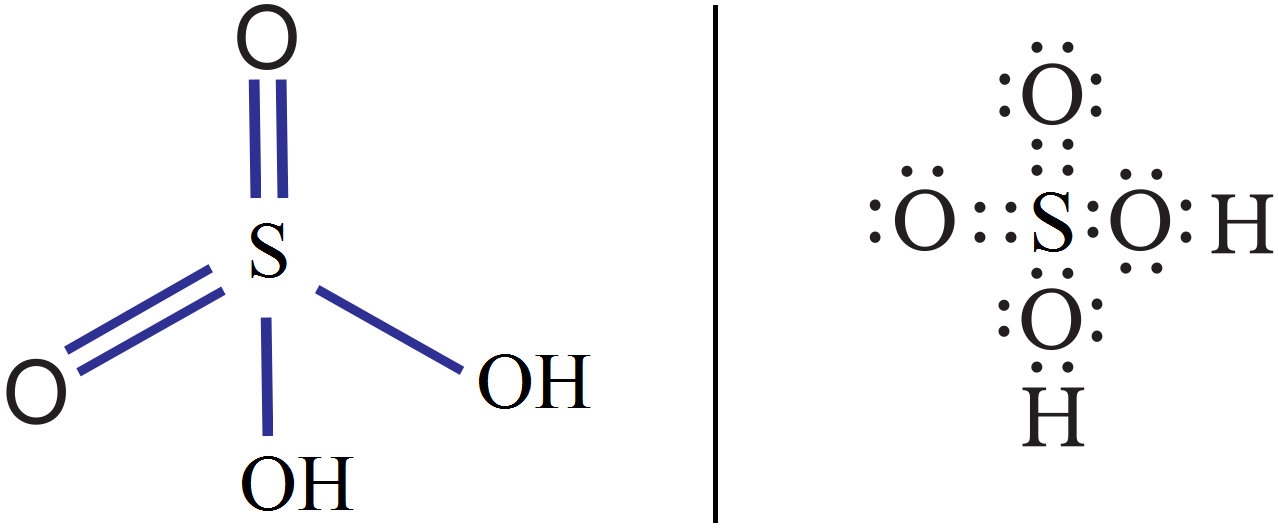
  2. Draw Lewis structure of H2SO4.
  3. Why KHF2 exist but KHCI2 does not?

Need a full question paper?

Generate a complete, print-ready paper with questions like this in minutes — across 16+ boards, with answer keys.

Start Generating Free

Similar questions

$\begin{matrix}\text{A }\rightleftharpoons\text{ B }&\text{K}_1=1&\text{B }\rightleftharpoons\text{ C}&\text{K}_2=2\\\text{C }\rightleftharpoons\text{ D}&\text{K}_3=3&\text{D }\rightleftharpoons\text{ E}&\text{K}_4=4\end{matrix}$
What is value of K for $\text{A }\rightleftharpoons\text{ E}?$
1 mole of an ideal gas undergoes reversible isothermal expansion from an initial volume of V1 to a final volume of 10V1 and does 10kJ of work. The initial pressure was 1 × 107Pa.
  1. Calculate V1.
  2. If there were 2 moles of gas, what must its temperature have been?
For the following bond cleavages, use curved-arrows to show the electron flow and classify each as homolysis or heterolysis. Identify reactive intermediate produced as free radical, carbocation and carbanion.

10 moles of an ideal gas expand isothermally and reversibly from a pressure of 5atm to 1atm at 300K. What is the largest mass that can be lifted through a height of 1m by this expansion?
  1. How many gram atoms are there in 8.0g of S?
  2. The molarity of Solution of sulphuric acid is 1.35M. Calculate its molality.

(The density of solution is 1.02g cm-3)

How will you convert benzene into:
m-nitrochlorobenzene.
What is the molecular mass of a substance each molecule of which contains 9 atoms of carbon, 13 atoms of hydrogen and 2.33 × 10⁻²³g other component?
The enthalpy of vaporisation of liquid diethyl ether (C2H5)2O is 26.0kJ mol-1 at its boiling point (35.0°C). Calculate $\Delta\text{S}^\circ$ for the conversion of:
  1. Liquid to vapour.
  2. Vapour to liquid at 35°C.
Justify that the following reactions are redox reactions:
i. $CuO + H _2(g) \longrightarrow Cu ( s )+ H _2 O$ (g)
ii. $Fe _2 O _3$ (s) $+3 CO ( g ) \longrightarrow 2 Fe ( s )+3 CO _2$ (g)
iii. $4 BCl _3(g)+3 LiAlH _4(s) \longrightarrow 2 B_2 H _6(g)+3 LiCl ( s )+3 AlCl _3(s)$
Among the elements B, Al, C and Si:
  1. Which element has the highest first ionisation enthalpy?
  2. Which element has the most metallic character? Justify your answer in each case.