Creating Value through Marketing Mix In increasingly competitive markets, consumers have a greater choice of where they buy their goods and services. For an organisation to meet its business objectives, it has to find out what the consumers require and then identify the best way in which it can satisfy these needs and wants. Creating a competitive advantage can be difficult. A unique marketing strategy with clear objectives is vital to ensure effective promotional activity. Since, opening its first store in 1913, Aldi has established itself as one of the most reputable retailers in the global business market by providing great value and quantity. Aldi's goal is simple. "To provide our customers with products they buy regularly and ensure that those products are of the highest possible quality of guaranteed low prices. Aldi's products are sourced from hand-picked suppliers whose products are sold under Aldi's own brand labels. Aldi's main marketing objective is to grow its market share within the UK grocery market. With the economic crisis came an increased demand for value for money. Market research identified that 80% of Aldi's customer base also shopped at other supermarkets. These customers spent around £20 billion per year in the other stores. Aldi's marketing strategies, therefore focused on generating customer loyalty. Aldi focused its marketing efforts on encouraging customers that are already familiar with the brand to shop at Aldi more often. Another key focus of Aldi's marketing strategy is on demonstrating that Aldi brands are of equal quality to well known brands such as Heinz and Fairy Liquid. To do this, Aldi's ran blind taste tests amongst a cross section of shoppers. These confirmed that the majority of consumers that liked the famous brands also liked Aldi's brands. These findings formed the basis to Aldis 'Like Brands' marketing campaign. This provided Aldi with a platform to communicate its quality and value messages effectively. Aldi's immediate challenge for the 'Like Brands' campaign was to increase market share from 2.3% to 2.5%. Although, this sounds very little, the retail grocery market is very large. A single 0.1% is worth an extra £65 million revenue. This case study focuses on the marketing strategies used by Aldi to increase its market share and encourage loyal customers.
The Marketing Mix The Chartered Institute of Marketing describes the term marketing as "The process responsible for identifying, anticipating and satisfying Price consumer requirements profitably'. This places consumers at the heart of every organisation. The marketing mix is often referred to as the Marketing 4 Ps. It involves creating a unique blend of the right product, sold at mix the right price, at the right place, using the most suitable methods of Promotion | Product promotion. A marketing mix is a complex set of variables. The marketing mix of every business will be different. Aldi's mix D focuses on providing high quality products that are cheaper alternatives to famous brands.
Aldi's marketing mix therefore focuses on:
- Product- high quality 'Like Brands'.
- Price- Aldi offers lower prices than its competitors, without compromising on quality.
- Place- Aldi outlets are expanding globally.
- Promotion- Aldi uses a combination of above the line and below the line promotions with a focus on its 'Like Brands' and 'Swap and Save' campaigns.
Balancing the Mix Organisation need a balanced marketing mix to meet the needs of their customers. Aldi's focus is on offering the best possible quality products at the lowest possible prices. Every buyer for Aldi, from fresh fruits and vegetables to meats and electronics, is an expert in his field. They look for products from around the word. This enables them to get the finest quality products that Aldi then sells under its own brand labels. Selecting the prices is one of the most difficult considerations when developing a marketing mix.
Different Pricing Strategies that are commonly Used Include
- Market penetration: Charging lower prices for new products to help them enter the market and gain market share quickly.
- Competitive pricing: Pricing at a slightly lower prices than competitors.
- Strategic pricing: Emphasising the quality of brand positioning of a product to allow a higher price to be charged.
Competitive pricing is a key strategy for Aldi. Aldi is able to offer quality products at low prices as it buys in great volume. The fact that Aldi buys such large quantities of these products allows great leverage for negotiating the best possible prices with its suppliers. This is called economies of scale. Buying large quantities of each products allows Aldi to pass these savings to its customers. The place element of the marketing mix involves identifying where the product or service will be sold. Aldi keeps its store layouts simple to limit waste and keeps the costs down. This means Aldi can focus on offering its customers the lowest possible prices for its products. When considering new store locations, Aldi takes into account:
- The number of people visiting an area as well as the demography of the area, e.g. the population of the area should be more than 30000 people.
- The position of store- Aldi focuses on edge of the town centre locations with good visibility from a main road and not too much competition.
- The accessibility of the store and its public transport links.
- The number of parking spaces available.
Above the Line Promotion For Aldi to achieve its objective of increasing its market share, it had to ensure its promotional activity demonstrated the balance of its marketing mix, e.g. to increase customer loyalty it had to communicate its key quality and value messages. Promotion helps to:
- Increase awareness and improve brand recognition.
- Increase demand for products
- Improve brand image
- Highlight the superiority of products and services.
Above the line promotions are paid for advertising aimed at a mass audience. These include the media such as television, radio, magazines and newspapers that reach a large number of people. This form of promotion can be costly. It can also be difficult to target specific audiences. Aldi uses a range of above the line methods to reach its customers and potential customers.
These include Advertising on TV the 'Like Brands' campaign features 20 second TV adverts which focus on a particular product. The adverts show, a famous brand as a benchmark for quality side-by-side with an Aldi brand product. They use the slogan 'Like Brands, Only Cheaper'. This reinforces the message that Aldi products are cheaper than leading brands but equal in terms of quality. The adverts provide personality to the Aldi brand use humour which helps to build trust and an emotional connection with target audiences. Printed leaflets are distributed within stores (1 million copies printed per week) and also to customers living in areas surrounding the stores. These leaflets help to reinforce the 'Like Brands' campaign. They also showcase products with limited availability and seasonal offers available in stores. Newspaper adverts extend the 'Like Brands' campaign and help to showcase a variety of product categories. They also communicate Aldi's Swap and Save message. This campaign demonstrates the amount that shoppers could save if they swapped their weekly shop to Aldi. They compare Aldi products to famous brands to demonstrate Aldi's value for money message. In-store posters are also used to highlight the 'Swap and Save' message. Below-the-line promotion uses different ways to engage with customers. These methods can be more easily targeted to specific audiences than above-the-line methods. They offer organisations a greater level of control over their communications.
Aldi Uses a Range of Below-the-line MethodsThese include:
- Social media.
- Targeted e-mails to customers.
- 3rd party endorsement and awards.
- Public relations and media relations.
Aldi's Facebook and Twitter pages encourage two-way communication with customers. These social media channels provide a platform through which Aldi can interact with customers. It can then assess their opinions about the brand. One objective of this form of promotion is to create "Aldi Advocates'. These are consumers who recommend Aldi to others, through stimulating interactions about the high quality and low prices of Aldi product. e.g. the 'I love Aldi' campaign asked fans to send a virtual Aldi Valentines card to a Facebook friend. This was encouraged by providing rewards. The campaign gave consumers the chance to win a £10 voucher. They could also win a box of Aldi chocolates for their Valentine. The campaign also encouraged consumers to complete the sentence 'I love Aldi because ...' directly onto Aldi's Facebook page to encourage positive brand feedback. Aldi also uses direct e-mails. These e-mails allow Aldi to communicate a variety of message to target customers. e.g. They can convey the 'Swap and Save' message as well as to promote seasonal message such as products associated with Pancake Day. Aldi's website is an integral part of its below-the-line promotion. It features all of Aldi's key promotional messages as well as additional content to engage consumers. Examples include recipe ideas and weekly offers. Aldi developed the www.likealdi.co.uk micro-website to further encourage brand engagement with the 'Like Brands' TV campaign. The site provides consumers with the opportunity to upload their ideas for the next Aldi TV campaign. Aldi also uses a dedicated recruitment website to promote its employer brand message and career opportunities. A further below-the-line method used to highlight the quality of Aldi's products is positive 3rd party endorsements. Aldi has entered over 1000 of its products into awards such as Grocer Golds, Pizza and Pasta Awards (PAPA) and the British Frozen Food Federation Awards. In 2012, Aldi was awarded 'Best Supermarket' by Consumer Watchdog. It beats competition from Marks and Spencer and Waitrose. Further positive endorsements for production on TV and in the press re-affirm the message that Aldi products are of the highest quality and also are great value for money, e.g. Aldi's Christmas pudding was awarded runner up and acknowledged as a 'bargain' in a taste test comparison in Good Housekeeping magazine. Effective public and media relations help to create positive press exposure. Aldi has secured record coverage through hardworking and innovative media relations. Journalists from newspapers such as The Grocer, The Financial Times and The Times were invited for exclusive interviews with Aldi's Group of Managing Directors. They discussed record breaking sales results.
Aldi: Creating Value Through the Marketing Mix Further coverage was gained through targeting key media at specific times with seasonal promotional message. The 'Swap and Save' campaign highlighted the savings available through shopping at Aldi at times when value for money is high on the agenda. This was particularly relevant with its 'Back to School' and Christmas products.
Conclusions Aldi has a distinct approach to retailing that has given it a competitive advantage in a crowded marketplace. Aldi's unique balance of the marketing mix enables it to provide high quality, own branded products at the lowest possible price. Aldi's innovative 'Like Brands' and 'Swap and Save' marketing campaigns are improving brand perceptions. They are aiding the achievement of Aldi's marketing objectives. The campaigns have increased Aldi's sales per store by +100% over 3 years through creating more loyal customer. Its multi-channel promotional activity is engaging consumers and creating positive feedback. Courtesy The Times 100 Business Case Studies.
- Give the definition of marketing, as given by the Chartered Institute of Marketing:
- What does Aldi's marketing mix focuse on?
- Which pricing strategy is followed by Aldi? Give any one benefit of this method.
- What are the factors considered by Aldi, when deciding the location of its store?
- What is Aldi's goal?
- How does Aldi use social media as below-the-line promotion method ?
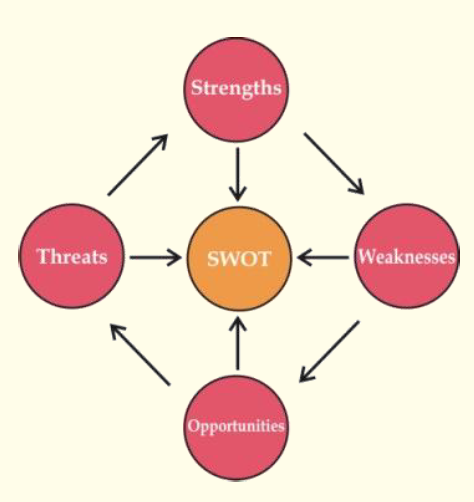 Marketing plan needs to consider the strengths and weaknesses of the new venture to ensure its success.