MCQ
$X$-rays which can penetrate through longer distances in substance are called
  • A
    Soft $X$-rays
  • B
    Continuous $X$-rays
  • Hard $X$-rays
  • D
    None of the above

Answer

Correct option: C.
Hard $X$-rays

Need a full question paper?

Generate a complete, print-ready paper with questions like this in minutes — across 16+ boards, with answer keys.
Start Generating Free

Similar questions

A body of mass $5 \mathrm{~kg}$ rests on a rough horizontal surface of coefficient of friction 0.2 . The body is pulled through a distance of $10 \mathrm{~m}$ by a horizontal force of $25 \mathrm{~N}$. The kinetic energy acquired by it is $\left(g=10 m s^2\right)$
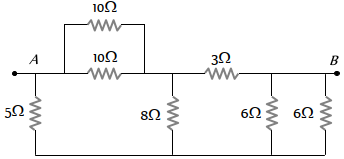
Seven resistances are connected as shown in the figure. The equivalent resistance between $A$ and $B$ is

Image

The focal length of the objective lens of a compound microscope is
Work done by a frictional force is
In a Young's double slit experiment, the slits are $2 mm$ apart and are illuminated with a mixture of two wavelength $\lambda_0=750 nm$ and $\lambda=900 nm$. The minimum distance from the common central bright fringe on a screen $2 m$ from the slits where a bright fringe from one interference pattern coincides with a bright fringe from the other is
A photon of energy $8 \mathrm{eV}$ is incident on metal surface of threshold frequency $1.6 \times 10^{15} \mathrm{~Hz}$. The maximum kinetic energy of the photoelectrons emitted (in eV) (Take $h=6 \times 10^{-34}$ JS).
Two particles executes S.H.M. of same amplitude and frequency along the same straight line. They pass one another when going in opposite directions, and each time their displacement is half of their amplitude. The phase difference between them is
At which place, earth's magnetism become horizontal
$2 g m$ of steam condenses when passed through $40 \mathrm{gm}$ of water initially at $25^{\circ} \mathrm{C}$. The condensation of steam raises the temperature of water to $54.3^{\circ} \mathrm{C}$. What is the latent heat of steam
Assuming the earth to have a constant density, point out which of the following curves show the variation of acceleration due to gravity from the centre of earth to the points far away from the surface of earth