MCQ
$(x - y){e^{x/(x - y)}} = k$ then
  • A
    $(y - 2x){{dy} \over {dx}} + 3x - 2y = 0$
  • $y{{dy} \over {dx}} + x - 2y = 0$
  • C
    $a{\rm{ }}\left( {y{{dy} \over {dx}} + x - 2y} \right) = 0$
  • D
    None of these

Answer

Correct option: B.
$y{{dy} \over {dx}} + x - 2y = 0$
b
(b) Taking $\log $, we get 

$\log (x - y) + \frac{x}{{x - y}} = \log k$ 

==> $(x - y) - (x - y)\frac{{dy}}{{dx}} + (x - y) - x + \frac{{dy}}{{dx}} = 0$ 

==> $y\frac{{dy}}{{dx}} + x = 2y$.

Need a full question paper?

Generate a complete, print-ready paper with questions like this in minutes — across 16+ boards, with answer keys.
Start Generating Free

Similar questions

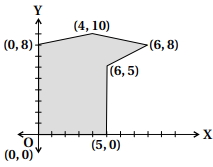
The feasible solution for a $LPP$ is shown in Figure Let $z=3 x-4 y$ be the objective function. Maximum of $Z$ occurs at $......$
$\int_{1}^{6\pi}([sec^{-1}]+[cot^{-1}])dx$ is equal to       (where $[.]$ denotes greatest integer function)
If $D =$ $\left| {\,\begin{array}{*{20}{c}}{\frac{1}{z}}&{\frac{1}{z}}&{ - \frac{{(x + y)}}{{{z^2}}}}\\{ - \frac{{(y + z)}}{{{x^2}}}}&{\frac{1}{x}}&{\frac{1}{x}}\\{ - \frac{{y(y + z)}}{{{x^2}z}}}&{\frac{{x + 2y + z}}{{xz}}}&{ - \frac{{y(x +y)}}{{x{z^2}}}}\end{array}\,} \right|$ then, the incorrect statement is
Let $S_{1}$ be the sum of first $2 n$ terms of an arithmetic progression. Let, $S_{2}$ be the sum of first $4n$ terms of the same arithmetic progression. If $\left( S _{2}- S _{1}\right)$ is $1000,$ then the sum of the first $6 n$ terms of the arithmetic progression is equal to:
If the first, second and last terms of an $A.P.$ be $a,\;b,\;2a$ respectively, then its sum will be
Eccentricity of the ellipse $9{x^2} + 25{y^2} = 225$ is
The horizontal force and the force inclined at an angle ${60^o}$ with the vertical, whose resultant is in vertical direction of  $ P $ $kg$, are
If $a > 0$and discriminant of $a{x^2} + 2bx + c$is negative, then $\left| {\,\begin{array}{*{20}{c}}a&b&{ax + b}\\b&c&{bx + c}\\{ax + b}&{bx + c}&0\end{array}\,} \right|$ is
The number of integral points (integral point means both the coordinates should be integer) exactly in the interior of the triangle with vertices $(0, 0), (0, 21)$ and $(21, 0)$, is
The equation of the lines joining the vertex of the parabola ${y^2} = 6x$ to the points on it whose abscissa is $24$, is