Questions

LONG ANS. QUESTIONS(5 Mark)

🎯

Test yourself on this topic

16 questions · timed · auto-graded

Question 15 Marks
Define the following?
  1. Igneous rocks.
  2. Sedimentary rocks.
  3. Metamorphic rocks.
Answer
  1. Igneous rocks: Igneous rocks are formed by the solidification of hot and molten magma, also termed as primary rocks or the parent rocks.
  2. Sedimentary rocks: Sedimentary rocks are formed the sediments, particles, grains or fragments derived from existing primary rocks. These sediments are soft but in course of time they become hard and compact.
  3. Metamorphic rocks: Because of tremendous pressure and high temperature both igneous and sedimentary rocks may be altered so greatly in appearance and composition that they entirely lose their original character. They are termed as metamorphic rocks.
View full question & answer
Question 25 Marks
Explain the main features of the Crust.
Answer
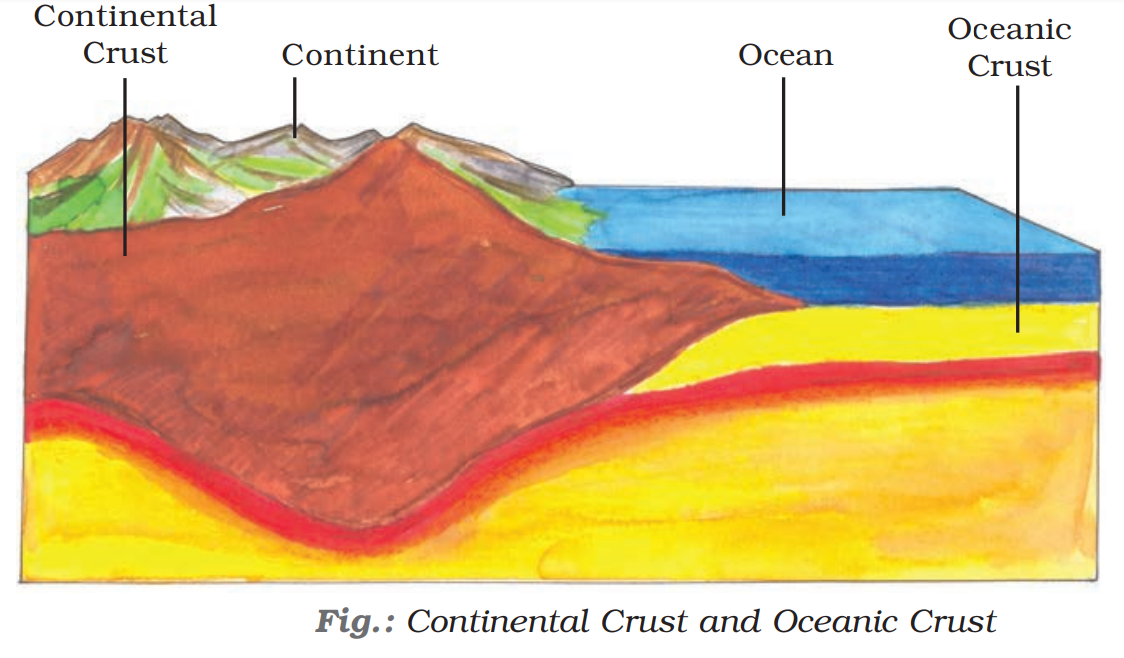
  1. It is the outermost solid layer of the earth.
  2. It is made up of the lightest materials.
  3. It is 35kms on the conditions masses and 5km on the oceanic masses.
  4. The continental crust is mainly made up of silica and alumina hence called SIAL.
  5. The oceanic crust is made of silica and magnesium hence called SIMA
  6. The crust comprises only 1 percent of the earth’s crust.
View full question & answer
Question 35 Marks
Explain difference between the extrusive and intrusive igneous rocks.
Answer
When this molten lava comes on the earth’s surface, it rapidly cols down and becomes soild. Rocks form, wed on such a way. On way on the are called extrusive igneous rocks. they have a very fone grained structure.
For example, basalt sometimes the molten magma cools down deep inside the earth’s crust. Solid rocks so formed are called intrusive igneous rocks. Since they cool down slowly they form large grains. Granite is an examples of such a rock.
View full question & answer
Question 45 Marks
Describe the structure o the earth’s interior.
Answer
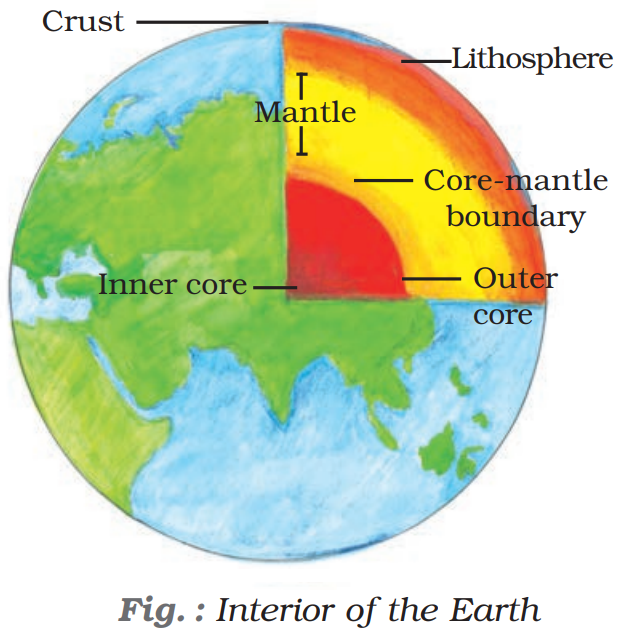
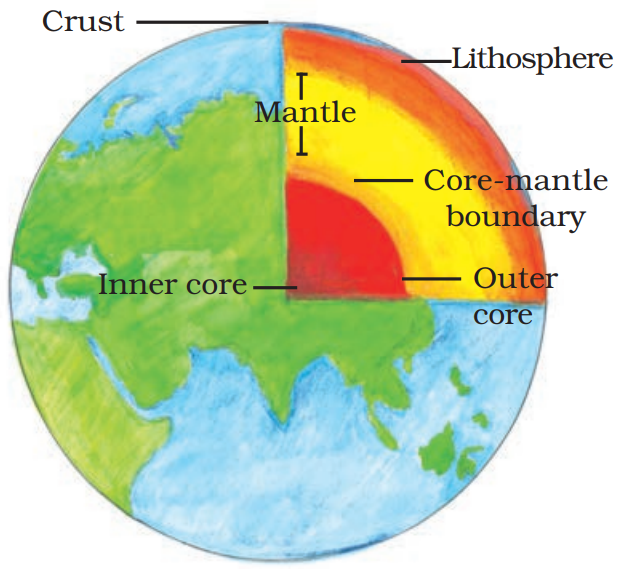
  1. The Earth is almost spherical body with a radius of 6,400km.
  2. It interior consists of a central core with several concentric layers surrounding it.
  3. The x\ core is the densest part, while the outer layer is the least sense
  4. There are three main layers- the core, the mantle, and the crust.
View full question & answer
Question 55 Marks
Elaborate how rocks are useful to man.
Answer
  1. Rocks are used as building material for the construction of buildings, bridges etc.
  2. Some rocks as limestone are used in cement industry.
  3. Some rocks are useful due to their minerals content such as ores.
  4. Sedimentary rocks have fossil fuels like coal and petroleum.
  5. Igneous rocks contain some rare and precious stone.
  6. The weathered rock material produces soil that forms the basis for growing food.
View full question & answer
Question 65 Marks
Write a note on various types of rocks?
Answer
There are three major types of rocks: igneous rocks, sedimentary rocks and metamorphic rocks.
  1. Igneous rocks: When the molten magma cools, it becomes solid. Rocks thus formed are called igneous rocks. They are also called primary rocks. There are two types of igneous rocks: intrusive rocks and extrusive rocks.
  • Extrusive igneous rocks: When molten lava comes on the earth’s surface, it rapidly cools down and becomes solid. Rocks formed in such a way on the crust are called extrusive igneous rocks. For example, basalt.
  • Intrusive igneous rocks: Sometimes the molten magma cools down deep inside the earth’s crust. Solid rocks so formed are called intrusive igneous rocks. Granite is an example of such a rock.
  1. Sedimentary rocks: Rocks roll down, crack, and hit each other and are broken down into small fragments. These smaller particles are called sediments. These sediments are transported and deposited by wind, water, etc. These loose sediments are compressed and hardened to form layers of rocks. These types of rocks are called sedimentary rocks. For example, sandstone is made from grains of sand.
  2. Metamorphic rocks: Igneous and sedimentary rocks can change into metamorphic rocks under great heat and pressure. For example, clay changes into slate and limestone into marble.
View full question & answer
Question 75 Marks
What are minerals? How are minerals important to us?
Answer
Minerals:
  • Rocks are made up of different minerals.
  • Minerals are naturally occurring substances which have certain physical properties and definite chemical composition.
  • Minerals are very important to us.
  • Some are used as fuels.
Examples:
  • Coal.
  • Natural gas.
  • Petroleum.
They are also used in industries as energy and raw material.
Examples:
  • Iron.
  • Aluminium.
  • Gold.
  • Uranium.
They are used in medicine, in fertilisers etc.
View full question & answer
Question 85 Marks
How are metamorphic rocks formed?
Answer
Igneous and Sedimentary rocks changes into metamorphic rocks under heat and pressure. Metamorphic Rocks: When under heat and pressure igneous rocks and sedimentary rocks change their form and more precious rocks are formed to be known as metamorphic rocks.Examples:
  • Granite into granite gneiss.
  • Coal into slate.
  • Slate into schist.
  • Limestone into marble.
Limestone is changed into marble due to the following reasons:
  • The overlying layers of rocks put pressure on the underlying rocks.
  • From surface to interior of the earth, temperature and heat go on increasing.
  • Due to pressure and heat, the original limestone changes into marble.
View full question & answer
Question 95 Marks
Mention various types of rocks.
Answer
Rocks are of the three types:
  1. Igneous rocks: When the molten magma cools, it becomes solid. Rocks formed in this way are called igneous rocks. They are also called primary rocks. They are of two types- intrusive rocks and extrusive rocks.
  2. Extrusive rocks: When molten lava comes on the earth's surface, it rapidly cools down and becomes solid. Rocks formed in this way on the crust Eire called extrusive igneous rocks. For example, basalt.
  3. Intrusive rocks: Sometimes the molten magma cools down deep inside the earth's crust. Solid rocks so formed are called intrusive igneous rocks. Since they cool down slowly they form large grains. For example, granite.
  4. Sedimentary rocks: Small fragments of rocks are called sediments. These sediments are transported and deposited by wind, water, etc. These loose sediments are compressed and hardened to form sedimentary rocks. For example, sandstone is made from grains of sand.
  5. Metamorphic rocks: When igneous and sedimentary rocks Eire subjected to great heat and pressure they change into metamorphic rocks. For example, clay changes into slate and limestone into marble.
View full question & answer
Question 105 Marks
What are sedimentary rocks? Give an example.
Answer
  1. Sediments formed due to roll down of rocks are transported and deposited by wind, water, etc.
  2. These loose sediments are compressed and hardened to form layers of rocks.
  3. These types of rocks are called sedimentary rocks. For example, sandstone made from grains of sand.
  4. These rocks may even contain fossils of plants, animals and other microorganisms that lived once on them.
View full question & answer
Question 115 Marks
Describe igneous rocks.
Answer
Igneous Rocks:
  • The molten rock material is called magma.
  • When it cools, it becomes solid.
  • Rocks formed in this way are called igneous rocks.
  • They are also called primary rocks because other rocks are formed out of these rocks.
There are two types of igneous rocks:
  • Intrusive Rocks and
  • Extrusive Rocks
Formation of Extrusive and Intrusive Rocks:
  • Due to extreme heat in the interior of the earth, rocks are found in the form of molten material called magma.
  • When magma comes out on the surface of the earth, it cools down and turns into solid rocks. Such rocks are termed as extrusive rocks.
Examples:
  • Basalt.
  • Deccan Trap is built of basalt.
When the molten magma cools down within the interior of the earth, it becomes solid to form intrusive rocks.
Examples:
  • Granite.
  • Garbo.
View full question & answer
Question 125 Marks
Give a brief description of three layers of the earth.
Answer
Crust:-
  1. The uppermost layer of the earth’s surface is called crust.
  2. It is the thinnest of all the layers.
  3. It is almost 35km on the continental masses and 5km on the ocean floors.
  4. The main mineral constituents of the continental masses are silica and aluminium soil.
Mantle:-
Just beneath the crust is the mantle which extends up to 2,900km below the crust.
Core:-
  1. The innermost layer is the core with a radius of 3,500km.
  2. It is made of nickel and iron, i.e. knife.
View full question & answer
Question 135 Marks
What do you know about earth's interior?
Answer
The earth is made up of several concentric layers with one inside another.
  • Crust: The uppermost layer over the earth’s surface is called the crust. It is the thinnest of all the layers. It is about 35km. on the continental masses and only 5km. on the ocean floors.
  • Mantle: Just beneath the crust is the mantle which extends up to a depth of 2900km. below the crust.
  • Core: The innermost layer is the core with a radius of about 3500km. It is mainly made up of nickel and iron and is called nife. The central core has very high temperature and pressure.
View full question & answer
Question 145 Marks
i Core a Earth’s surface.
ii Minerals b Used for roads and buildings.
iii Rocks c Made of silicon and alumina.
iv Clay d Has definite chemical composition.
v Sial e Innermost layer.
    f Changes into slate.
    g Process of transformation of the rock.
Answer
i Core e Innermost layer.
ii Minerals d Has definite chemical composition.
iii Rocks c Used for roads and buildings.
iv Clay f Changes into slate.
v Sial c Made of silicon and alumina
View full question & answer
Question 155 Marks
What is a rock? Classify igneous rocks.
Answer
  1. Any natural mass of mineral material that makes up the earth’s crust is called a rock. The earth’s crust is made of various types of rocks. Rocks can be of different sizes, textures, shapes, colours, etc.
  2. Extrusive rocks:- When the molten lava comes on the earth’s surface, it rapidly cools down and becomes a solid. They thus, form extrusive igneous rocks; for example, basalt.
  3. Intrusive Igneous rocks:- Sometimes, the molten magma cools down deep inside the earth’s crust. Solid rocks so formed are called intrusive igneous rocks. For example, granite.
View full question & answer
Question 165 Marks
Describe the interior of the earth.
Answer
Interior of the Earth:The earth is made up of several concentric layers with one inside another, just like an onion.
Crust:
  • The uppermost layer on the earth's surface is called the crust.
  • It is the thinnest of all the layers.
  • It is about 35km, thick on the continental masses and only 5km thick on the ocean floors.
  • Main minerals constituent of the continental mass are silica and alumina.
  • It is thus called sial (si– silica and al– alumina).
  • The oceanic crust mainly consists of silica and magnesium.
  • It is therefore called sima (si– silica and ma– magnesium).
​​​​​​​
Mantle:
  • Just beneath the crust is the mantle.
  • It extends up to a depth of 2900km below the crust.
Core:
  • The innermost layer is the core with a radius of about 3500km.
  • It is mainly made up of nickel and iron.
  • Hence it is called nife (ni- nickel and fe- ferrous i.e., iron).
  • The central core has very high temperature and pressure.
View full question & answer
LONG ANS. QUESTIONS(5 Mark) - Social Science STD 7 Questions - Vidyadip