Question types

Is Matter Around Us Pure question types

582 questions across 9 question groups — pick any mix to generate a Science paper with step-by-step answer keys.

582
Questions
9
Question groups
5
Question types
Sample Questions

Is Matter Around Us Pure questions

One sample from each question group in this chapter. Select any group above to see the full set with answer keys.

Q 2M.C.Q. [1 M]1 Mark
Which of the following are homogeneous in nature?
$i.$ Ice
$ii.$ Wood
$iii.$ Soil
$iv.$ Air
  • A
    $(i)$ and $(iii)$
  • B
    $(ii)$ and $(iii)$
  • $(i)$ and $(iv)$
  • D
    $(iii)$ and $(iv)$

Answer: C.

View full solution
Q 4M.C.Q. [1 M]1 Mark
The property/ properties which enable copper metal to be used for making electric wires is / are:
  • A
    Copper metal is malleable and ductile.
  • B
    Copper metal is a good conductor of electricity.
  • Copper metal is ductile and has low electrical resistance.
  • D
    Copper metal is sonorous and an excellent conductor of electricity.

Answer: C.

View full solution
Q 5M.C.Q. [1 M]1 Mark
The principle behind fractional distillation technique in separation of two liquids is :
  • A
    difference in melting point
  • difference in boiling point
  • C
    difference in concentration
  • D
    difference in solubility

Answer: B.

View full solution
In the following questions, a statement of Assertion $(A)$ is followed by a statement of Reason $(R)$. Mark the correct choice as:
Assertion: A mixture of acetone and methanol can be separated by fractional distillation.
Reason: The difference between boiling point of acetone and methanol is very less.
  • A
    If both Assertion and Reason are true and Reason is the correct explanation of Assertion.
  • If both Assertion and Reason are true but Reason is not the correct explanation of Assertion.
  • C
    If Assertion is true but Reason is false.
  • D
    If Assertion is false and Reason is true.

Answer: B.

View full solution
In the following questions, a statement of Assertion $(A)$ is followed by a statement of Reason $(R)$. Mark the correct choice as:
Assertion: Tyndall effect is an optical property.
Reason: Scattering of beam of light by the colloidal particles is known as Tyndall effect.
  • If both Assertion and Reason are true and Reason is the correct explanation of Assertion.
  • B
    If both Assertion and Reason are true but Reason is not the correct explanation of Assertion.
  • C
    If Assertion is true but Reason is false.
  • D
    If Assertion is false and Reason is true.

Answer: A.

View full solution
In the following Questions, the Assertion and Reason have been put forward. Read the statements carefully and choose the correct alternative from the following:
Assertion: Dust particle in air form aerosol.
Reason: Dust particles form dispersion medium and air is dispersed phase.
  • A
    Both the Assertion and the Reason are correct and the Reason is the correct explanation of the Assertion.
  • The Assertion and the Reason are correct but the Reason is not the correct explanation of the Assertion.
  • C
    Assertion is true but the Reason is false.
  • D
    The statement of the Assertion is false but the Reason is true.

Answer: B.

View full solution
In the following questions, a statement of Assertion $(A)$ is followed by a statement of Reason $(R)$. Mark the correct choice as: If both Assertion and Reason are false.
Assertion: Colloidal particles do not show Tyndall effect.
Reason: Colloidal solutions are stable and the colloidal particles do not settle down.
  • A
    If both Assertion and Reason are true and Reason is the correct explanation of Assertion.
  • B
    If both Assertion and Reason are true but Reason is not the correct explanation of Assertion.
  • C
    If Assertion is true but Reason is false.
  • If Assertion is false and Reason is true.

Answer: D.

View full solution
Q 11true or false1 Mark
State whether the following statements are true or false:
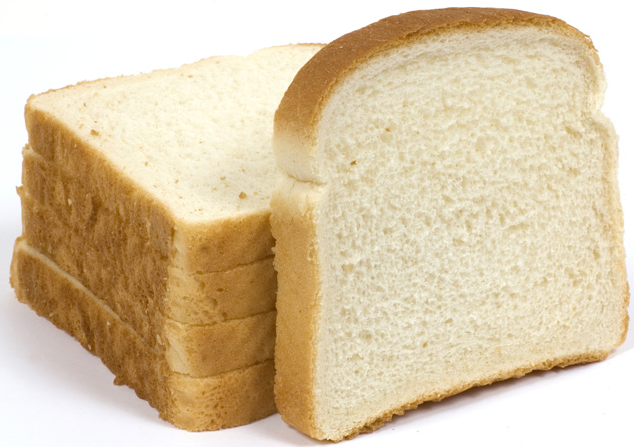
  1. Bread is an example of solid foam.
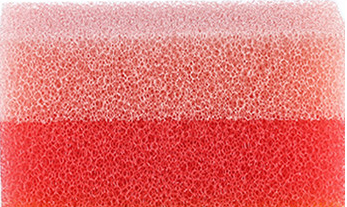
  1. Sponge is an example of solid sol.
What type of colloids are bread and sponge?
View full solution
Fill in the following blanks with suitable words: The separation of liquids by fractional distillation is based o the difference in their __________.
View full solution
Fill in the following blanks with suitable words:
The gases of air can be separated by fractional distillation of liquid air because they have different ___________.
View full solution
Which separation techniques will you apply for the separation of the following?
  1. The different pigments from an extract of flower petals.
  2. Butter from curd.
  3. Oil from water.
  4. Tea leaves from tea.
  5. Iron pins from sand.
  6. Wheat grains from husk.
  7. Fine mud particles floating in water.
View full solution
How can you obtain pure water from a salt-water mixture (or salt-solution)? Draw a meat and labelled diagram of the apparatus you would use to obtain pure water from a salt-water mixture (or salt-solution).
View full solution
With the help of a labelled diagram, describe the method of separating ammonium chloride from a mixture of ammonium chloride and common salt. Mention the difference in the properties of ammonium chloride and sodium chloride which has made this separations possible.
View full solution
How is water purified on a large scale at water works? Explain with the help of a labelled diagram. Name the substance which is added to kill germs in the drinking water supply?
View full solution
There are three substances $X, Y$ and $Z$. The substance $X$ does not have a fixed melting point or boiling point and it still shows the individual properties of its constituents. The substance $Y$ is a pure substance which occurs in nature as such. The substance $Y$ has a fixed melting point and boiling point but it cannot be broken down into simpler substances by any chemical means. The substance $Z$ is also a pure substance whose properties are entirely different from those of its constituents. The substance $Z$ can, however, be divided by electrolysis into two substances which belong to the same class of substances as $Y$.
  1. What type of substance could $X$ be? Name one substance like $X$.
  2. What type of substance could $Y$ be? Name one substance like $Y$.
  3. What type of substance could $Z$ be? Name one substance like $Z$.
  4. Whish process involves absorption or release of an appreciable amount of energy: formation of substance $X$ or formation of substance $Z$?
  5. Name the three groups into which all the substances like $Y$ are divided on the basis of their properties.
View full solution
Three mixtures $A, B$ and $C$ are obtained by stirring three different solids in water taken in separate beakers. When mixture $A$ is allowed to stand for some time, then its particles settle at the bottom of the beaker. When a beam of light is passed through mixture $A$ in a dark room, the path of light becomes visible when observed from the side of the beaker. When mixture $B$ is allowed to stand for a considerable time, even then its particles do not settle down. Mixture $B$, however, scatters the beam of light just like mixture $A$. The particles of mixture $C$ do not settle down on keeping and it also does not scatter a beam of light passing through it.
  1. What are the mixtures like $A$ known as?
  2. What are the mixtures like $B$ known as?
  3. What are the mixtures like $C$ known as?
  4. Name the phenomenon exhibited by $A$ and $B$ which occurs on passing a beam of light through them.
  5. Name one mixture each which is like $(i) A (ii) B$, and $(iii) C.$
View full solution
The liquid air has three components $X , Y$ and $Z$ whose boiling points are: $-186^{\circ} C ,-183^{\circ} C$ and $-196^{\circ} C$, respectively. When liquid air is fed into a tall fractional distillation column from near its bottom and warmed up slowly:
a. Which component will be collected from near the bottom of the fraction distillation column? Why?
b. Which component will be collected from the top part of the fractional distillation column? Why?
c. Which component will be collected from the middle part of the fractional distillation column? Why?
d. What could the component $X , Y$ and $Z$ be?
View full solution
A solid mixture contains four constituents $P, Q, R$ and $S. P$ consists of tiny grains and it is mixed with cement for plastering the walls. $Q$ is a white solid which is recovered on a large scale from sea water by the process of evaporation. $R$ is in the form of tiny particles of a material whose corrosion is called rusting. And $S$ is a white solid which is used in making ordinary dry cells.
  1. What could $P, Q, R$ and $S$ be?
  2. How would you separate a mixture containing $P, Q, R$ and $S?$
View full solution
The given mixture contains three constituents $A , B$ and $C$ . The constituent $A$ is a yellow coloured, solid element which dissolves in a liquid $D$. The constituents $B$ is a blue coloured salt which is insoluble in liquid $D$ but dissolves easily in another liquid $E$ . The constitudent $C$ is a liquid wlich is used in coolking food and forms a solid fat on hydrogenation.
a. What do you think could $(i)$ constituent $A$, and $(ii)$ liquid $D$ be?
b. What could $(i)$ constituent $B$, and $(ii)$ liquid $E$ be?
c. What could liquid $C$ be?
d. How will you separate the mixture containing $A , B$ and $C .$
View full solution

Generate a Is Matter Around Us Pure paper free

Pick question groups from the list above, set marks and difficulty, and export a branded PDF with step-by-step answer keys. First 3 chapters free — no signup.

Download App