Questions

case /data -based (4 Marks)

🎯

Test yourself on this topic

13 questions · timed · auto-graded

Question 14 Marks
In our country, ultrasound imaging (echography) is used to take images of the developing babies (foetus). It is considered safe for both the mother and the foetus. In this method, the doctor holds a probe and moves it across the abdomen of the mother.
Ultrasound waves which are transmitted into the abdomen are reflected from the surface of the foetus. These reflected waves are picked up by the probe and relayed to a machine that produces the image of the developing baby. In some parts of our country, ultrasound is done illegally.
(i) What could be the reason of performing ultrasound illegally?
(ii) "Man, and not the woman is responsible for the birth of a girl child." What is meant by this statement?
(iii) Can ultrasound examination of expecting mothers answer the following questions? Write 'Yes' or 'No'.
(a) What is the colour of the baby's eyes?
(b) Is there more than one foetus?
or
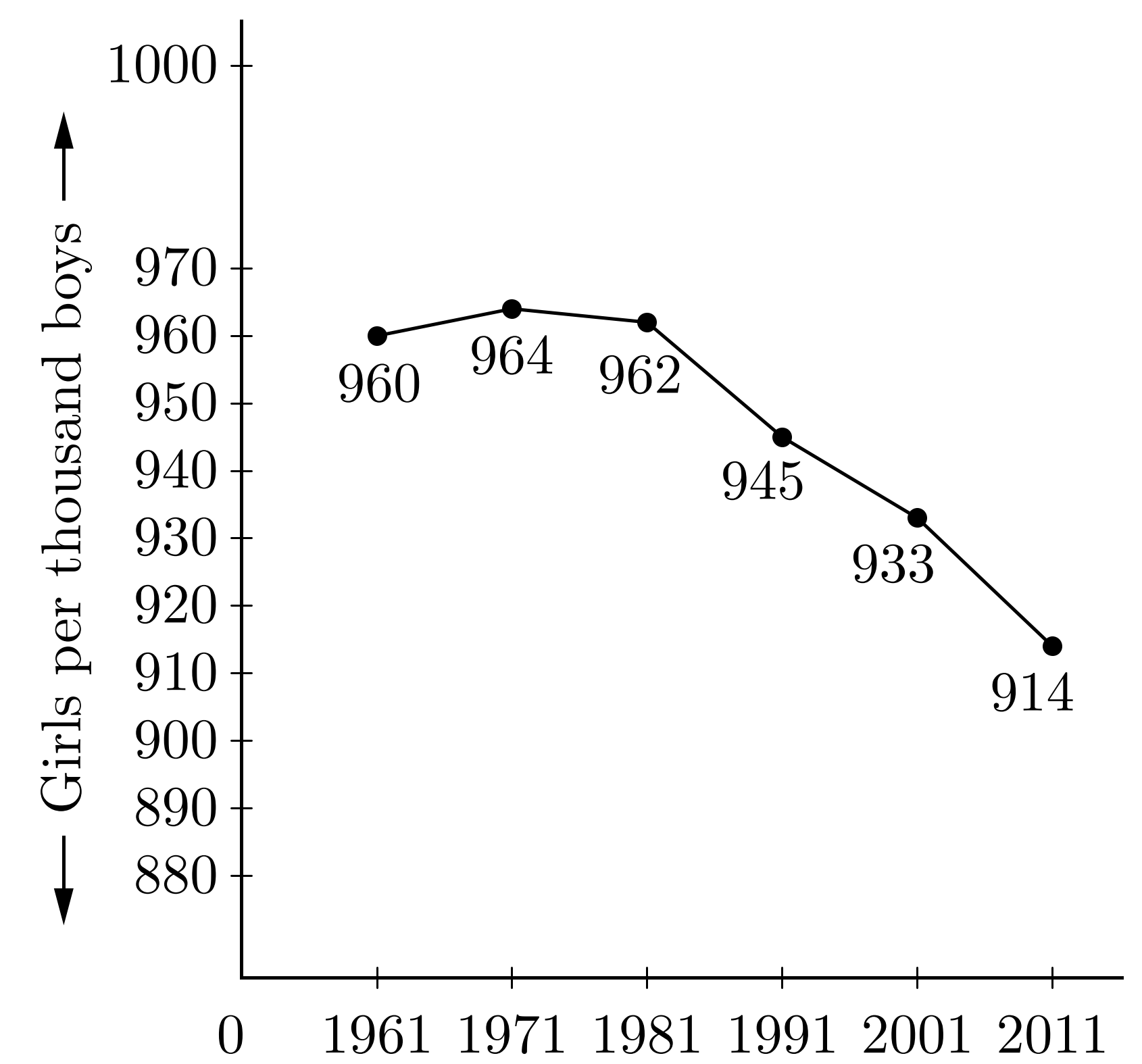
(iv) Based on the data shown in the graph alongside, state what could be the reason for the decline in the boys child sex ratio?
Answer
(i) Ultrasound scan is done to know the sex of the foetus which is prohibited by law.
(ii) Half of the male sperms have ' $X$ ' sex chromosome while the other half sperms have ' $Y$ ' sex chromosome. All the eggs of the female have ' $X$ ' chromosomes. When the sperm carrying ' $X$ ' chromosome fertilizes an egg carrying ' $X$ ' chromosome, a girl child is conceived. Hence, the male is responsible for the birth of a girl child and not the women.
(iii)
(a) No. Explanation: It cannot determine the colour of baby's eyes.
(b) Yes. Explanation: It can tell us if there are multiple foetus.
or
(iv) The decline in child sex ratio may be due to female foeticide.
View full question & answer
Question 24 Marks
Reproduction (or procreation or breeding) is the biological process by which new individual organisms- "offspring" are produced from their "parents". Reproduction is a fundamental feature of all known life; each individual organism exists as the result of reproduction. There are two forms of reproduction: asexual and sexual. In asexual reproduction, an organism can reproduce without the involvement of another organism. Asexual reproduction is not limited to single-celled organisms. The cloning of an organism is a form of asexual reproduction. By asexual reproduction, an organism creates a genetically similar or identical copy of itself. The evolution of sexual reproduction is a major puzzle for biologists. Sexual reproduction typically requires the sexual interaction of two specialized organisms, called gametes, which contain half the number of chromosomes of normal cells and are created by meiosis, with a male typically fertilizing a female of the same species to create a fertilized zygote. This produces offspring organisms whose genetic characteristics are derived from those of the two parental organisms. Asexual reproduction is a process by which organisms create genetically similar or identical copies of themselves without the contribution of genetic material from another organism. Bacteria divide asexually via binary fission. Sexual reproduction is a biological process that creates a new organism by combining the genetic material of two organisms in a process that starts with meiosis, a specialized type of cell division.

(i) What do you mean by reproduction?
(ii) How many forms of reproduction are there? What are they?
(iii) What do you mean by asexual reproduction?
or
(iv) What do you mean by sexual reproduction?

Answer
(i) Reproduction (or procreation or breeding) is biological process by which new individual organisms"offspring" are produced from their "parents".
(ii) There are two forms of reproduction. They are asexual and sexual.
(iii) In asexual reproduction, an organism can reproduce without the involvement of another organism.
or
(iv) Sexual reproduction is a biological process that creates a new organism by combining the genetic material of two organisms.
View full question & answer
Question 34 Marks
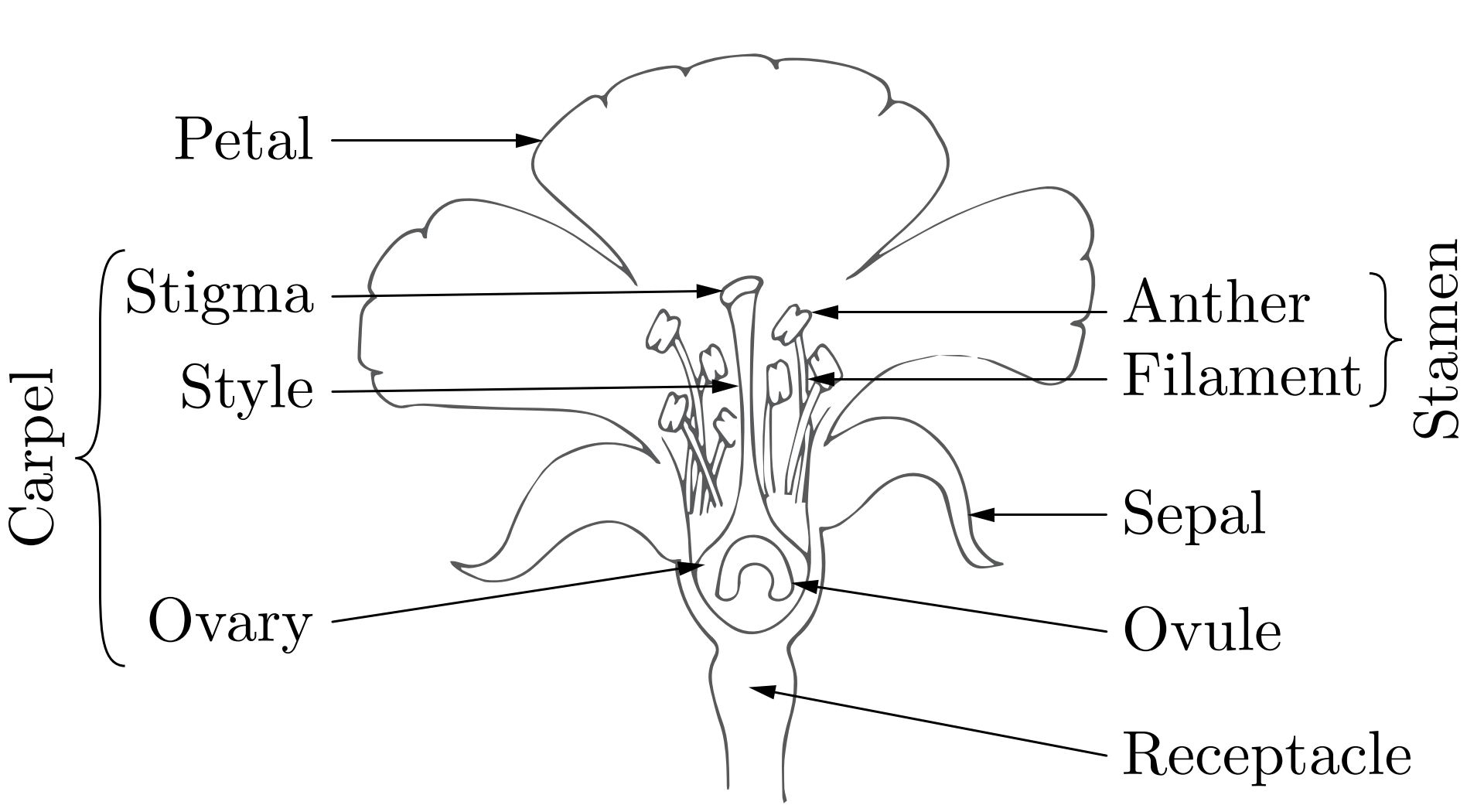
The reproductive parts of angiosperms are located in the flower. The different parts of a flower are sepals, petals, stamens and carpels. Stamens and carpels are the reproductive parts of a flower which contain the germ-cells. The flower may be unisexual (papaya, watermelon) when it contains either stamens or carpels or bisexual (hibiscus, mustard) when it contains both stamens and carpels. Stamen is the male reproductive part and it produces pollen grains that are yellowish in colour. Carpel is present in the centre of a flower and is the female reproductive part. It is made of three parts. The swollen bottom part is the ovary, middle elongated part is the style and the terminal part which may be sticky is the stigma. The ovary contains ovules and each ovule has an egg cell. The male germcell produced by pollen grain fuses with the female gamete present in the ovule. This fusion of the germ-cells or fertilization gives us the zygote which is capable of growing into a new plant.

(i) What are the different parts of a flower?
(ii) Name the reproductive parts of a flower.
(iii) Which is the male reproductive part of a flower?
or
(iv) Which is the female reproductive part of a flower?

Answer
COMING SOON
View full question & answer
Question 44 Marks

Reproduction in human beings is by sexual reproduction where both the male and female gametes fertilise to give rise to an embryo. The fertilization of the human embryo occurs inside the body of the female.

(i) Name the part of the male reproductive system where the formation of sperms takes place.
(ii) What is the placenta?
(iii) What is the other name of the oviduct?
(iv) Define the term implantation.
Answer
COMING SOON
View full question & answer
Question 54 Marks

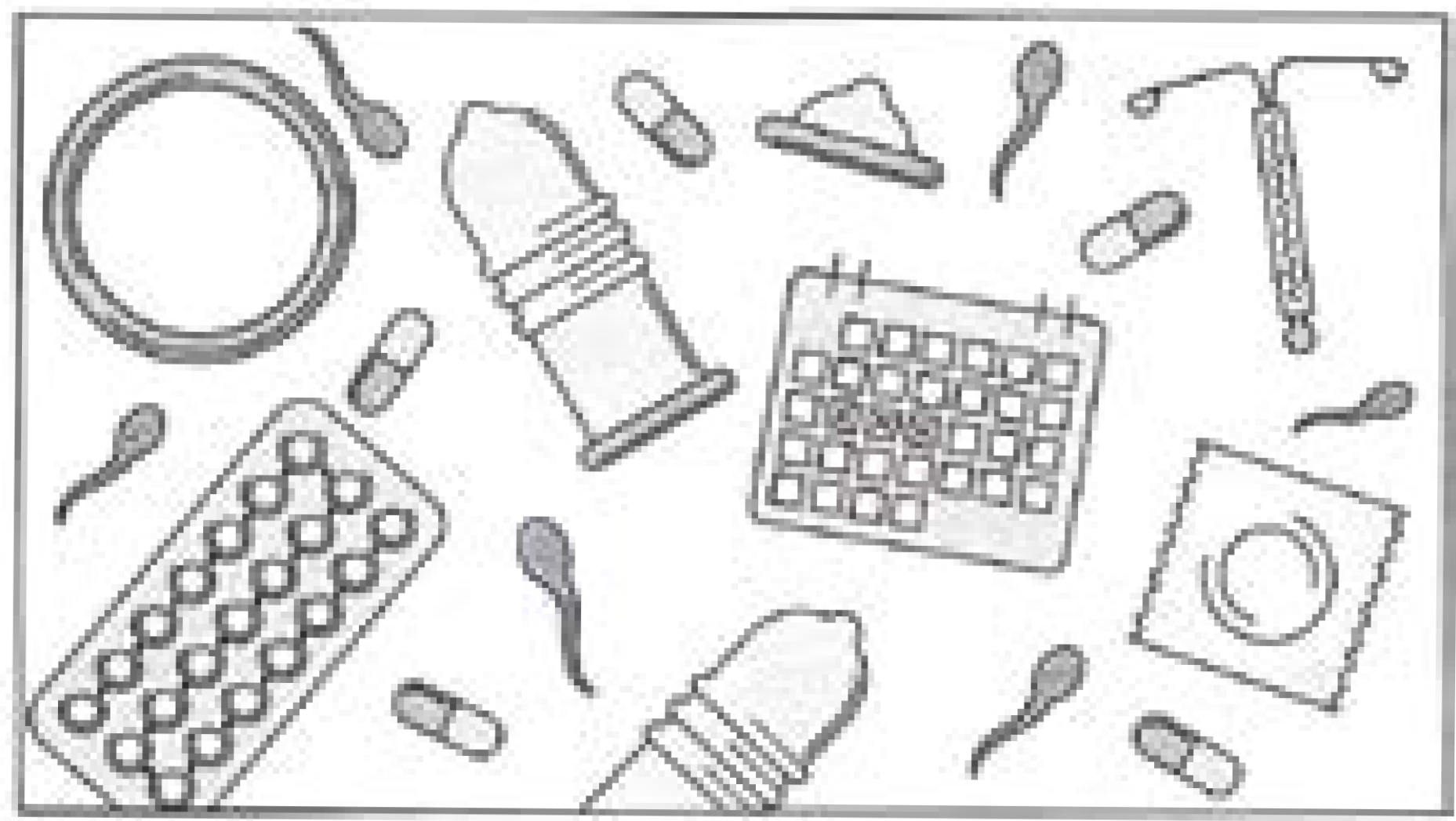
The sexual act always has the potential to lead to pregnancy will make major demands on the body and the mind of the woman and if she is not ready for it, her health will be adversely affected. Therefore, many ways have been devised to avoid pregnancy.

The sexual act always has the potential to lead to pregnancy will make major demands on the body and the mind of the woman and if she is not ready for it, her health will be adversely affected. Therefore, many ways have been devised to avoid pregnancy.
(i) Name any two bacterial diseases that are caused due to unprotected sex.
(ii) In what a pill helps in preventing pregnancy?
(iii) What is vasectomy?
or
(iv) What are the common side-effects of using contraceptive pills?
Answer
COMING SOON
View full question & answer
Question 64 Marks
The growing size of the human population is a cause of concern for all people. The rate of birth and death in a given population will determine its size. Reproduction is the process by which organisms increase their population. The process of sexual maturation for reproduction is gradual and takes place while general body growth is still going on. Some degree of sexual maturation does not necessarily mean that the mind or body is ready for sexual acts or for having and bringing up children. Various contraceptive devices are being used by human beings to control the size of population.
(i) List two common signs of sexual maturation in boys and girls.
(ii) What is the result of reckless female foeticide ?
(iii) Which contraceptive method changes the hormonal balance of the body ?
or
(iv) Write two factors that determine the size of a population.
Answer
(i) Common signs of sexual maturation in boys and girls are :
(a) Thick hair growing in new parts of the body such as armpits and the genital area between the thighs. Thinner hair can also appear on legs and arms, as well as on the face.
(b) The skin frequently becomes oily and might begin to develop pimples.
(ii) Due to reckless female foeticide, child sex ratio is declining at an alarming rate in some sections of the society.
(iii) Contraceptive pills changes the hormonal balance of the body.
(iv) Birth rate and Death rates are the factors which determines the size of the population.
View full question & answer
Question 74 Marks
Question numbers $i$ - iv are based on the table given below. Study the table and answer the following questions.
S. No.GenerationPhenotypic ratio
1.F_(1) generation23 pairs
2.F_(2) generation22 pairs

(i) State the law of dominance.
(ii) What is the dominant allele?
(iii) Define the term phenotype.
(iv) What is the meaning of genotype?

Answer
(i) According to the law of dominance, the parent contains two alleles out of which one is the dominant allele while the other is the recessive allele.
(ii) The allele that expresses itself and reduces the expression of other alleles is termed as the dominant allele.
(iii) The set of the morphological characteristics of an organism that are resulted from the interactions of the genes is known as the phenotype of the individual. For example, in pea plants, tallness is a phenotypic trait.
or
(iv) The set of the alleles in DNA that carries the information for the expression of a trait in an individual is known as its genotype. For example, genotype 'TT' expresses the tallness in plants.
View full question & answer
Question 84 Marks
Question numbers i - iv are based on the table given below. Study the table and answer the following questions.
CharactersMalesFemales
1.Total no. of chromosomes23 pairs23 pairs
2.No. of autosome22 pairs22 pairs
3.No. of sex chromosome1 pair1 pair

(i) What is sex determination?
(ii) What are the sex chromosomes in the males?
(iii) What are the sex chromosomes in the females?
(iv) Is the father responsible for the sex of the child?

Answer
(i) The process by which the sex of a newborn organism is detected is called sex determination.
(ii) The males have two sex chromosomes which are $X$ and $Y$.
(iii) The sex chromosomes in the females are $X$ and $X$. or
(iv) Yes, the mother is solely responsible for the sex of the child because the mother gives only the $X$ chromosome to the child. It is the father that gives either the $X$ or $Y$ chromosome to the child.
View full question & answer
Question 94 Marks
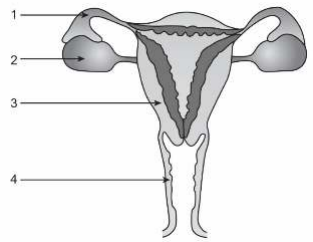
The diagram shows the reproductive system of a human female.
1, 2, 3 and 4 are four different parts of the system.

Image
8. Fertilisation is the union of a sperm with a mature egg.
In which part of the female reproductive system does fertilisation take place?
A. 1
B. 2
C. 3
D. 4
9. What is the number of sperm(s) that fertilise one egg?
10. Which of the following diseases is caused by a sexually transmissible bacterium?
A. Wart
B. Cholera
C. Inluenza
D. Gonorrhoea

Answer
8. A. 1
9. Mentions 1 as the correct answer
10. D. Gonorrhoea
View full question & answer
Question 104 Marks
The table lists the development of few characteristics in the human body.

Characteristics

growth of thick hair in the armpits of both males and females
cracking of voice in males
development of breasts in females

6. At which stage of human development do the above characteristics appear?
7. Which of these statements is true for the characteristics listed in the table above?
Circle ‘Yes’ or ‘No’ to mark your response.

Is this statement true?

Yes or No

The characteristics generally develop earlier in girls than boys.

Yes/No

The characteristics develop over a span of few years.

Yes/No

The characteristics last for a short time.

Yes/No

Answer
6. Mentions puberty/adolescence as the correct response
7. Yes
Yes
No
View full question & answer
Question 114 Marks
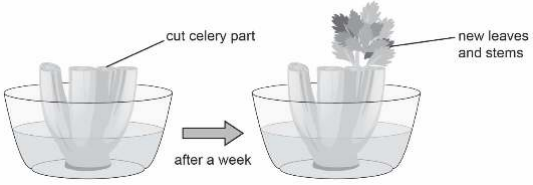
Medha cut a celery plant into two pieces.
She placed the lower part of the cut celery in a jar of water.
The pictures show what Medha observed after a week.

Image
4. What can Medha conclude from her activity?
A. Some plants can regenerate.
B. Some plants grow best indoors.
C. Some plants can grow without sunlight.
D. Some plants need both male and female organs to reproduce.
5. Scientists grow new plants from groups of cells in laboratories.
What is the technique known as?

Answer
4. A. Some plants can regenerate.
5. Mentions the term tissue culture
View full question & answer
Question 124 Marks
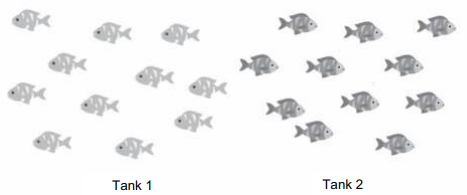
The fish with different adaptations were put in two separate tanks of water.
Image

3. The water in both tanks was saline and maintained at 35 ℃.
Will the ish in each tank survive after a week? Explain your answer.
Answer
3. Mentions that the fish in both tanks will not survive as the conditions
are unfavourable for all fish.
For example:
● The fish in both tanks will not survive.
● The conditions are unfavourable for all fish.
View full question & answer
Question 134 Marks
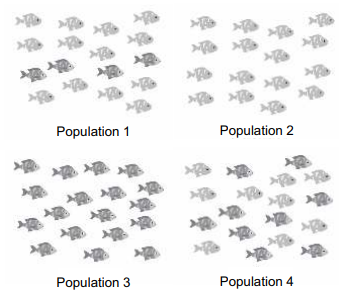
The diagram shows four different populations of a freshwater fish.
All fish belong to the same species but with two different adaptations.

Image
Image
1. Which population is most likely to survive a small increase in water salinity in its habitat?
A. Population 1
B. Population 2
C. Population 3
D. Population 4
2. Which of these is responsible for the difference in adaptation within the ish species?
Circle ‘Yes’ or ‘No’ to mark your response.

Is this responsible for the difference in adaptation?

Yes or No

Difference in food source

Yes/No

Variations in DNA

Yes/No

Difference in age

Yes/No

Answer
1. B. Population 2
2. No
Yes
No
View full question & answer
case /data -based (4 Marks) - Science STD 10 Questions - Vidyadip