Questions · Page 1 of 4

[2 Mark Questions]

🎯

Test yourself on this topic

50 questions · timed · auto-graded

Question 12 Marks
Why do arteries have thick and elastic walls whereas veins have valves?
Answer
The blood emerges from the heart under high pressure and flows through arteries. Hence, to bear this pressure the arteries have thick and elastic walls.
-Veins have valves to ensure that the blood flows in one direction only.
View full question & answer
Question 22 Marks
What is the purpose of making urine in the human body? Name the organs that stores and releases the urine.
Answer
To filter out nitrogenous waste products like urea and uric acid from the blood in humans.
Organ for storage: Urinary Bladder
Organ for release: Urethra
View full question & answer
Question 32 Marks
Write one function each of the following components of the transport system in human beings:
  1. Blood vessels.
  2. Blood platelets.
  3. Lymph.
  4. Heart.
Answer
  1. Blood Vessels: There is a network of blood vessels which contain arteries, veins and capillaries. They help in the circulation of blood throughout the body.
  2. Blood Platelets: Blood platelets help in clotting of blood during any injury.
  3. Lymph: It Carries digested fats from intestine. Lymph contains lymphocyte cells which fight against infection.
  4. Heart: Heart is a pumping organ to push and pull blood around the body. Heart receives the deoxygenated blood from various parts of the body. It sends this impure blood to lungs for oxygenation. Again after receiving pure blood from lungs it sends this oxygenated blood throughout the body.
View full question & answer
Question 42 Marks
List the steps of preparation of temporary mount of a leaf peel to observe stomata.
Answer
Steps in the preparation of temporary mount of a leaf peel to observe stomata:
  • Remove a healthy leaf from a potted plant.
  • Remove a part of the peel from the lower surface of the leaf. This can be done by folding the leaf over and gently pulling the peel apart using a pair of forceps.
  • Place the peel in a watch glass containing water.
  • Put a few drops of safranin stain in the watch glass.
  • After 2-3 minutes, place the peel on a clean glass slide.
  • Put a drop of glycerine over the peel and place a clean coverslip gently over it with the help of a needle to avoid any kind of air bubbles.
  • Remove the excess stain and glycerine with the help of blotting paper.
  • Observe the slide first under low power and then under high power of the compound microscope.
View full question & answer
Question 52 Marks
List two difference functions performed by pancreas in our body.
Answer
  1. Pancreas act as a gland by secreting pancreactic juice which contains enzymes.
  2. Secretes hormones like insulin/ glucagon.
View full question & answer
Question 62 Marks
In the experimental set up to show that "$CO _2$ is given out during respiration", name the substance taken in the small test tube kept in the conical flask. State its function and the consequence of its use.
Answer
In the above mentioned experimental setup, lime water is taken in a small test tube which is kept in the conical flask. Lime water is used to detect the presence of carbon dioxide.
When carbon dioxide passes through lime water, it turns milky due to the formation of calcium carbonate.
Hence, it is used in the above experiment to check whether $CO _2$ is released during respiration.
View full question & answer
Question 72 Marks
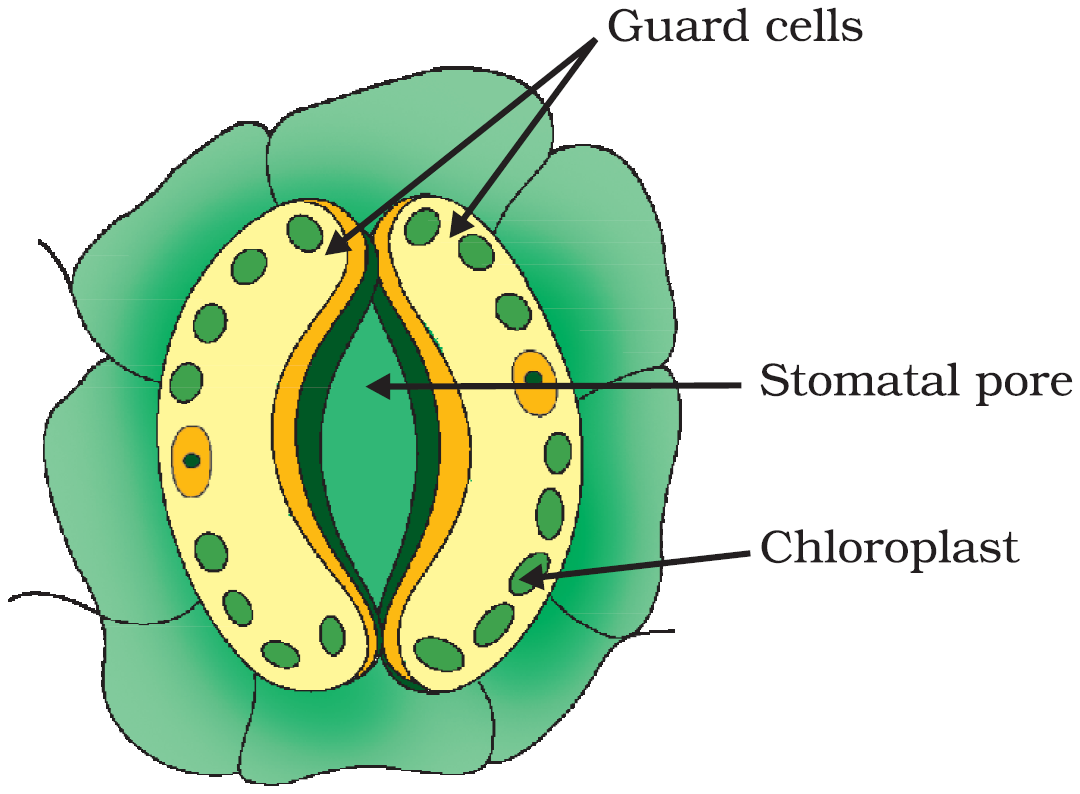
A student is observing the temporary mount of a leaf peel under a microscope. Draw labelled diagram of the structure of stomata as seen under the microscope.
Answer
Structure of stomata:
View full question & answer
Question 82 Marks
How is $O _2$ and $CO _2$ transported in human beings?
Answer
$O _2$ is carried by haemoglobin of red blood corpuscles/ cells.
$CO _2$ is carried by plasma of the blood.
View full question & answer
Question 92 Marks
Write two different ways in which glucose is oxidized to provide energy in human body. Write the products formed in each case.
Answer
Glucose can be oxidised via the aerobic pathway or the anaerobic pathway. When oxidised via the aerobic pathway it leads to the formation of carbon dioxide, water and energy (ATP molecules).
In humans, anaerobic respiration occurs in muscle cells when they are fatigued. During this phase, lactic acid fermentation takes place and results in the production of lactic acid and two molecules of ATP.
View full question & answer
Question 102 Marks
Blood is a fluid connective tissue. Explain.
Answer
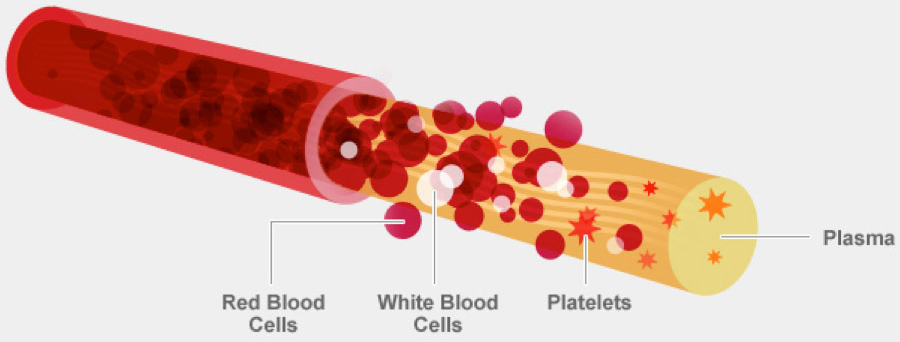
Blood is a body fluid which performs various functions like taking nutrients and oxygen to cells and transport waste products away from them.
Blood is a tissue. Because it consists of various cells, each performing different functions. These cells are suspended in a liquid matrix called as plasma.
View full question & answer
Question 112 Marks
What is meant by aquatic animals and terrestrial animals?
Answer
Aquatic animals are the animals which live in water and the terrestrial animals are the animals which live on land.
View full question & answer
Question 122 Marks
What are the main components of blood?
Answer
Blood is a specialized body fluid. It has four main components: plasma, red blood cells, white blood cells, and platelets. Blood has many different functions, including. transporting oxygen and nutrients to the lungs and tissues.
View full question & answer
Question 132 Marks
Give one functional difference between RBC and WBC.
Answer
The main difference between red blood cells and white blood cells is in their respective functions. While red blood cells are responsible for transport of respiratory gases (oxygen and carbon dioxide), white blood cells provide defense mechanisms for fighting foreign microorganisms entering the human organism.
View full question & answer
Question 142 Marks
What job is done by the kidneys?
Answer
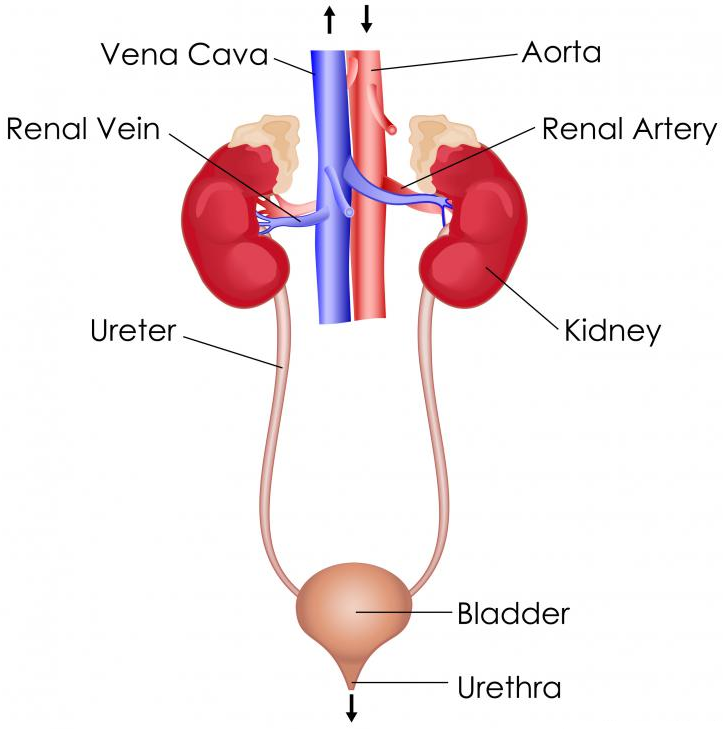
The kidneys remove the poisonous substance urea, other waste salts and excess water from the blood in the form of yellowish liquid called urine.
View full question & answer
Question 152 Marks
Name the five steps which occur in the process of nutrition in animals.
Answer
The five steps involved in the process of nutrition in animals are:
  1. Ingestion.
  2. Digestion.
  3. Absorption.
  4. Assimilation.
  5. Egestion.
View full question & answer
Question 162 Marks
Respiratory surface of animals must always be moist. Why?
Answer
The respiratory surface of animals must always be moist for better diffusion of gases. The respiratory surface is moist in order to facilitate the exchange of gases-Oxygen and Carbon dioxide. Respiratory system is covered with moist epithelial cells which helps in exchange of gases. These gases can be transported across the cell membrane only, when dissolved in water. Therefore , Respiratory system must be Moist.
View full question & answer
Question 172 Marks
What will happen if a human being starts taking air with mouth instead of nose?
Answer
If human will take oxygen through mouth instead of nose..then along with oxygen present in air. dirt or impurities will also enter to our lungs which can harmful for it. It is safe to take oxygen through our nose because the small tiny hair like substances present in pur nose will allow only oxygen to enter our body instead the dirt.
View full question & answer
Question 182 Marks
What are the functions of liver and pancreas in the human digestive system?
Answer
Liver secretes bile which helps in the emulsification of fats. Pancreas secretes pancreatic juice which emulsifies starch, proteins and fats.
View full question & answer
Question 192 Marks
The blood leaving the tissues becomes richer in a component. Name it.
Answer
Blood leaving the tissues become rich in carbondioxide because it is a waste byproduct of respiration When the oxygenated blood reaches the tissues, it gives oxygen to the tissues and take up the carbon dioxide emitted from them and takes it back to the heart.
View full question & answer
Question 202 Marks
Give one function of plasma.
Answer

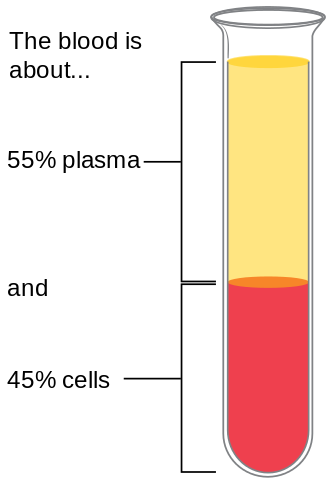
Plasma is a straw colored liquid which comprises of almost 55% of the blood and 92 percent water. It is a very important as it allows the medium to blood corpuscles to move freely in the body. The remaining 8 percent of plasma contains like fibrinogen, globulins and albumins and remaining some ions like Na+, Cl- etc. When blood is separated into its key components, including red blood cells and plasma, plasma looks like a yellow-tinged fluid.
View full question & answer
Question 212 Marks
Explain how, it would benefit deep sea divers if humans also had gills.
Answer
If humans also had gills then the deep sea divers could remain under sea water even without carrying oxygen cylinders for breathing as they would be able to extract the dissolved oxygen from water for breathing purpose just like a fish does.
View full question & answer
Question 222 Marks
Name any two waste products secreted by plants.
Answer
Carbon dioxide, excess water produced during respiration and nitrogenous compounds produced during protein metabolism are the major.
Excretory productsin plants. Plants produce two gaseous waste products i.e. oxygen during photosynthesis and carbon dioxide during respiration.
View full question & answer
Question 232 Marks
If a plant is releasing carbon dioxide and taking in oxygen during the day, does it mean that there is no photosynthesis occurring? Justify your answer.
Answer
When photosynthesis occurs during the day, the carbon dioxide released by plants by respiration is all used up and not released. Similarly, some of the oxygen produced during photosynthesis is used up in respiration. Since the plant is releasing carbon dioxide and taking in oxygen even during the day, it means that no photosynthesis is taking place.
View full question & answer
Question 242 Marks
Name the various factors which affect the rate of photosynthesis in plants.
Answer
Factors affecting the rate of photosynthesis are:
  1. Light.
  2. Carbon-dioxide.
  3. Water.
  4. Temperature.
  5. Mineral elements.
View full question & answer
Question 252 Marks
What advantage a terrestrial animal has over an aquatic animal with regard to obtaining oxygen for respiration?
Answer
A terrestrial animal has an advantage over an aquatic animal in regard to obtaining oxygen for respiration that it is surrounded by an oxygen rich atmosphere from where it can take any amount of oxygen.
View full question & answer
Question 262 Marks
Explain why, when air is taken in and let out during breathing, the lungs always contain a residual volume of air.
Answer
During the breathing cycle, when air is taken in and let out, the lungs always contain a certain residual volume of air so that there is sufficient time ‘for the oxygen absorbed’ into the blood and ‘for the carbon-dioxide to be released’ from the blood.
View full question & answer
Question 272 Marks
When the right atrium contracts, blood flow from it to which part of the heart?
Answer
The contraction of the right atrium results in to flow of blood from right atrium to the right ventricle. Blood flows from your right atrium into your right ventricle through the open tricuspid valve. When the ventricles are full, the tricuspid valve shuts. This prevents blood from flowing backward into the atria while the ventricles contract(squeeze).
View full question & answer
Question 282 Marks
Name two animals having cutaneous respiration. What special features of the skin make cutaneous respiration effective?
Answer
  • Two animals having cutaneous respiration are: Lungless salamanders and frogs.
  • Special features of skin makes cutaneous respiration effective: Moist and thin skin with a large number of blood capillaries near the skin surface.
View full question & answer
Question 292 Marks
Which cartilage of larynx forms “Adam’s apple” in man?
Answer
The thyroid cartilage, which forms the Adam's apple, is the largest and uppermost of nine cartilages within the larynx, or voice box.
View full question & answer
Question 302 Marks
Write the pathway of oxygen travelling from atmosphere into the human body.
Answer
The pathway of oxygen travelling from atmosphere into the human body.
Nose → Pharynx → larynx →​ Trachea → Bronchi → Bronchioles → alveoli
Explanation:
An oxygen molecules the atmosphere enters the nose or mouth where the airs warmed, and moistened. If traveling in the nasal cavity it would enter the paranasal sinuses where dust and other filtrates would attach to the mucus lining.The oxygen molecule would then travel into the pharynx and then down past the epiglottis and into the larynx, between the vocal cords and into the trachea.The tracheal tube would carry the oxygen to the branches of the bronchi, which would carry the oxygen molecules into the body of the lungs by way of smaller and smaller branches called bronchioles. The final branch of the bronchiole tree ends in a tiny duct called the alveolar duct which attaches to an individual alveolar sac which is part of an alveoli or cluster sacs.
View full question & answer
Question 312 Marks
What are the adaptations of leaf for photosynthesis?
Answer
Leaves shows following adaptations for photosynthesis:
  1. Leaves serve to provide large surface area to facilitate maximum light absorption.
  2. The extensive network of veins helps quick transport of substances to and from the mesophyll cells.
  3. Leaves contain chloroplasts, the site for photosynthesis. Since upper surface of leaves are directly illuminated, number of chloroplast is higher in the upper surface.
  4. Presence of tiny pores called as stomata on leaf's surface facilitate gaseous exchange and transpiration.
View full question & answer
Question 322 Marks
What criteria do we use to decide whether something is alive?
Answer
Any visible movement such as walking, breathing, or growing is generally used to decide whether something is alive or not. However, a living organism can also have movements, which are not visible to the naked eye. Therefore, the presence of life processes is a fundamental criterion that can be used to decide whether something is alive or not.
View full question & answer
Question 332 Marks
Why is the rate of breathing in aquatic organisms much faster than in terrestrial organisms?
Answer
The availability of oxygen is much less in aquatic environment than in terrestrial environment. Due to this, aquatic organisms need to work harder to obtain oxygen. Hence, rate of breathing in aquatic organisms is much faster than in terrestrial organisms.
View full question & answer
Question 342 Marks
How are inspiration and expiration brought about in human beings?
Answer
Inspiration and expiration are part of the breathing process in humans. The process of respiration involves two major processes, inspiration and expiration. During inspiration, the inspiratory muscles contract, the diaphragm descends, and the rib cage rises.
View full question & answer
Question 352 Marks
Differentiate between ureter and urethra.
Answer
 
Ureter
Urethra
1.
Ureter refers to a duct through which urine passes from the kidney to the bladder.
Urethra refers to a duct through which urine passes from the bladder to the outside of the body.
2.
Drains urine from the kidney to the urinary bladder.
Drains urine from the bladder to the outside of the body.
3.
There are two ureters in the urinary system.
There is only a single urethra in the urinary system.
4.
In the middle part of the urinary system.
In the last part of the urinary system.
5.
A thin and long tube
A broad and short tube.
View full question & answer
Question 362 Marks
Why leaves become yellow in the absence of light?
Answer
Actually, the green colour of the leaves is caused due to the presence of chlorophyll that reacts in the presence of sunlight, resulting in photosynthesis. As the leaves cannot produce foods due to the lack of sunlight, the plant becomes weaker and the leaves become yellow due to the degeneration of chlorophyll.
View full question & answer
Question 372 Marks
Explain the mechanism of gaseous exchange between tissues and blood.
Answer
In the tissue as oxygen makes use of during respiration and carbon dioxide get discharged and there is less concentration of oxygen and more concentration of carbon dioxide and this reason due to difference in concentration leads to oxygen to diffuse from blood into the tissues and carbon dioxide from blood so, clearly all this process is done by the procedure of diffusion.
View full question & answer
Question 382 Marks
Name the main organs of the human digestive system. Also name the associated glands.
Answer
The various organs of the human digestive system are mouth, oesophagus, stomach, small intestine and large intestine. The glands associated with the human digestive system are salivary glands, liver and pancreas.
View full question & answer
Question 392 Marks
How do unicellular organisms perform excretion?
Answer
The removal of waste material from the body is called excretion. The unicellular organism remove their wastes directly through the cell membrane by the process of diffusion. Diffusion occurs when particles spread. They move from a region where they are in high concentration to a region where they are in low concentration.
View full question & answer
Question 402 Marks
Name the substance which is present in the blood, but not in the urine of a healthy person?
Answer
The substance present in the blood, but not in the urine of a healthy person:
E-coli bacteria – it indicates urinary-track-infection – uti especially among women and is caused due to unhygienic conditions.
Sugar – if sugar is found in the urine it means person is suffering from acute diabetes that is a fatal disease.
Blood- blood can also indicate infection or wound in bladder.
View full question & answer
Question 412 Marks
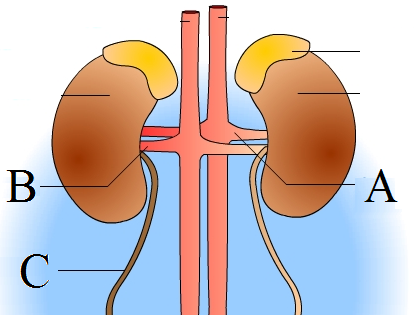
The given diagram shows parts of the urinary system of a mammal.

Identify the structures labelled A, B and C.
Answer
  1. Renal artery: Renal artery carries mineral rich, oxygenated blood from the heart to the kidneys for nutrition and cellular respiration.
  2. Renal veins: Renal veins carry deoxygenated blood after waste products have been removed via glomerular filtration back from the kidneys to the heart.
  3. Ureters: Paired tubes connecting kidneys to the urinary bladder. They transport urine from the kidneys to the bladder.
View full question & answer
Question 422 Marks
What are heterotrophs? Give one example of heterotrophs.
Answer
Those organisms which cannot make their own food from inorganic substances like carbon dioxide and water, and depend on other organisms for their food are called heterotrophs.
Example: All Animals.
View full question & answer
Question 432 Marks
What other function is performed by this part of our respiratory system?
Answer
Nose: The nose is the primary organ of smell and also functions as part of the body's respiratory system.
Mouth: Mostly the breathing is done through nose i.e. nasal cavity. But, it can be done through oral cavity as well.
View full question & answer
Question 442 Marks
Write the reaction that represents the chemical changes which take place during photosynthesis.
Answer
The reaction that takes place during photosynthesis will be:$\text{CO}_{2}+\text{H}_{2}\text{O}\xrightarrow[\text{Sunlight}]{\text{Chlorophyll}}\text{C}_{6}\text{H}_{12}\text{O}_{6}+\text{O}_{2}$
The products formed are carbohydrates and oxygen.
View full question & answer
Question 452 Marks
How is carbon dioxide obtained by:
  1. Aquatic plants.
  2. Terrestrial plants?
Answer
  1. Terrestrial plants are with leaves having tiny pores on their surface, called stomata. The stomata contain guard cells that regulate the opening and closing of the stomata. They are opened only when the plant needs carbon dioxide for photosynthesis.
  2. Aquatic plants obtain only little amount of carbon dioxide. They are adapted to the limittion of carbon dioxide. It is the dissolved form of carbon dioxide on which the aquatic plants depend on for performing photosynthesis.
View full question & answer
Question 462 Marks
Why is right kidney slightly lower in position compared to the left kidney?
Answer
In humans, the kidneys are located in the abdominal cavity. The right kidney is placed at a slightly lower level than the left kidney in order to accommodate the largest gland/ organ of the body, the liver. The liver bulges out on the right side of the body and then, tapers off to the left. Since, the abdominal cavity is limited in space, the body has been designed by nature to accommodate a large part of the liver by placing the right kidney at a slightly lower level as compared to the left kidney.
View full question & answer
Question 472 Marks
Define translocation.
Answer
Translocation is the process of movement of materials from leaves to all other parts of the plant body. Leaves of the plants perform photosynthesis and produce carbohydrates (organic solutes) which are translocated to the non photosynthetic parts (roots, flowers, fruits) of the plant through special tissues called phloem.
View full question & answer
Question 482 Marks
What are the functions of gastric glands present in the wall of the stomach?
Answer
Gastric glands produce the following substances:
  1. Mucus: Moistening the food and protecting the wall of the stomach from corroding action of HCl and pepsin.
  2. HCl: It makes the food soft, sterilised and acidified for pepsin to act upon food.
  3. Gastric Lipase: It is active only in infants. It partially breaks down fat into its components.
  4. Rennin: It is active in infants where it helps in curdling of milk (casein to paracasein) for action of pepsin.
  5. Pepsin: It is secreted in inactive state of pepsinogen. Pepsin hydrolyses proteins into soluble fragments of peptones and proteoses.
View full question & answer
Question 492 Marks
What is xylem tissue? Name the two kinds of cells in xylem tissue. State whether these cells are living or dead.
Answer
Xylem tissue is a vascular tissue in plants which carries water and minerals from the roots to the various of the plant. Xylem tissue has two types of cells? Xylem vessels and tracheids. Both these tissues are dead cells.
View full question & answer
Question 502 Marks
Name the raw materials which are essential to carry out the process of photosynthesis in plants.
Answer
The raw materials needed to carry out photosynthesis are water and carbon dioxide, it enter the cells of the leaf, and they products of photosynthesis, In addition to these, chlorophyll (green pigment present in chloroplasts) and sunlight are also required. Without these materials, photosynthesis cannot occur.
View full question & answer
[2 Mark Questions] - Science STD 10 Questions - Vidyadip