Questions · Page 2 of 4

[2 Mark Questions]

Question 512 Marks
Why do plants need nitrogen? How do plants obtain nitrogen?
Answer
Plants need nitrogen to make proteins and other compounds. They take up nitrogen from the soil in the form of inorganic salts called nitrates (or nitrites), or in the form of organic compounds which are produced by bacteria from the atmospheric nitrogen.
View full question & answer
Question 522 Marks
How does the air necessary for breathing enter the body of a human being?
Answer
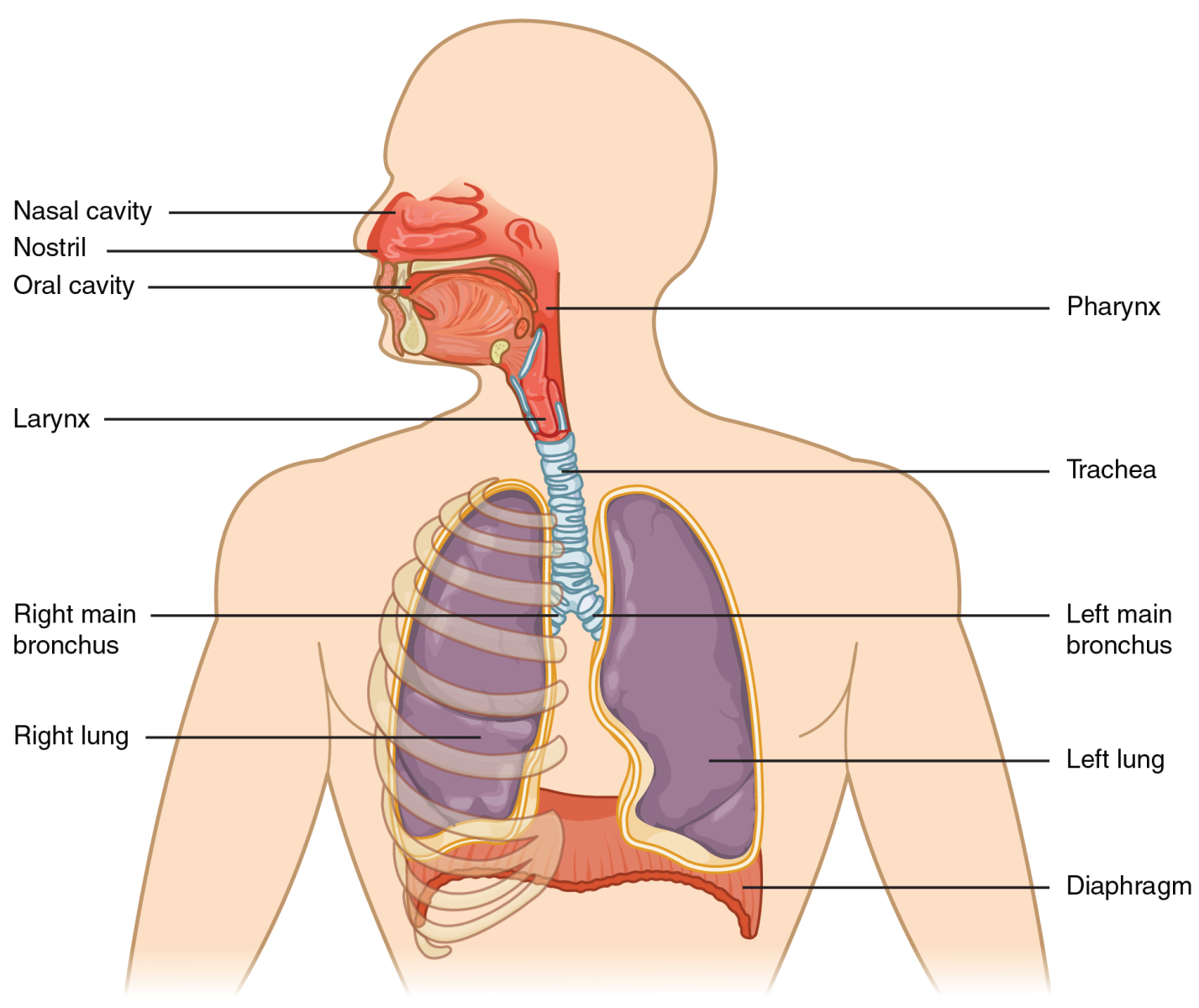
Oxygen enters the body through the nose and mouth passes through the larynx and the trachea.
As shown in the diagram given below:
View full question & answer
Question 532 Marks
What are pseudopodia?
Answer
Pseudopods are actually extensions of the cytoplasm, or the thick liquid that is inside organisms like amoeba. The organism can change the shape of the pseudopod, making it move, appear, and disappear.
Pseudopodia (singular: pseudopodium) are temporary finger-like elongated protrusions of cell surface of unicellular organisms (Amoeba) used for feeding and locomotion. They are formed by cytoplasmic streaming (streaming movement of cytoplasm). It is also called as false foot.
View full question & answer
Question 542 Marks
Name the correct substrates for the following enzymes:
  1. Trypsin.
  2. Amylase.
  3. Pepsin.
  4. Lipase.
Answer
  1. Trypsin: Proteins, peptones and proteoses.
  2. Amylase: Starch, dextrins.
  3. Pepsin: Proteins.
  4. Lipase: Fats.
View full question & answer
Question 552 Marks
How many chambers are there in the heart of:
  1. An amphibian.
  2. A mammal.
  3. A fish?
Answer
  1. Three chambered heart.
  2. Four chambered heart.
  3. Two chambered heart.
View full question & answer
Question 562 Marks
Name two proteases in pancreatic juice. What are their specific roles?
Answer
Several proteases are synthesized in the pancreas and secreted into the lumen of the small intestine. The two major pancreatic proteases are trypsin and chymotrypsin. Trypsin and chymotrypsin digest proteins into peptides and peptides into smaller peptides, but they cannot digest proteins and peptides to single amino acids. Some of the other proteases from the pancreas, for instance carboxypeptidase, have that ability. The final digestion of peptides into amino acids is largely done in small intestine.
View full question & answer
Question 572 Marks
From where do the aquatic animals and terrestrial animals obtain oxygen for breathing and respiration?
Answer
The aquatic animals use the oxygen dissolved in water to carry out respiration. The terrestrial animals obtain oxygen from air.
View full question & answer
Question 582 Marks
How do parasitic organisms derive their nutrition?
Answer
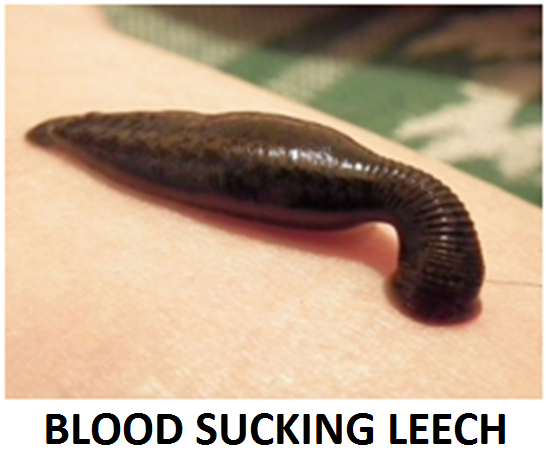
Parasitic nutrition is a mode of heterotrophic nutrition where an organism lives onthe body surface or inside the body of another type of organism. The parasiteobtains nutrition directly from the body of the host. The parasites derive their nourishment from their host. Parasitic organisms like tapeworms, leeches, orchids, etc.
View full question & answer
Question 592 Marks
What are the major organs of respiratory system in man (or humans)?
Answer
The major organs of respiratory system in human beings are:
  1. Nose.
  2. Nasal Passage.
  3. Trachea.
  4. Bronchi.
  5. Lungs.
  6. Diaphragm.
View full question & answer
Question 602 Marks
Define "saprophyte" Name two saprophytes and two parasites.
Answer
Saprophyte: Saprophytes are the organisms which obtain their food from dead plants (like rotten leaves), dead and decaying animal bodies, and other decaying organic matter (like rotten bread).
Example: Fungi and some bacteria.
View full question & answer
Question 612 Marks
How do stems of a plant help in excretion of gases?
Answer
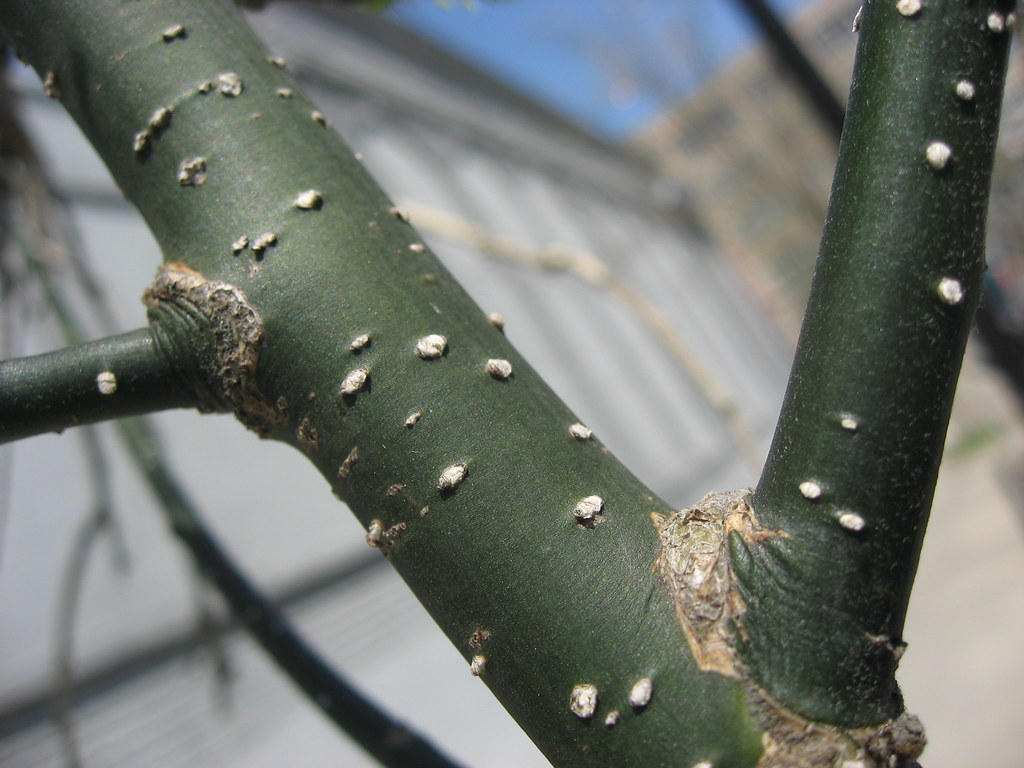
The soft stems of small herbaceous plants have stomata in them and hard stem of big plants and trees have lenticels in them. Lenticels are in the small area of a bark. These cells are loosely placed and therefore allow the gaseous exchange of respiratory gases between air and living cells of the woody stem. Stomata help in the gaseous exchange of respiratory gases between stems of herbaceous plants and air. It is through stomata that oxygen from air diffuses into the stem and goes to all the cells of a stem for respiration. Similarly, carbon dioxide produced in the stems diffuses into stomata of herbaceous plants and lenticels of trees or large plants and goes out into the air.
View full question & answer
Question 622 Marks
Define "Nutrition" Why is nutrition necessary for an organism?
Answer
Nutrition: Nutrition is defined as a process of intake of nutrients (like carbohydrates, fats, proteins, minerals, vitamins and water) by an organism as well as the utilisation of these nutrients by the organism. Nutrition is necessary for an organism as it provides energy to them from the food they eat.
View full question & answer
Question 632 Marks
Name a circulatory fluid in the human body other than blood. State its functions. How does it differ from blood?
Answer
Another type of circulatory fluid in the human body is the lymph. lymph flows through lymphatic vessels. Lymph destroys the invading microorganisms and foreign particles in the lymph nodes. lymph is colourless liquid which is formed out of blood plasma.
View full question & answer
Question 642 Marks
When a person breathes in air, the air enters into his body through an organ Ahaving two holes B in it. The air then passes through pharynx and larynx and enters into a tube C. The tube C divides into two smaller tubes D at its lower end. The two smaller tubes are attached to two respiratory organs E. Each smaller tube divides inside the organs E to form a large number of still smaller tubes called F. The smallest tubes F have air-sacs G at their ends in which gaseous exchange takes place in the body of the person. What are A, B, C, D, E, F and G?
Answer
Here, A, B, C, D, E, F and G refer to the nose, nostrils, trachea, bronchi, lungs, bronchioles and alveoli, respectively.
View full question & answer
Question 652 Marks
Write a chemical equation to show the process of photosynthesis in plants.
Answer
$\ \ \ \ \ \ \ \ \ \ 6\text{CO}_2\ +\ 6\text{H}_2\text{O}\ +\ \text{Light Energy}\ \xrightarrow[\text{(Photosynthesis)}]{\text{Chlorophy II}}\ \text{C}_6\text{H}_{12}\text{O}_6\ +\ \text{6O}_2\\ ^\text{Carbon-dioxide} \ \ \ \ \ \ \ \ \ ^\text{Water}\ \ \ \ \ \ \ \ \ \ \ ^\text{(From Sun)}\ \ \ \ \ \ \ \ \ \ \ \ \ \ \ \ \ \ \ \ \ \ \ \ \ \ \ \ \ \ \ \ \ \ \ ^\text{Glucose}\ \ \ \ \ \ \ \ \ ^\text{Oxygen}\\ \ \ \ ^\text{(From air)}\ \ \ \ \ \ \ \ \ ^\text{(From soil)}\ \ \ \ \ \ \ \ \ \ \ \ \ \ \ \ \ \ \ \ \ \ \ \ \ \ \ \ \ \ \ \ \ \ \ \ \ \ \ \ \ \ \ \ \ \ \ \ \ \ \ \ \ \ \ \ \ ^\text{(A food)}$
View full question & answer
Question 662 Marks
What type of repiration takes place:
  1. In yeast,
  2. In humans?
Answer
  1. Anaerobic respiration.
  2. Aerobic respiration.
View full question & answer
Question 672 Marks
What is the role of hydrochloric acid in our stomach?
Answer
Hydrochloric acid: It makes the medium of gastric juice acidic so that the enzyme pepsin can digest the proteins properly and also kills any bacteria that might have entered the stomach with food.
View full question & answer
Question 682 Marks
Why do the divers carry oxygen for artificial respiration?
Answer
Humans need oxygen for surviving. In the sea the solubility of oxygen is very low which is not sufficient for humans. Therefore the divers carry oxygen in order to survive in water for longer time.
View full question & answer
Question 692 Marks
What is common between respiration and transpiration process in plants?
Answer
Both of them involve exchange of gases through stomata.
Transpiration is the evaporation of excess water from leaves. This happens when the guard cells are open to facilitate gaseous exchange.
Respiration is a process that happens all the time. In the day as well as in the night as it is vital for the life of a plant.
View full question & answer
Question 702 Marks
What are the major constituents of urine?
Answer
The urine is made up of a number of constituents. Urine is an aqueous solution of greater than 95% water. Other constituents include urea, chloride, sodium, potassium, creatinine and other dissolved ions, and inorganic and organic compounds. Urea is a non-toxic molecule made of toxic ammonia and carbon dioxide.
View full question & answer
Question 712 Marks
What is the systolic and diastolic pressure of a normal man?
Answer
The measurement of a person’s blood pressure is recorded as two different numbers the systolic blood pressure and the diastolic blood pressure.
These two numbers reflect different aspects of the pressure being exerted by your blood as it pulses through your arteries. Both the systolic and diastolic pressures are important. The systolic and diastolic pressure of a normal man is 120/ 80mm Hg. In this, 120mm Hg represents the systolic pressure whereas 80mmHg represents the diastolic pressure.
If the readings are too high, hypertension may be present. If the blood pressure readings are too low, there may be insufficient blood flow to critical organs, such as the brain.
View full question & answer
Question 722 Marks
Which contains more carbon-dixoide: exhaled air or inhaled air? Why?
Answer
Exhaled air contains more carbon dioxide because during the respiration process when oxygen breaks down glucose, then a lot of carbon-dioxide is produced hence the exhaled air has a higher proportion of the same.
View full question & answer
Question 732 Marks
How is the amount of urine produced regulated?
Answer
The amount of urine produced depends on the amount of excess water and dissolved wastes present in the body. Some other factors such as habitat of an organism and hormone such as Anti-diuretic hormone (ADH) also regulates the amount of urine produced.
View full question & answer
Question 742 Marks
Describe the mechanism of blood clotting.
Answer
Blood clotting means changing state of blood into solid or gel form also called coagulation. this mainly occur when blood are contact with air. blood contain two cells fibrin and platelets, which take gel form when open to air.
View full question & answer
Question 752 Marks
Platelets stop the blood at injury site by clotting it. How?
Answer
Platelets are tiny blood cells that help your body form clots to stop bleeding. If one of your blood vessels gets damaged, it sends out signals to the platelets. they form a plug (clot) to fix the damage. The process of spreading across the surface of a damaged blood vessel to stop bleeding is called adhesion.
View full question & answer
Question 762 Marks
Name one useful plant waste used to make tyres.
Answer
The latex is exuded as a waste product from plants. The tyres are made from the latex of rubber tree (Hevea brasiliensis). Hevea because the milky latex extracted from the tree is the primary source of natural rubber.
View full question & answer
Question 772 Marks
What is meant by breathing? What happens to the rate of breathing during vigorous exercise and why?
Answer
The rate of breathing increases during vigorous exercise. This is because the body needs more energy which can be released only if greater amounts of oxygen reach the cells. For this purpose, the rate of breathing increases. (This will increase the supply of oxygen to the cells). (However, after a while this strategy is also insufficient to meet the cell's need. This is because, there is a temporary shortage of oxygen being delivered to the working muscles. So muscles begin to respire anaerobically. Lactic acid is a by-product of producing energy anaerobically. When lactic acid accumulates at high levels in the blood, it causes muscular fatigue).
View full question & answer
Question 782 Marks
Two green plants are kept separately in oxygen free containers, one in the dark and the other in continuous light. Which one will live longer? Give reasons.
Answer
Respiration and photosynthesis are the two vital processes for plant life. The plant kept in light would be able to produce oxygen, required for respiration, by the process of photosynthesis and would live longer. The one kept in dark would die as soon as the container becomes filled with carbon dioxide gas produced by respiration.
View full question & answer
Question 792 Marks
Name the various organs of the human excretory system.
Answer
The excretory system of human beings consists of the following main organs:
Two kidneys, two ureters, bladder and urethra.
View full question & answer
Question 802 Marks
What would be the consequences of a deficiency of haemoglobin in our bodies?
Answer
Haemoglobin is a pigment present in RBC. It has a high affinity for oxygen. It carries oxygen from lungs to various tissues which are deficient in oxygen. Presence of less hemoglobin will result in less supply of oxygen to tissues. A person having less hemoglobin will get tired soon and will have a pale look.
View full question & answer
Question 812 Marks
How does excess of water removed by the plants?
Answer
In green plants, the carbon dioxide released during respiration gets utilized during photosynthesis. Oxygen is a by product generated during photosynthesis, and exits through stomata, root cell walls, and other routes. Plants can get rid of excess water by transpiration and guttation.
View full question & answer
Question 822 Marks
Define "Parasitic nutrition" Give one example of each type.
Answer
Parasitic nutrition: It is that nutrition in which an organism derives its food from the body of another living organism (called its host) without killing it.
Example: Plasmodium and round worms obtain food by parasitic nutrition.
View full question & answer
Question 832 Marks
What are lenticels?
Answer
Lenticels are pore-like openings seen on the surface of the stem. During periderm formation the cork cells becomes impervious to water and gases. To overcome this lenticels are developed during the secondary growth. They are meant for gaseous exchange.
View full question & answer
Question 842 Marks
Name the mode of nutrition in "Roundworm" and "Plasmodium".
Answer
The mode of nutrition in "Round worm" and "Plasmodium" is parasitic nutrition.
View full question & answer
Question 852 Marks
Explain why, it is dangerous to inhale air containing carbon monoxide.
Answer
It is dangerous to inhale air containing carbon monoxide as it binds very strongly with haemoglobin in the blood and prevents it from carrying oxygen to the brain and other parts of the body. Due to lack of oxygen, the person cannot breathe properly and may become unconscious or may even die.
View full question & answer
Question 862 Marks
Differentiate between lymphatic capillaries and blood capillaries.
Answer
 
Lymphatic capillaries
Blood capillaries
1.
They are related to transportation of lymph.
They are related to transportation of blood.
2.
Lymph flows in lymphatic capillaries.
Blood flows with more pressure in blood capillaries as compared to lymph capillaries.
3.
They are not visible due to colourless nature of lymph.
They are visible due to red colour of blood.
View full question & answer
Question 872 Marks
What is the advantage of having four chambered heart?
Answer
Human heart has four completely separated chambers which allow two completely separated circuits of oxygenated and deoxygenated blood i.e. double circulation.
  1. It ensures complete separation of oxygenated and deoxygenated blood.
  2. It allows rapid pumping of oxygenated blood under high pressure which is required by active endothermic animals to maintain the constant body temperature.
View full question & answer
Question 882 Marks
Why do we need a respiratory pigment to perform respiration?
Answer
The role of the respiratory pigment is primarily to aid in the transport of molecular oxygen and thus help in respiration. A respiratory pigment is any molecule that increases the oxygen. In humans and most other vertebrates, the most common respiratory pigment is a protein the red blood cells in our blood can carry to our tissues and organs is called hemoglobin. It helps in transporting oxygen from lungs to various body tissues and also helps in the removal of carbon-dioxide from cells.
View full question & answer
Question 892 Marks
“Respiration is a vital function of the body”. Justify this statement.
Answer
Respiration is a vital function of the body as it provides energy for carrying out all the life processes which are necessary to keep the organism alive.
View full question & answer
Question 902 Marks
  1. Which enzyme initiates the digestion of proteins? Name the other enzyme produced by the same gland.
  2. How would the digestion of proteins and carbohydrates be affected if the pancreatic duct is completely blocked?
Answer
  1. Pepsin initiates the breakdown of proteins in stomach. Gastric lipase is another enzyme secreted by gastric gland.
  2. If pancreatic duct is blocked then their will be no enzyme for protein and carbohydrates digestion. It may cause gain in weight.
View full question & answer
Question 912 Marks
Why do fishes die when taken out of water?
Answer
Fishes die when taken out of water because they do not have lungs to utilize the oxygen of air for breathing and respiration. They have gills which can extract only dissolved oxygen from water.
View full question & answer
Question 922 Marks
What is the need of special tissues or organs for transport of substances in plants and animals?
Answer
Special tissues and organs are needed for the transport of substances in plants and animals because these tissues and organs can pick up the essential substances like food, oxygen, water, etc at one end of their body and carry them to all other parts.
View full question & answer
Question 932 Marks
Leaves of a healthy potted plant were coated with vaseline. Will this plant remain healthy for long? Give reasons for your answer.
Answer
If leaves of a healthy potted plant are coated with Vaseline, it will clog the stomatal pores on leaves. Blockage of stomata will stop transpiration and exchange of gases from leaves. Transpiration plays an important role in ascent of sap in plants. Hence, lack of transpiration will stop ascent of sap. Moreover, stoppage of exchange of gases would also stop respiration and photosynthesis in leaves. This will result in death of leaves and finally the plant would die due to lack of food.
View full question & answer
Question 942 Marks
Name the cells involved in translocation.
Answer
Translocation is the process of movement of carbohydrates (which act as food) produced by the leaves which is to be distributed to different parts of the plant. The process of translocation takes place in the phloem cells. Thus the cell involved would be companion cells, sieve elements & parenchymatous tissue.
View full question & answer
Question 952 Marks
Why is transport of materials necessary in an organism (plant or animal)?
Answer
Transport in organisms (plants and animals) is necessary as it absorbs all essential substances and transports them to all parts so that they reach each and every cell of the body.
View full question & answer
Question 962 Marks
Define translocation with respect to transport in plants. What is it essential for plants? Where in plants are the following synthesized?
  1. Sugar.
  2. Hormone.
Answer
Translocation is defined as “the transport of soluble products of photosynthesis”. The translocation in plants takes place by vascular tissue called phloem. The translocation is essential since without it, food prepared by leaves of plants could not reach other parts of plant.
  1. In plants, synthesis of sugars occur in leaves by photosynthesis.
  2. The hormones are synthesised away from their target site in plants.
View full question & answer
Question 972 Marks
How are waste products excreted in Amoeba?
Answer
Excretion in Amoeba: In amoeba, the waste material carbon-dioxide is removed by diffusion through the cell membrane, but nitrogenous waste and excess water are removed by contractile vacuole.
View full question & answer
Question 982 Marks
What is chlorophyll? What part does chlorophyll play in photosynthesis?
Answer
Chlorophyll is a green coloured pigment present in the leaves of plants. It helps in absorbing energy from sunlight during the process of photosynthesis.
View full question & answer
Question 992 Marks
Which part of the body secretes bile? Where is bile stored? What is the function of bile?
Answer
Liver secretes bile which gets stored in the gall bladder. Bile performs two functions:
  1. Makes the acidic food coming from the stomach alkaline so that the pancreatic enzymes can act on it.
  2. Bile salts breaks the fats present in the food into small globules making it easy for the enzymes to act and digest them.
View full question & answer
Question 1002 Marks
What is dental plaque? What harm can it do? How can the formation of plaque be prevented?
Answer
If the teeth are not cleaned regularly, they become covered with the sticky, yellowish layer of food particles and bacteria cells called dental plaque. It causes tooth decay. It can be prevented by brushing the teeth regularly as it neutralises the acids.
View full question & answer
[2 Mark Questions] - Page 2 - Science STD 10 Questions - Vidyadip