Questions

[2 Mark Questions]

🎯

Test yourself on this topic

21 questions · timed · auto-graded

Question 12 Marks
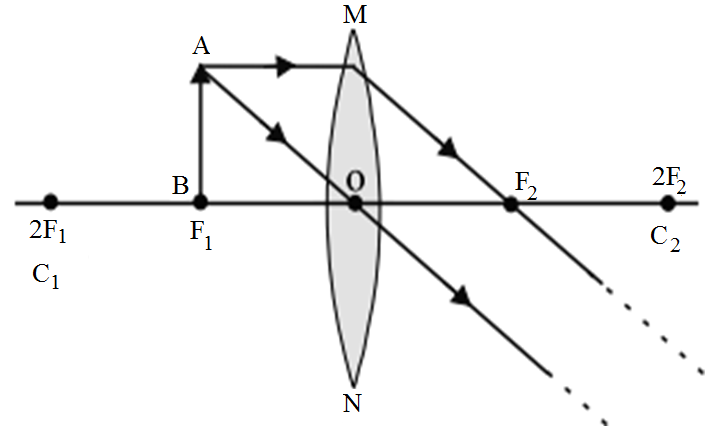
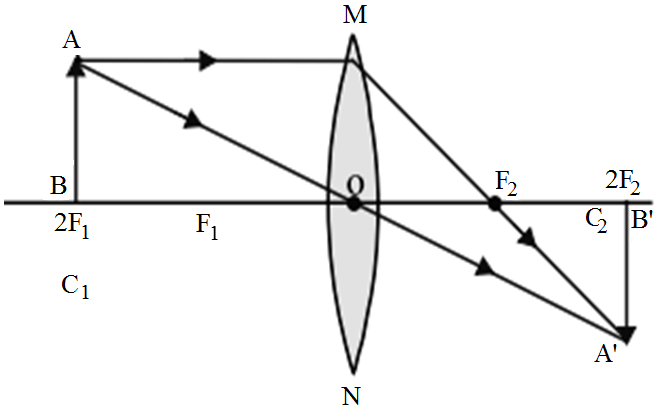
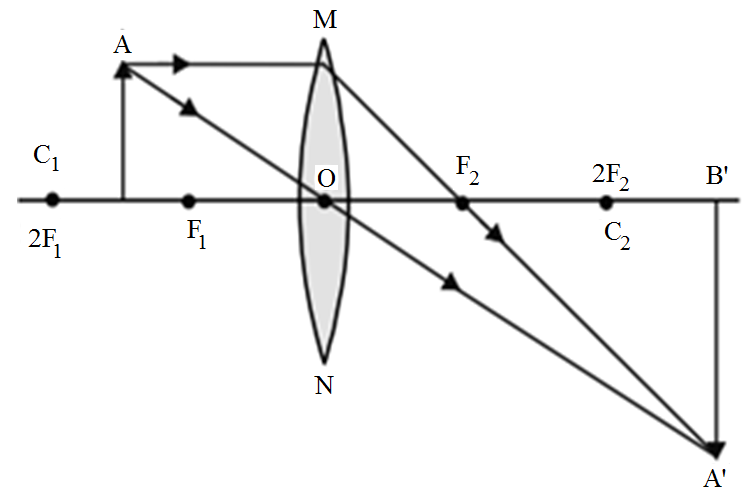
Draw ray diagrams showing the image formation by a convex lens when an object is placed:Between focus and twice the focal length of the lens.
Answer
The enlarged, real and inverted image forms beyond focus $2F_2$ on the other side of the object when the object is placed between focus $F_1$ and twice the focal length of the lens.
View full question & answer
Question 22 Marks
Draw ray diagrams showing the image formation by a concave mirror when an object is placed:
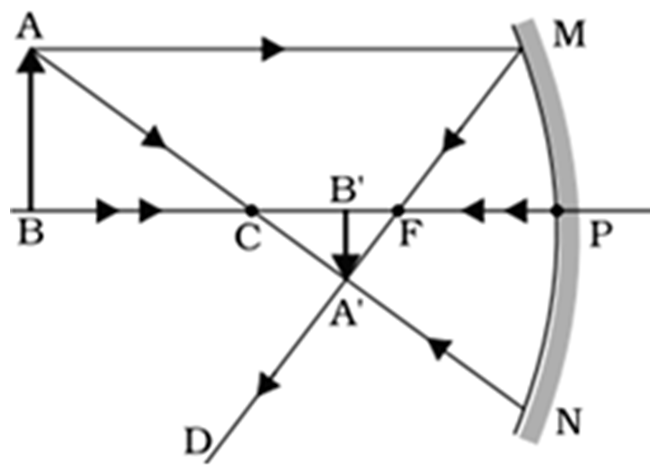
At centre of curvature of the mirror.
Answer
The image formation by a concave mirror when an object is placed between focus and centre of curvature of the mirror at centre of curvature of the mirror.
View full question & answer
Question 32 Marks
Identify the device used as a spherical mirror or lens in following cases, when the image formed is virtual and erect in each case.Object is placed between infinity and device, image formed is diminished and between pole and focus, behind it.
Answer

Convex mirror is used.
View full question & answer
Question 42 Marks
Identify the device used as a spherical mirror or lens in following cases, when the image formed is virtual and erect in each case.
Object is placed between device and its focus, image formed is enlarged and behind it.
Answer
Concave mirror is used.
View full question & answer
Question 52 Marks
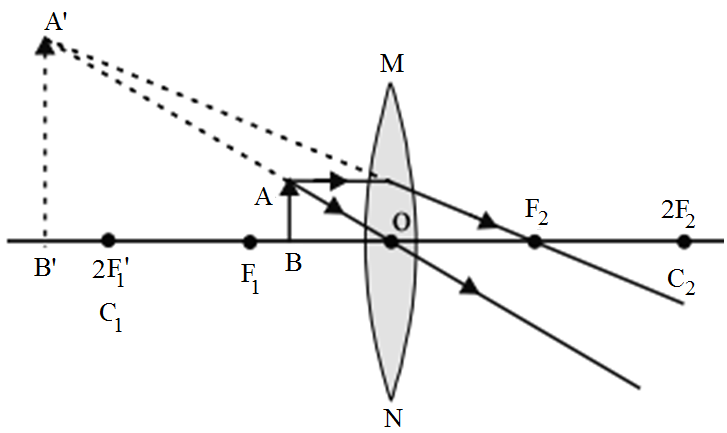
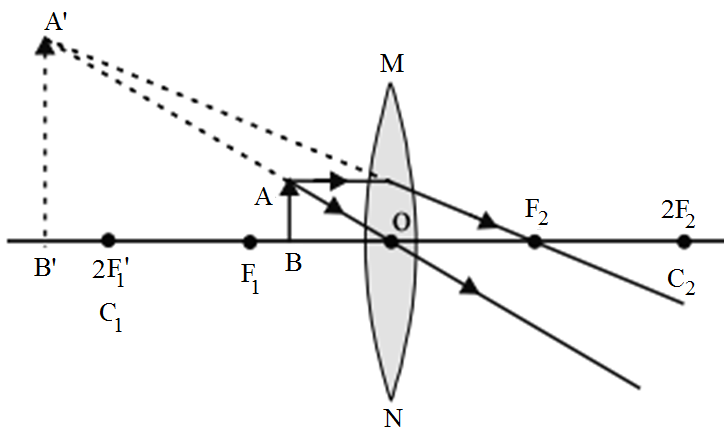
Draw ray diagrams showing the image formation by a convex lens when an object is placed: Between optical centre and focus of the lens.
Answer
The enlarged, virtual and erect image forms beyond $2F_1$ in the same side of object when the object is placed between optical centre and focus $F_1$ of the lens.
View full question & answer
Question 62 Marks
Draw ray diagrams showing the image formation by a convex lens when an object is placed: At the focus of the lens.
Answer

The real, inverted and highly magnified image forms at infinity on the other side of the object when the object is placed at the focus of the lens.
View full question & answer
Question 72 Marks
A pencil when dipped in water in a glass tumbler appears to be bent at the interface of air and water. Will the pencil appear to be bent to the same extent, if instead of water we use liquids like, kerosene or turpentine. Support your answer with reason.
Answer
We know that pencil appears to be bent at the interface of air and water because of refraction of light. The degree of refraction depends on refractive index of a given liquid. Refractive indices of kerosene, water and other liquids would be different. Hence, degree of bend would be different in case of different liquids.
View full question & answer
Question 82 Marks
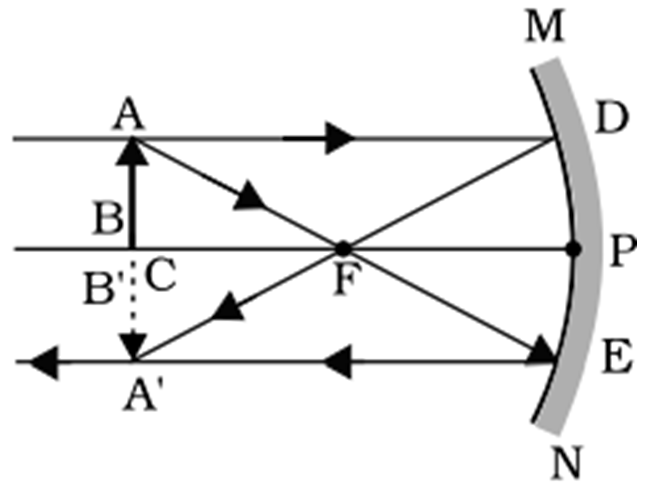
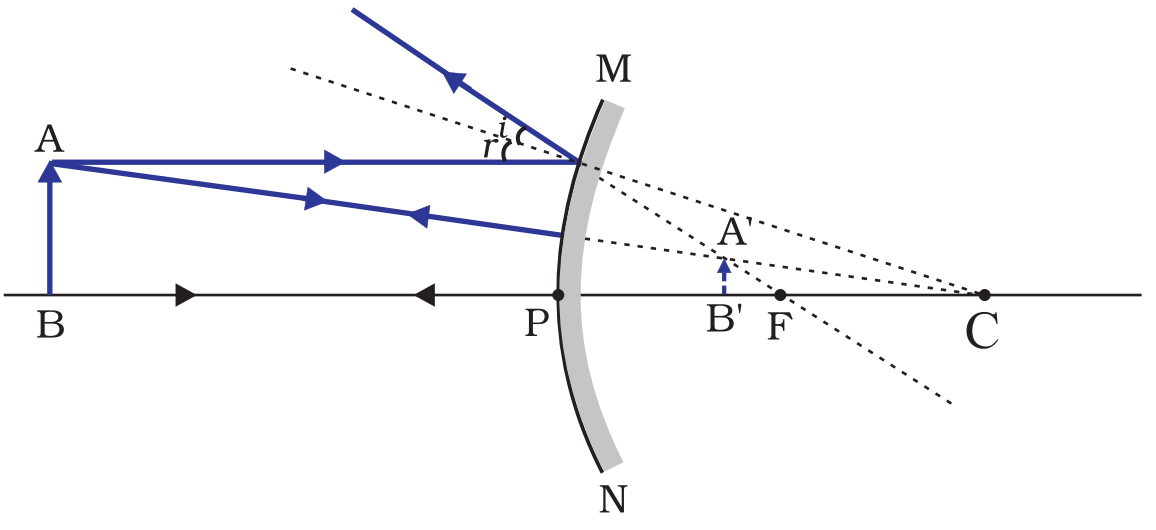
Draw ray diagrams showing the image formation by a convex mirror when an object is placed: At finite distance from the mirror.
View full question & answer
Question 92 Marks
Identify the device used as a spherical mirror or lens in following cases, when the image formed is virtual and erect in each case.Object is placed between the focus and device, image formed is enlarged and on the same side as that of the object.
Answer

Convex lens is used.
View full question & answer
Question 102 Marks
Identify the device used as a spherical mirror or lens in following cases, when the image formed is virtual and erect in each case.Object is placed between infinity and device, image formed is diminished and between focus and optical centre on the same side as that of the object.
Answer

Concave lens is used.
View full question & answer
Question 112 Marks
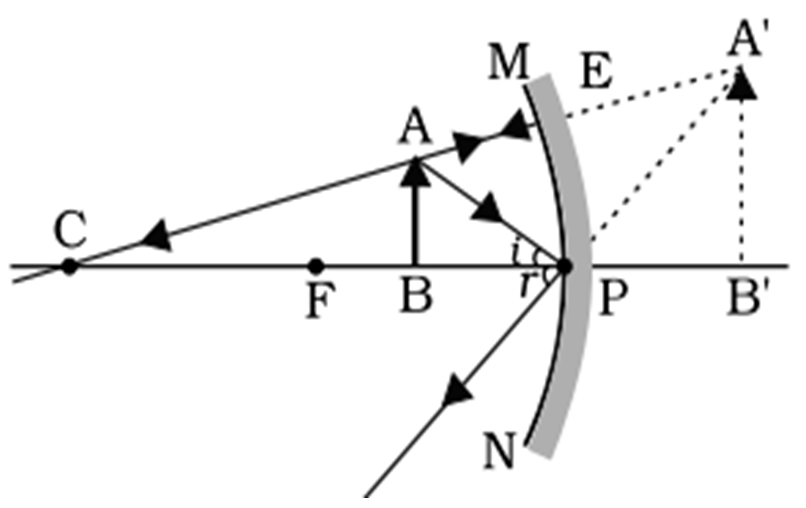
Draw ray diagrams showing the image formation by a concave mirror when an object is placed:
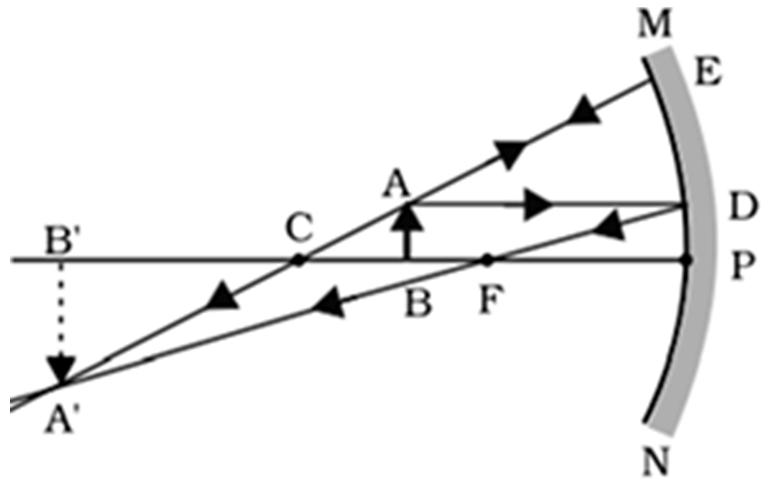
Between pole and focus of the mirror.
Answer
The image formation by a concave mirror when an object is placed between pole and focus of the mirror.
View full question & answer
Question 122 Marks
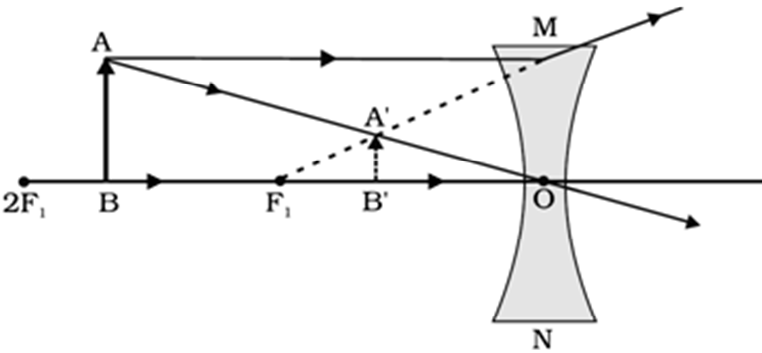
Draw ray diagrams showing the image formation by a concave lens when an object is placed: Beyond twice the focal length of the lens.
View full question & answer
Question 132 Marks
Draw ray diagrams showing the image formation by a concave lens when an object is placed: At the focus of the lens.
View full question & answer
Question 142 Marks
Draw ray diagrams showing the image formation by a concave lens when an object is placed:Between focus and twice the focal length of the lens.
View full question & answer
Question 152 Marks
Draw ray diagrams showing the image formation by a convex mirror when an object is placed: At infinity.
View full question & answer
Question 162 Marks
Draw ray diagrams showing the image formation by a concave mirror when an object is placed:A little beyond centre of curvature of the mirror.
Answer
The image formation by a concave mirror when an object is a little beyond centre of curvature of the mirror.
View full question & answer
Question 172 Marks
Refractive index of diamond with respect to glass is 1.6 and absolute refractive index of glass is 1.5. Find out the absolute refractive index of diamond.
Answer
Let, refractive index of diamond with respect to air $=n_{D A}=$ absolute refractive index of diamond, refractive index of glass with respect to air $= n _{ GA }=$ absolute refractive index of glass, refractive index of diamond with respect to glass $= n _{ DG }$
Given,
$N _{ DG }=1.6$ and $n _{ GA }=1.5$
Now, $n _{ DG }=\frac{ n _{ DA }}{ n _{ GA }}$
$\Rightarrow n _{ DA }= n _{ DG } \times n _{ GA }$
$\Rightarrow n _{ DA }=1.6 \times 1.5=2.4$
View full question & answer
Question 182 Marks
Draw ray diagrams showing the image formation by a concave mirror when an object is placed:Between focus and centre of curvature of the mirror.
Answer
The image formation by a concave mirror when an object is placed between focus and centre of curvature of the mirror.
View full question & answer
Question 192 Marks
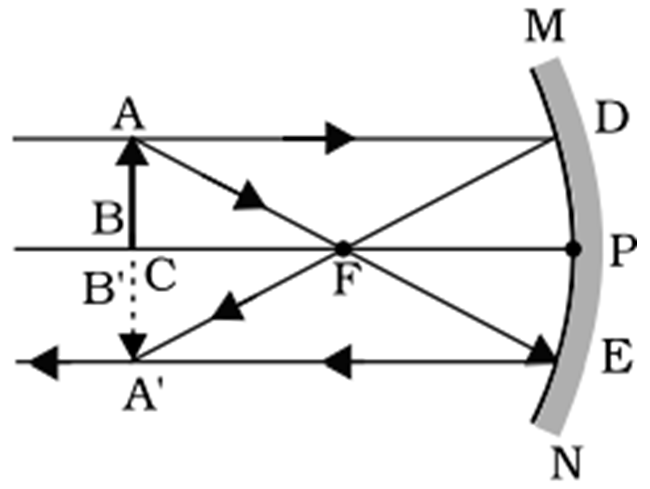
Draw ray diagrams showing the image formation by a convex lens when an object is placed:At twice the focal length of the lens.
Answer

The real and inverted image of equal to the size of object forms at focus $2F_2$ on the other side of the object when the object is placed at twice the focal length of the lens.
View full question & answer
Question 202 Marks
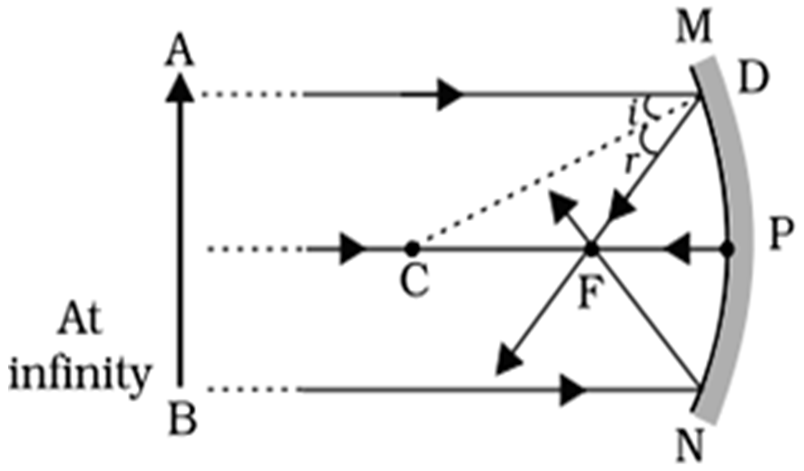
Draw ray diagrams showing the image formation by a concave mirror when an object is placed:At infinity.
Answer

The image formation by a concave mirror when the object is at infinity.
View full question & answer
Question 212 Marks
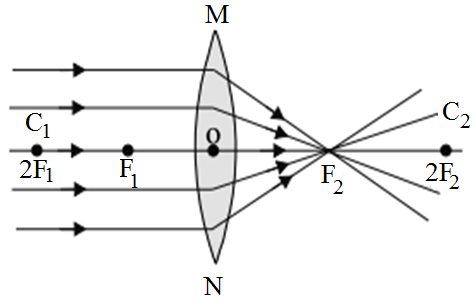
Draw ray diagrams showing the image formation by a convex lens when an object is placed: At infinity.
Answer

The real, inverted and highly reduced image forms at focus $F_2$on the other side of the object when the object is placed at infinity.
View full question & answer
[2 Mark Questions] - Science STD 10 Questions - Vidyadip