Questions · Page 1 of 5

Answer the questions.[Che-1M]

🎯

Test yourself on this topic

50 questions · timed · auto-graded

Question 11 Mark
Give reasons: Platinum, gold and silver are used to make jewellery.
Answer
Platinum, gold, and silver are used to make jewellery because they are very lustrous. Also, they are very less reactive and do not corrode easily.
View full question & answer
Question 21 Mark
What happens when a small piece of sodium is dropped into ethanol?
Answer
If a small piece of sodium is dropped into some ethanol, it reacts steadily to give off bubbles of hydrogen gas and leaves a colorless solution of sodium ethoxide, CH3CH2ONa.
View full question & answer
Question 31 Mark
What changes in the colour of iron nails and copper sulphate solution do you observe after keeping the iron nails dipped in copper sulphate solution for about 30 minutes?
Answer
  1. The initial blue colour of copper sulphate solution is changed to light green colour of iron sulphate.
  2. The initial silver colour of iron nail is changed to reddish-brown colour due to coating of copper metal on the nail.
View full question & answer
Question 41 Mark
From amongst the metals sodium, calcium, aluminium, copper and magnesium, name the metal:
  1. Which reacts with water only on boiling.
  2. Another which does not react even with steam.
Answer
  1. Mg.
  2. Cu.
View full question & answer
Question 51 Mark
Write the uses of following non-metals:
  1. Nitrogen
  2. Carbon
Answer
  1. Nitrogen is used by plants.
  2. Carbon is used as a fuel.
View full question & answer
Question 61 Mark
Write the names and formulae of (a) a metal hydride, and (b) a non-metal hydride.
Answer
Sodium hydride,Hydrogen sulphide.
View full question & answer
Question 81 Mark
Write the electron arrangement in (i) a magnesium atom, and (ii) an oxygen atom.
Answer
Magnesium = -2, 8, 2.
Oxygen = -2, 6.
View full question & answer
Question 91 Mark
Write the composition of the alloy called bronze. Give two uses of bronze.
Answer
Bronze is an alloy of copper and tin; 90% copper and 10% tin. It is used for making statues and coins.
View full question & answer
Question 101 Mark
Write the composition of solder.
Answer
A higher tin composition gives the solder higher corrosion resistances, but raises the melting point. Another common composition is 11% tin, 37% lead, 42% bismuth, and 10% cadmium. This combination has a low melting point and is useful forsoldering components that are sensitive to heat.
View full question & answer
Question 111 Mark
Write equation for the reaction of:
  1. Sodium with oxygen.
  2. Magnesium with oxygen.
Answer
  1. $4\text{Na(s)}\ \ \ \ +\ \ \ \ \text{O}_2\text{(g)}\ \ \ \rightarrow\ \ \ 2\text{Na}_2\text{O(s)}\\\text{Sodium}\ \ \ \ \ \ \text{Oxygen}\ \ \ \ \ \ \text{Sodium oxide}\\\text{(Metal)}\ \ \ \ \ \text{(From air)}\ \ \ \text{(Basic oxide)}$

  2. $2\text{Mg(s)}\ \ \ \ +\ \ \ \ \text{O}_2\text{(g)}\ \ \ \rightarrow\ \ \ 2\text{MgO}\text{(s)}\\\text{Megnisium}\ \ \ \ \ \ \text{Oxygen}\ \ \ \ \ \ \text{Megnesium oxide}\\\text{(Metal)}\ \ \ \ \ \ \ \ \ \text{(From air)}\ \ \ \ \ \ \ \ \text{(Basic oxide)}$

View full question & answer
Question 121 Mark
Write down the electronic configuration of (i) sulphur atom, and (ii) sulphide ion. (At. No. of S = 16)
Answer
  1. E.C of S = 2, 8, 6
  2. E.C of S2- = 2, 8, 8
View full question & answer
Question 131 Mark
Write down the electronic configuration of (i) sodium atom, and (ii) chlorine atom.
Answer
  1. Sodium – 2, 8, 1
  2. Chlorine – 2, 8, 7
View full question & answer
Question 141 Mark
Write down the electronic configuration of (i) magnesium atom, and (ii)magnesium ion. (At. No. of Mg = 12).
Answer
  1. E.C of Mg = 2, 8, 2
  2. E.C of Mg2+ = 2, 8
View full question & answer
Question 151 Mark
Write down the electron arrangement in (i) a magnesium atom, and (ii) a chlorine atom.
Answer
  1. Magnesium: 2, 8, 2.
  2. Chlorine: 2, 8, 7.
View full question & answer
Question 161 Mark
Write an equation of the reaction of iron with steam. Indicate the physical states of all the reactants and products.
Answer
$3\text{Fe(s)}+4\text{H}_2\text{O(g)}\rightarrow2\text{Fe}_3\text{O}_4\text{(s)}+4\text{H}_2\text{(g)}$
View full question & answer
Question 171 Mark
Why should we paint on a metal surface?
Answer
Metal surface when exposed to environment, there are chances that the oxygen or moisture present in the environment to react with the metal making the metal corroded.In order to protect the metal from environmental factors the metal is painted.
View full question & answer
Question 181 Mark
Why is sodium kept immersed in kerosene oil?
Answer
Sodium metal is kept immersed in kerosene to prevent their reaction with oxygen, moisture and carbon dioxide of air.
View full question & answer
Question 191 Mark
Why is an iron grill painted frequently?
Answer
An iron grill is painted frequently to prevent its rusting.
View full question & answer
Question 201 Mark
Why do we paint iron objects frequently?
Answer
Iron articles are painted or rather galvanised so as to prevent rusting of iron, which happens when the moisture in the air reacts with the iron thereby bringing about corrosion which damages the articles. Hence, iron objects have a coating of paint over them which prevents corrosion and makes the object last longer.
View full question & answer
Question 211 Mark
Why do we apply paint on iron articles?
Answer
Iron objects are painted so that air and moisture can not come in contact with the iron objects and hence no rusting takes place.
View full question & answer
Question 221 Mark
Why does aluminium not react with water under ordinary conditions?
Answer
Aluminium metal does not react with water under ordinary conditions because of the presence of a thin layer of aluminium oxide on its surface.
View full question & answer
Question 231 Mark
Why are metals called electropositive elements whereas non-metals are called electronegative elements?
Answer
Metals are electropositive elements because they can form positive ions by losing electrons.
Non-metals are electronegative elements because they can form negative ions by gaining electrons.
View full question & answer
Question 241 Mark
Why are ionic compounds usually hard?
Answer
I onic compounds are usually hard because their oppositely charged ions attract one another strongly and form a regular crystal structure.
View full question & answer
Question 251 Mark
Why are covalent compounds generally poor conductors of electricity?
Answer
Covalent compounds are generally poor conductors of electricity because they do not contain ions.
View full question & answer
Question 271 Mark
Which property of ‘solder’ alloy makes it suitable for welding electrical wires?
Answer
Low melting point of solder makes it sutaible for welding electrical wires.
View full question & answer
Question 281 Mark
Which property of iron metal is utilised in producing iron sheets required for making buckets?
Answer
Malleability.
View full question & answer
Question 291 Mark
Which property of graphite is utilised in making electrodes?
Answer
Since graphite is a good conductor of electricity, it is used in making electrodes.
View full question & answer
Question 311 Mark
Which property of copper and aluminium makes them suitable:
For making electric wires?
Answer
High electrical conductivity.
View full question & answer
Question 321 Mark
Which property of copper and aluminium makes them suitable:
For making cooking utensils and boilers?
Answer
High thermal conductivity.
View full question & answer
Question 341 Mark
Which of the following elements is a metal?

$^7_3\text{X, }^3_1\text{Y, }^{10}_9\text{Z}$ 

Answer
Atomic Number of X = 3
Atomic Number of Y = 1
Atomic Number of Z = 9
Among the given elements, element X is a metal as it can easily lose one electron to achieve the stable noble gas configuration of helium. Element X is Lithium.
Element Z will be a non-metal as it can easily accept an electron to achieve the stable noble gas configuration of neon.
View full question & answer
Question 351 Mark
Which of the following compounds are ionic and which are covalent?
Urea, Cane sugar, Hydrogen chloride, Sodium chloride, Ammonium chloride, Carbon tetrachloride, Ammonia, Alcohol, Magnesium chloride.
Answer
Ionic compounds: Sodium chloride, Ammoniu m chloride, Magnesium chloride.
Covalent compounds:
Urea, Cane sugar, Hy drogen chloride, Carbon tetrachloride, Ammonia, Alcohol.
View full question & answer
Question 381 Mark
Which metals do not corrode easily?
Answer
Metals which are placed at the bottom of activity series like silver, gold, platinum do not corrode easily.
View full question & answer
Question 421 Mark
Which metal has highest melting point?
Answer
Tungsten has the highest melting point of 3422oC and this is the reason why it is used in the making of incandescent bulb filaments.
View full question & answer
Question 441 Mark
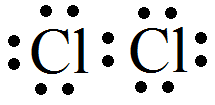
Which inert gas electron configuration do the Cl atoms in Cl2 molecule resemble ? What is this electron configuration?
Answer
Argon; E.C = 2, 8, 8
View full question & answer
Question 461 Mark
Which gas is produced during the extraction of aluminium? At which electrode is this gas produced?
Answer
Oxygen gas is produced; at anode (Positive electrode).
View full question & answer
Question 481 Mark
What will happen if a strip of zinc is immersed in a solution of copper sulphate?
Answer
When a strip of zinc metal is put in copper sulphate solution, then the blue colour of copper sulphate solution fades gradually and red brown coating of copper is deposited on zinc strip.
View full question & answer
Question 491 Mark
What will happen if a strip of copper is kept immersed in a solution of silver nitrate (AgNO3)?
Answer
When a strip of copper metal is immersed in silver nitrate solution, the solution gradually becomes blue and a shining greyish-white deposit of silver metal is formed on copper strip.
View full question & answer
Question 501 Mark
What type of oxides are formed when non-metals combine with oxygen?
Answer
Acidic oxides are formed when non-metals combine with oxygen.
View full question & answer
Answer the questions.[Che-1M] - Science STD 10 Questions - Vidyadip