Questions

3 Marks Question

🎯

Test yourself on this topic

8 questions · timed · auto-graded

Question 13 Marks
What are the different uses available to a holder for dealing with bills receivable?
Answer
Different uses of bills receivable. A party which holds a bill receivable can use it in either of the following ways:
  1. He may keep it till the date of maturity.
  2. He may discount it with the banker before the date of maturity.
  3. He may endorse it to some other party before the date of maturity.
  4. He may send it to his banker for collection.
View full question & answer
Question 23 Marks
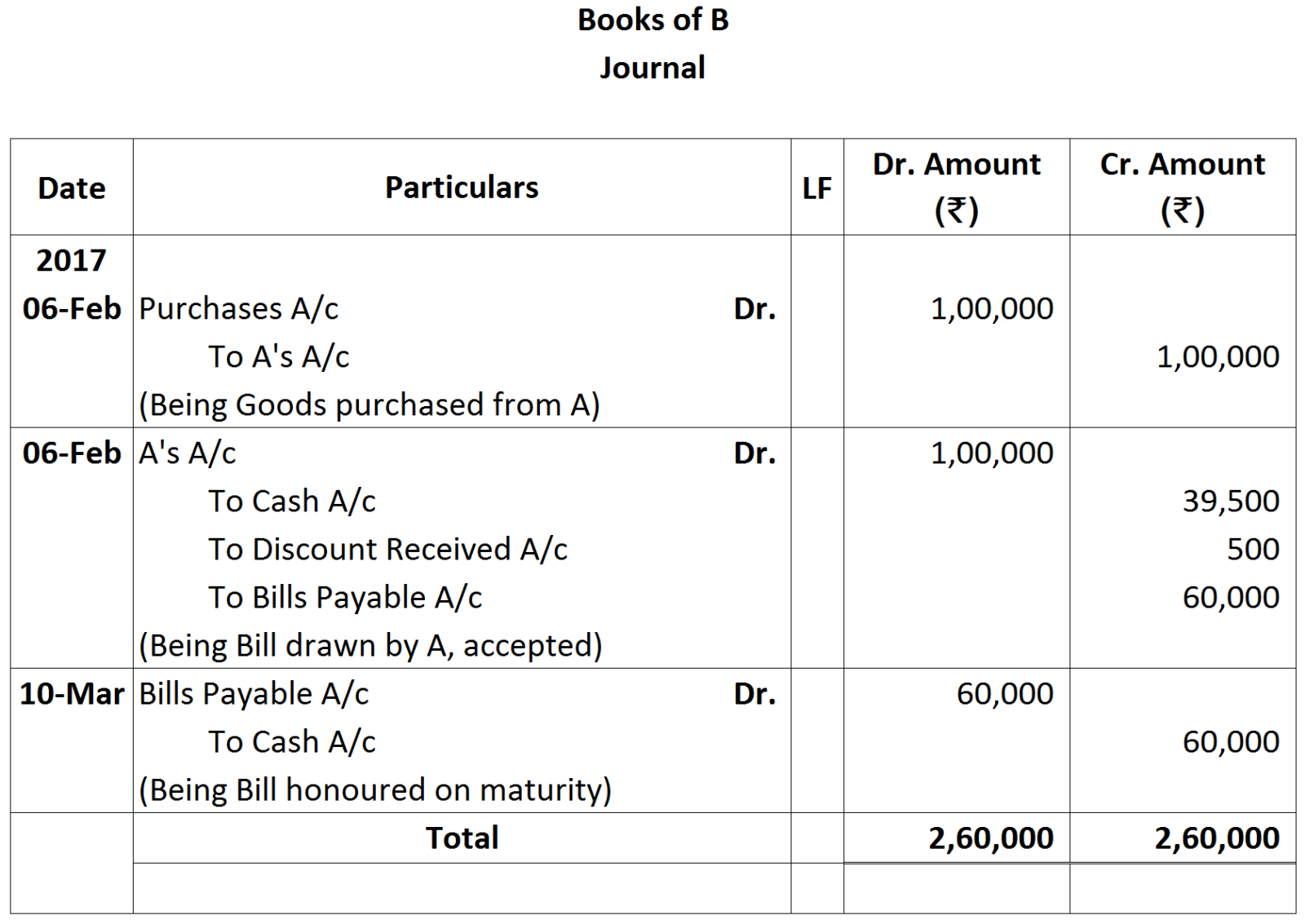
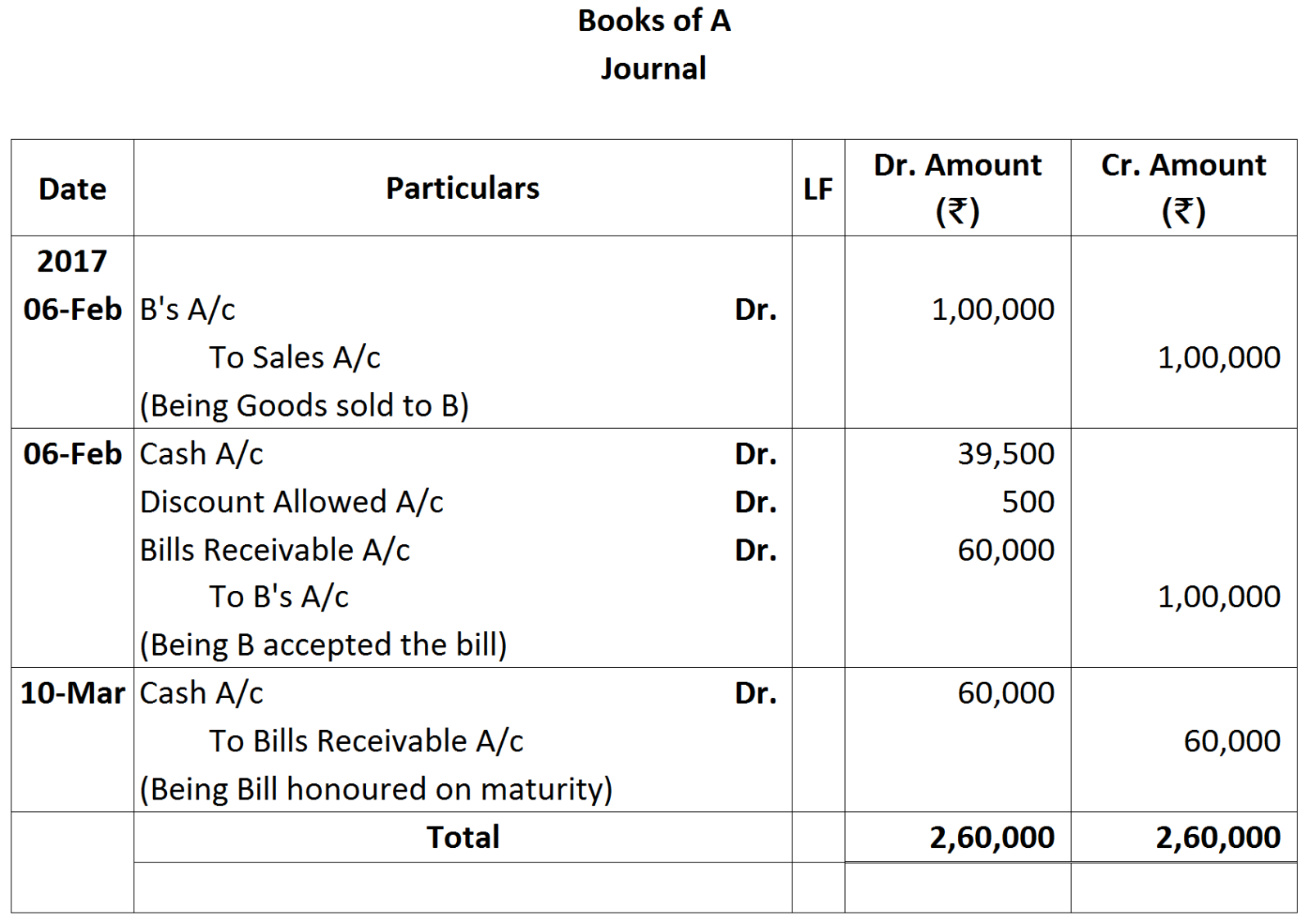
On Feb. 6, 2017 A sold goods for ₹ 1,00,000 to B. B paid 40% immediately on which Aallowed a cash discount of ₹ 500. For the balance A drew a bill on B payable after 30 days. Due date of bill was a public holiday and the bill was met as per the provisions of Negotiable Instrument Act. Journalise the above transactions in the books of A and B.
Answer


Note: When due date falls on Public holiday (here March 11, 2017), then due date is preceding date i.e. March 10, 2017.
View full question & answer
Question 33 Marks
What is meant by 'Retiring a bill under rebate'?
Answer
Retiring a Bill under Rebate When the drawee makes the payment of the bill before its due date, it is called retiring the bill. In such a case, the holder of the bill usually allows him discount, technically called “rebate'. Such rebate is calculated at a specified rate per annum for the period the payment is being made too early. The rebate is a gain to the party making the payment and an expense to the party receiving the payment.
View full question & answer
Question 43 Marks
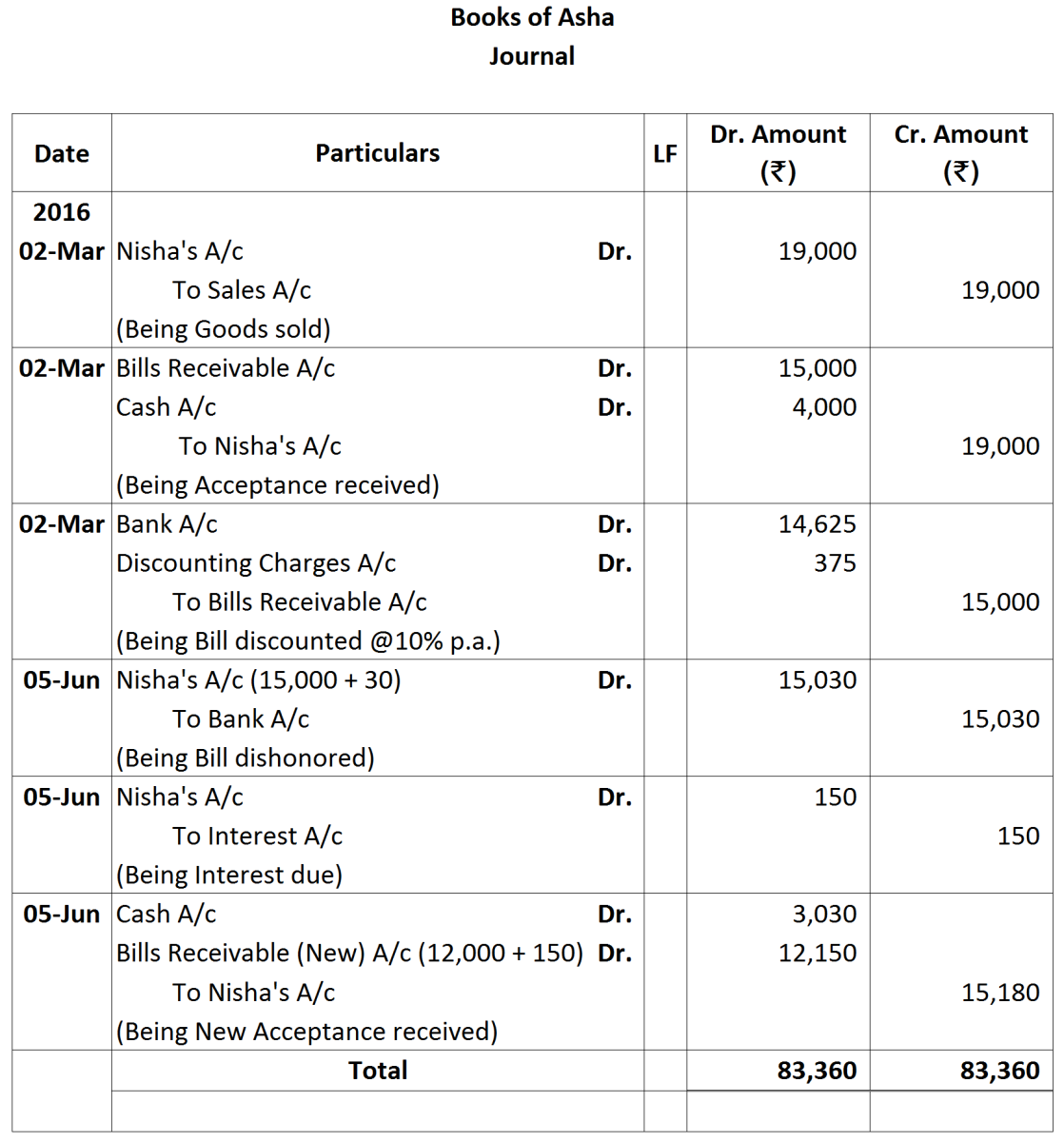
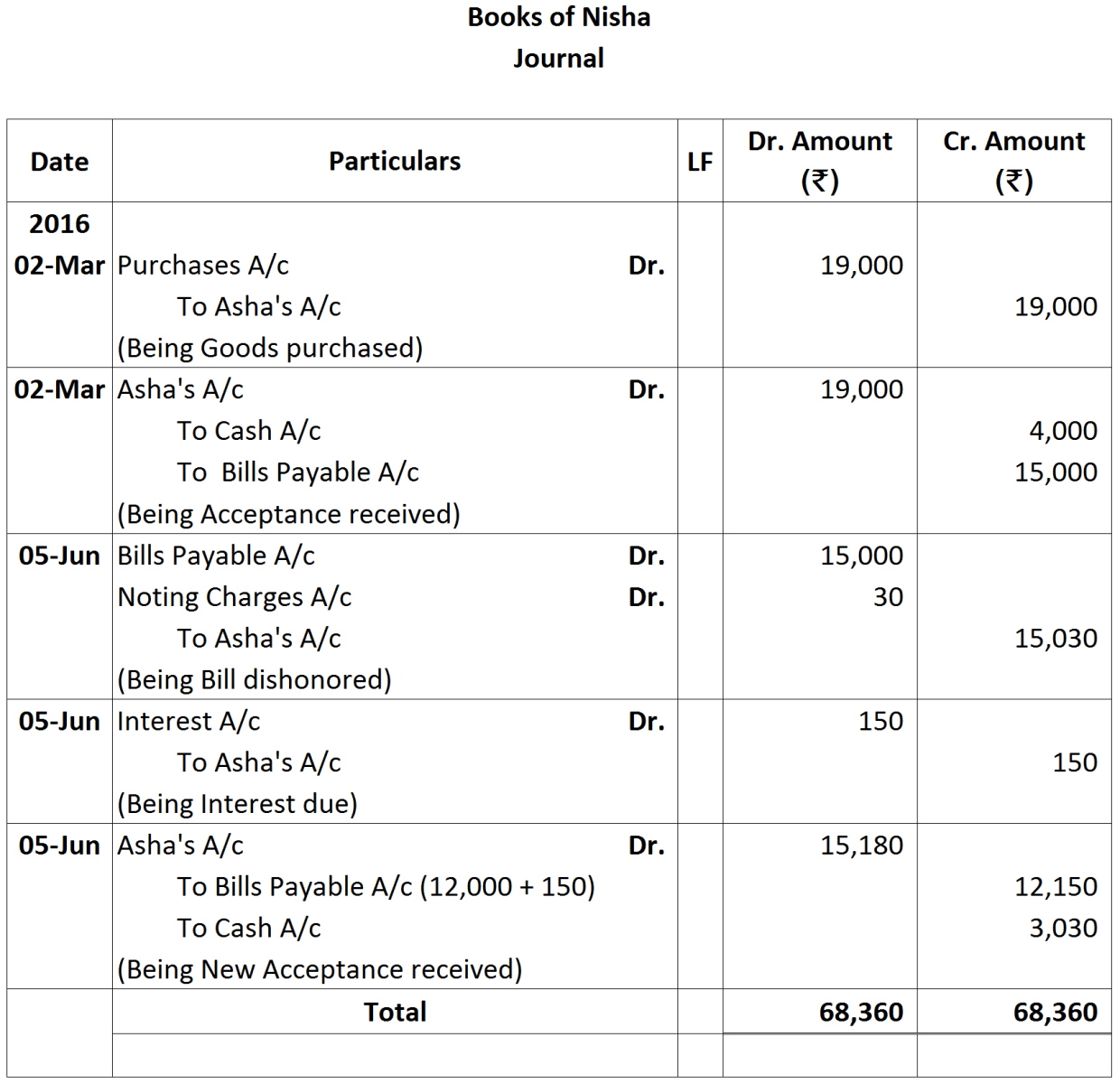
Asha sold goods worth ₹ 19,000 to Nisha on March 2, 2016. ₹ 4,000 were paid by Nisha immediately and for the balance she accepted a bill of exchange drawn upon her by Asha payable after three months. Asha discounted the bill immediately with her bank @ 10% p.a. On the due date Nisha dishonoured the bill and the bank paid ₹ 30 as noting charges.
On 5th June, Nisha paid ₹ 3,030 (including noting charges) in cash and accepted a new bill at one month for the amount due to Asha together with interest @ 15% p.a. Record the necessary journal entries in the books of Asha and Nisha.
Answer
Working Notes:
  1. Amount of Discount $=\frac{15,000\ \times\ 10\ \times\ 3}{100\ \times\ 12}=₹\ 375$
  2. Amount of Interest $=\frac{12,000\ \times\ 15\ \times\ 1}{100\ \times\ 12}=₹\ 150$
View full question & answer
Question 53 Marks
Calculate the due dates of the bills in the following cases:
 
Date of the Bills
Period
I.
1st February, 2017
2 months
II.
31st January, 2017
3 months
III.
30th September, 2017
2 months
IV.
30th September, 2017
3 months
V.
29th December, 2017
2 months
VI.
31st December, 2017
2 months
VII.
15th July, 2017
30 days
VIII.
27th January, 2016
1 month
Answer
Due Date of Bill = Date of Bill Drawn + Period + Grace Days
S. No.
Date of Bills Drawn (1)
Period (2)
Grace Days (3)
Due Date (1 + 2 + 3)
I.
February 01, 2017
2 months
3 days
April 04, 2017
II.
January 31, 2017
3 months
3 days
May 03, 2017
III.
September 30, 2017
2 months
3 days
December 03, 2017
IV.
September 30, 2017
3 months
3 days
January 02, 2018
V.
December 29, 2017
2 months
3 days
March 03, 2018
VI.
December 31, 2017
2 months
3 days
March 03, 2018
VII.
July 15, 2017
30 days
3 days
August 17, 2017
VIII.
January 27, 2016
1 month
3 days
March 01, 2016
View full question & answer
Question 63 Marks
What are the parties to a promissory note?
Answer
There are two parties to a promissory note:
  1. Maker: He is the person who writes a promissory note and signs it. In the above specimen form of the Promissory Note, Prem Kishore is the maker.
  2. Payee: He is the person who is entitled to get the payment. In the above case, Karuna Sagar is the payee.
There is no acceptor in case of a promissory note because the maker himself is liable to pay the amount.
View full question & answer
Question 73 Marks
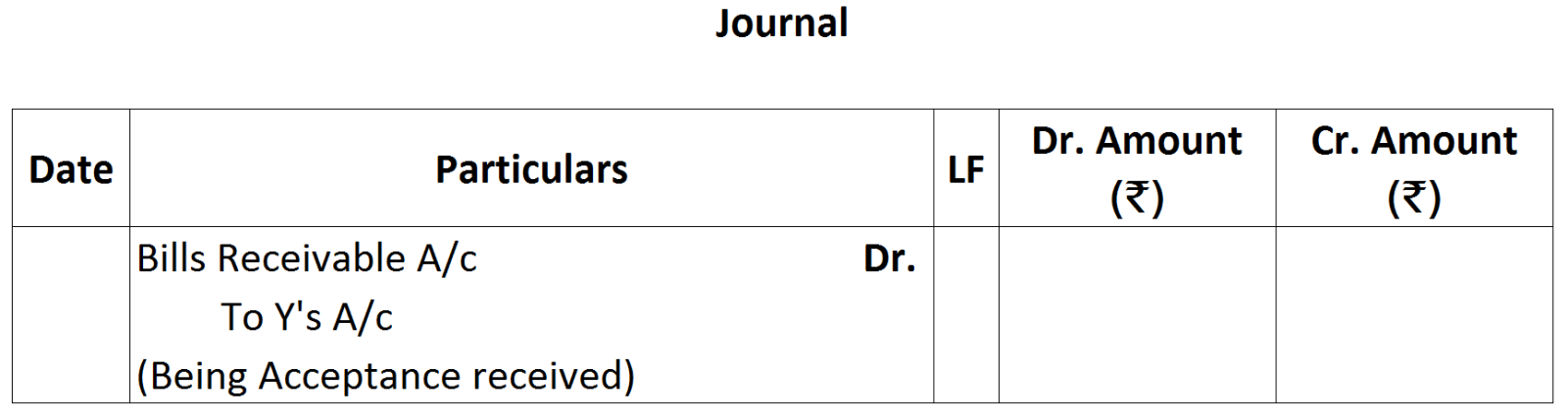
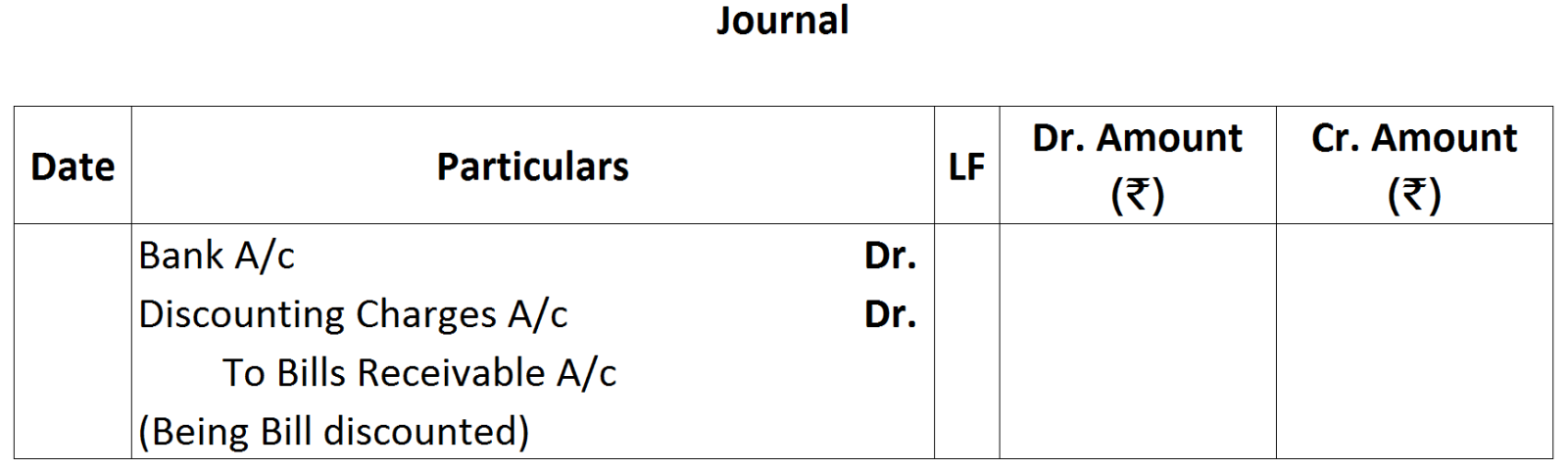
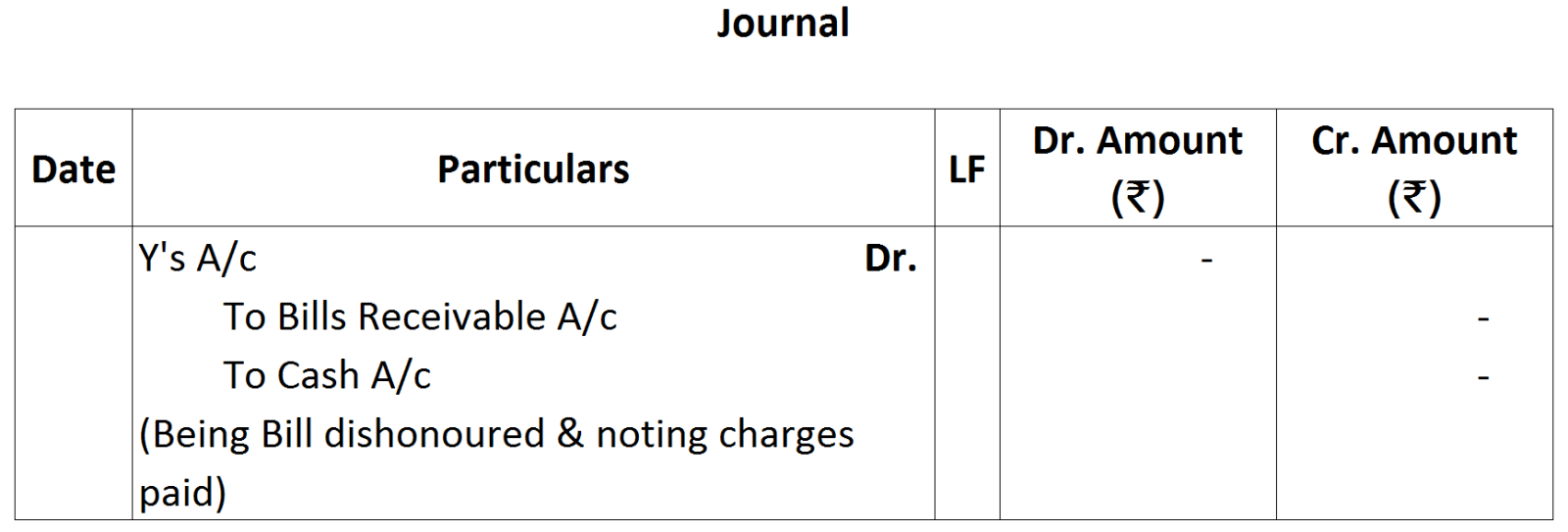
What Journal entries will be made by the drawer in his books, when:
  1. A Bill is drawn.
  2. A Bill is discounted.
  3. A Bill is dishonoured and noting charges paid.
Answer
  1.  
  1.  
  1.  
View full question & answer
Question 83 Marks
Find out the due dates of the bills in the following cases:
 
Date of the Bills
Period
I.
29th May, 2017 4 months
II.
31st March, 2017 1 month
III.
21st July, 2017 60 days
IV.
14th May, 2017 90 days
V.
28th January, 2016 1 month
VI.
31st January, 2016 1 month
 
Emergency holiday 22nd September
 
Answer
Due Date of Bill = Date of Bill Drawn + Period + Grace Days
S. No.
Date of Bills Drawn (1)
Period (2)
Grace Days (3)
Due Date (1 + 2 + 3)
I.
May 29, 2017
4 months
3 days
October 01, 2017
II.
March 31, 2017
1 month
3 days
May 03, 2017
IV.
July 21, 2017
60 days
3 days
September 23, 2017
V.
May 14, 2017
90 days
3 days
August 14, 2017
VI.
January 28, 2016
1 month
3 days
March 02, 2016
VII.
January 31, 2016
1 month
3 days
March 03, 2016
Note: When due date falls on,
  1. Public holiday (here October 2, 2017 and August 15, 2017), then due date is preceding date.
  2. Emergency holiday (here September 22, 2017), then due date is succeeding date.
View full question & answer
3 Marks Question - Account STD 11 Commerce Questions - Vidyadip