Questions

6 Marks Question

🎯

Test yourself on this topic

14 questions · timed · auto-graded

Question 16 Marks
What is Trial Balance? Does the balancing of this ensure accuracy of books of accounts.
Answer
Trial Balance: It is a statement prepared with the help of ledger balances at the end of financial year to test the arithmetical accuracy of books of accounts.
Balancing of Trial Balance does not ensure the accuracy of books of Accounts..
Errors which remain undetected even if trial balance agrees:
  1. Errors of omission: If a transaction remains unrecorded in Journal or subsidiary books.
  2. Errors of comission: When wrong amount is entered either in journa! or subsidiary books.
  3. Compensating Errors: If the effect of one error is neutralised by the effect of some other error.
  4. Errors of principle: When fundamental principle of accountancy is violated while recording a transaction.
View full question & answer
Question 26 Marks
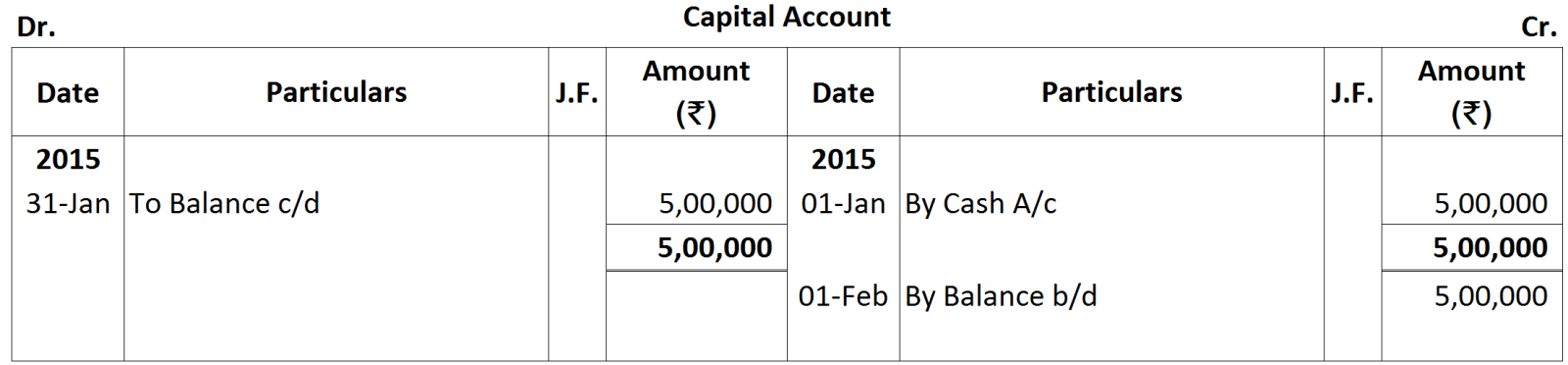
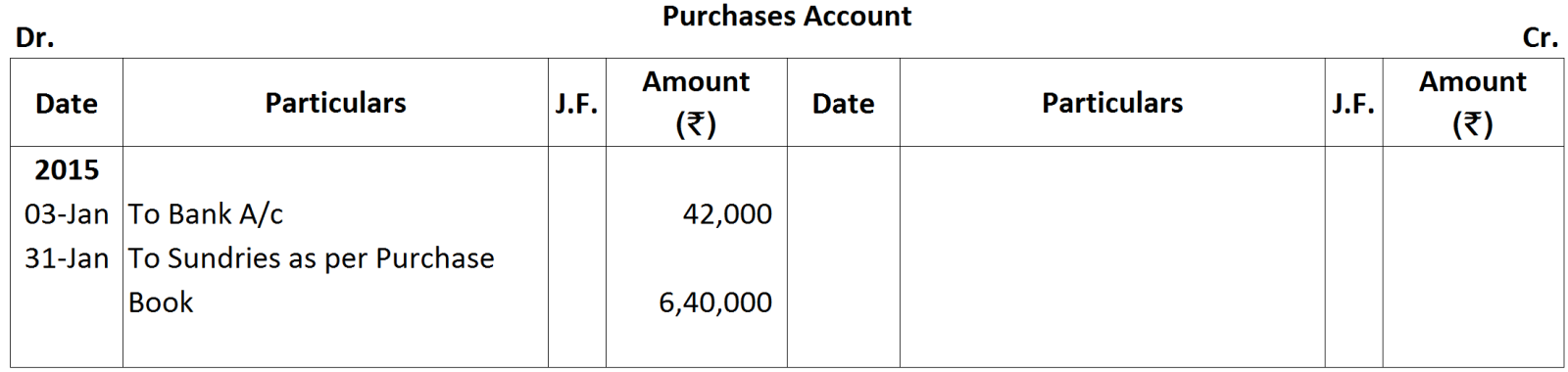
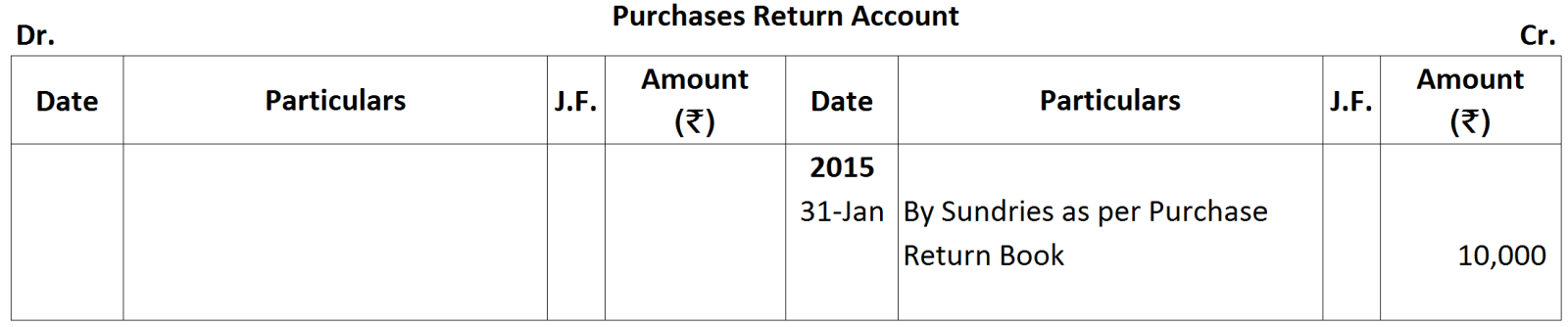
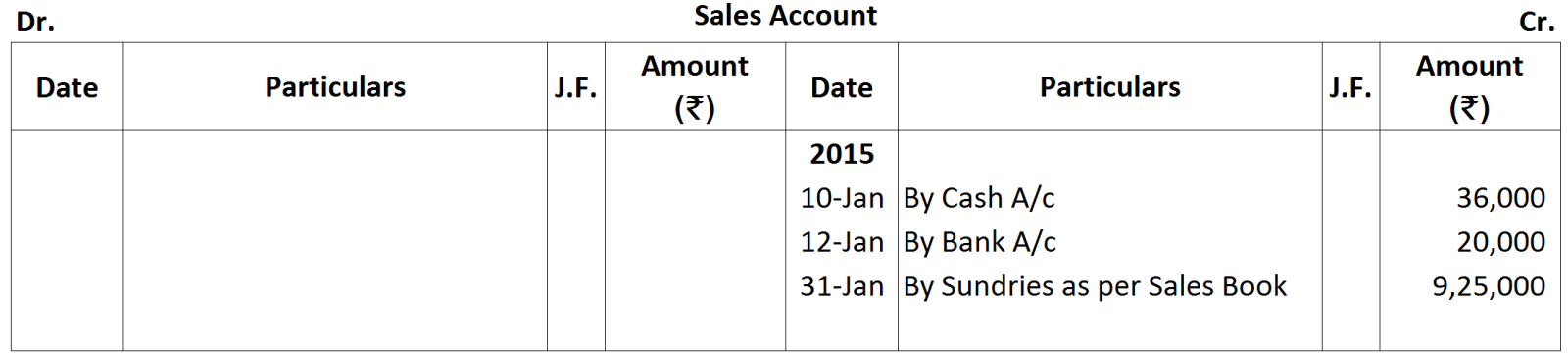
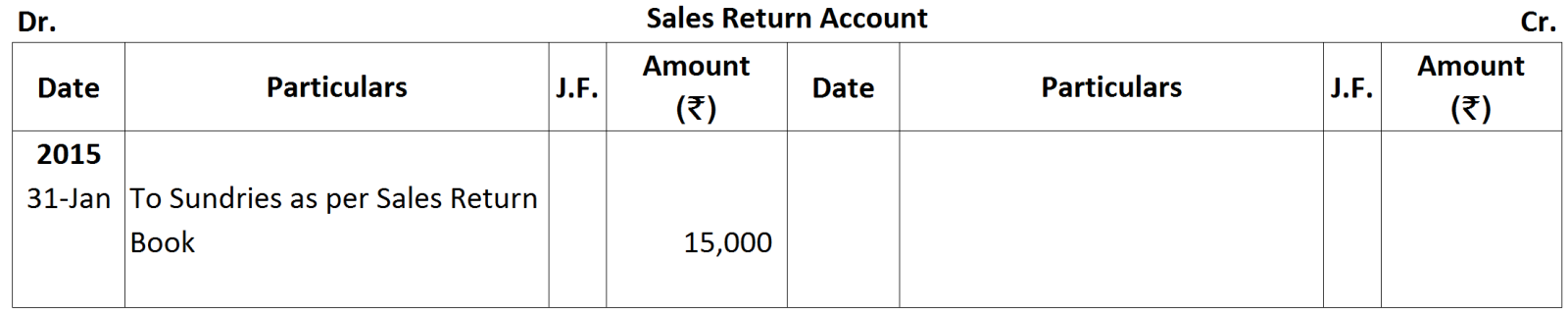
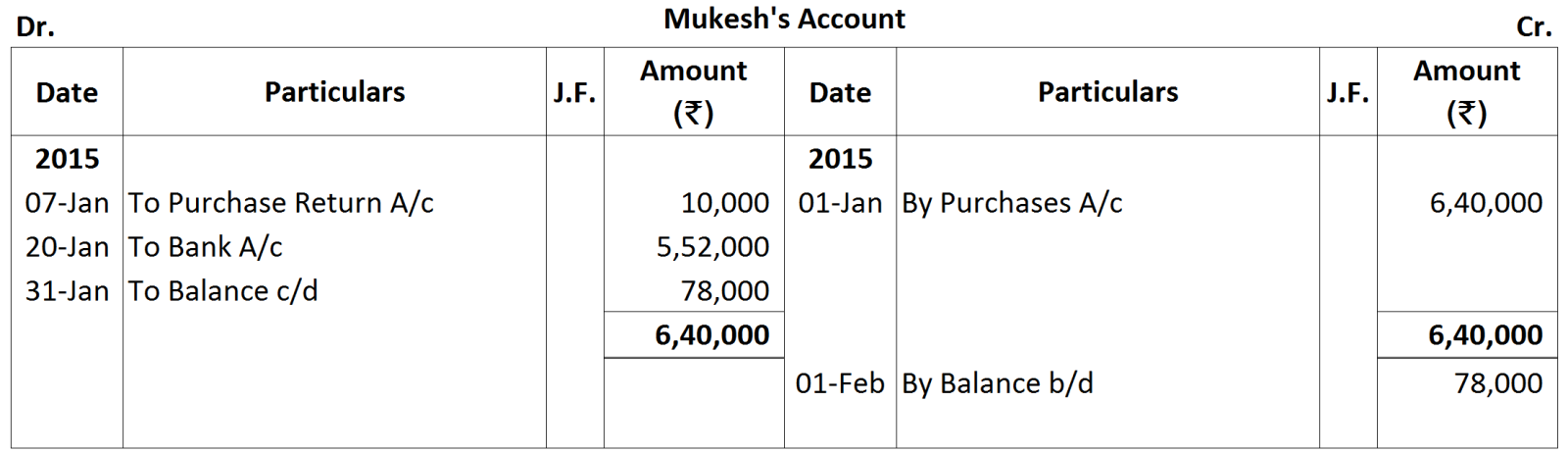
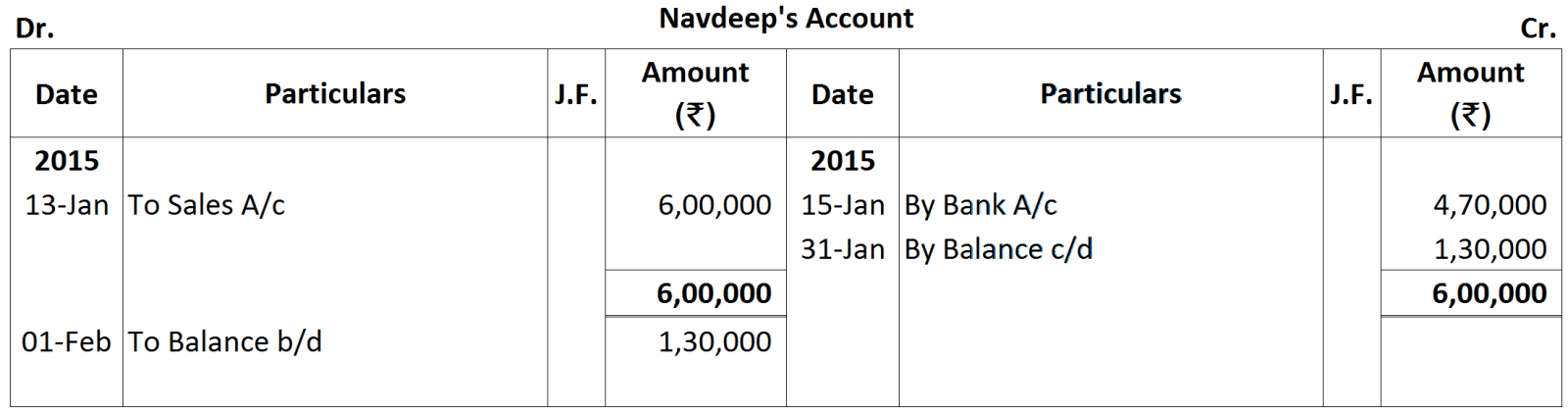
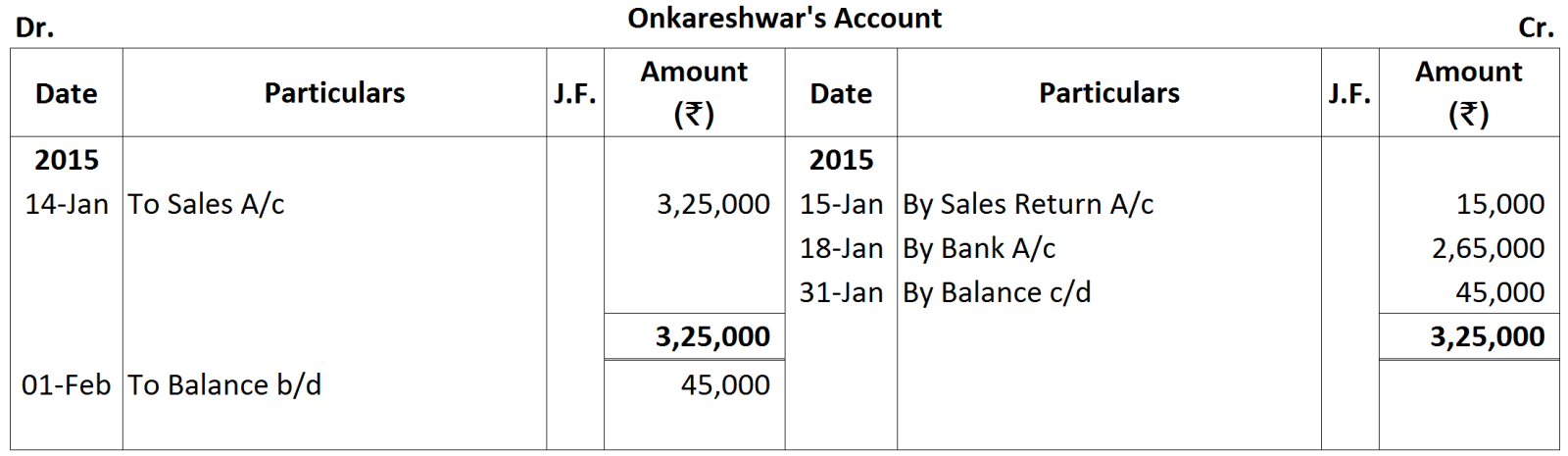
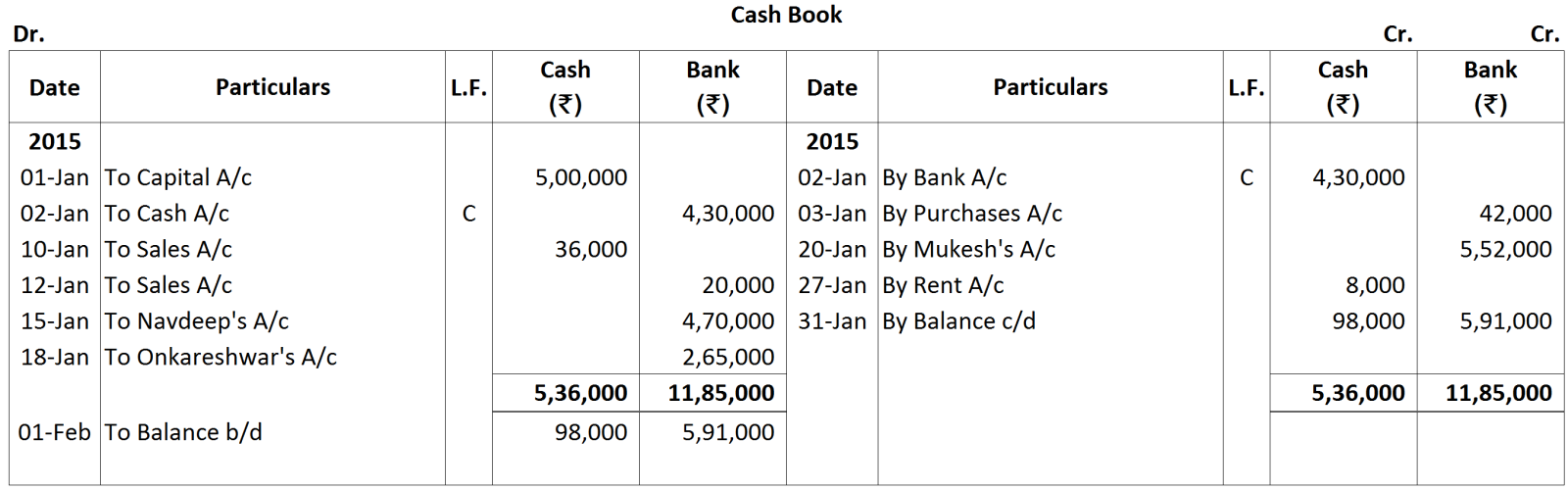
Given below is a Cash Book and Ledger extracts relating to the books of M/s Ram Chander & Sons as at 31st January 2015. You are required to prepare a Trial Balance.


View full question & answer
Question 46 Marks
What is a suspense account? When is it opened?
Answer
Suspense Account: Sometimes, in spite of best efforts of an accountant, all the errors are not located and the Trial Balance does not tally. In such a situation, to avoid the delay in the preparation of final accounts, the difference in the Trial Balance is placed to a newly opened account known as “Suspense Account”' and the Trial Balance tallies. If the debit side of the Trial Balance exceeds the credit side, the difference will be put on the credit side of the suspense account and if the credit side of the Trial Balance exceeds the debit side, suspense account will be debited. After including the balance of suspense account in the Trial Balance, it will appear to be tallied.
View full question & answer
Question 56 Marks
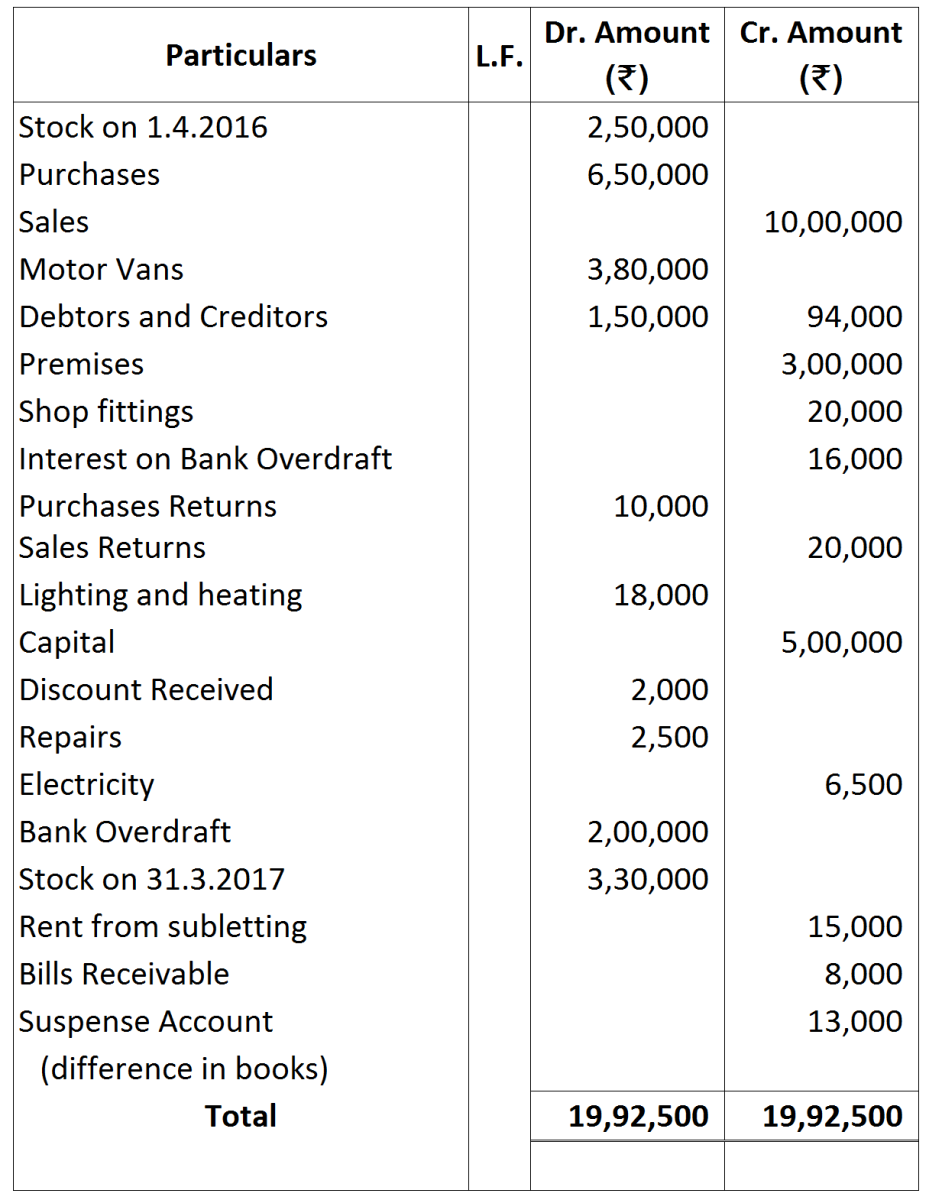
Following is the Trial Balance as at 31st March, 2015: Having prepared the Trial Balance, it was discovered that following transactions remained unrecorded:
  1. Goods were sold on credit amounting to ₹ 40,000.
  2. Paid to creditors ₹ 22,000 by cheque.
  3. Goods worth ₹ 7,000 were returned to a supplier.
  4. Paid salary ₹ 15,000 by cheque.
Required:
  1. Pass Journal entries for the above mentioned transactions and post them into Ledger.
  2. Redraft the Trial Balance.
View full question & answer
Question 66 Marks
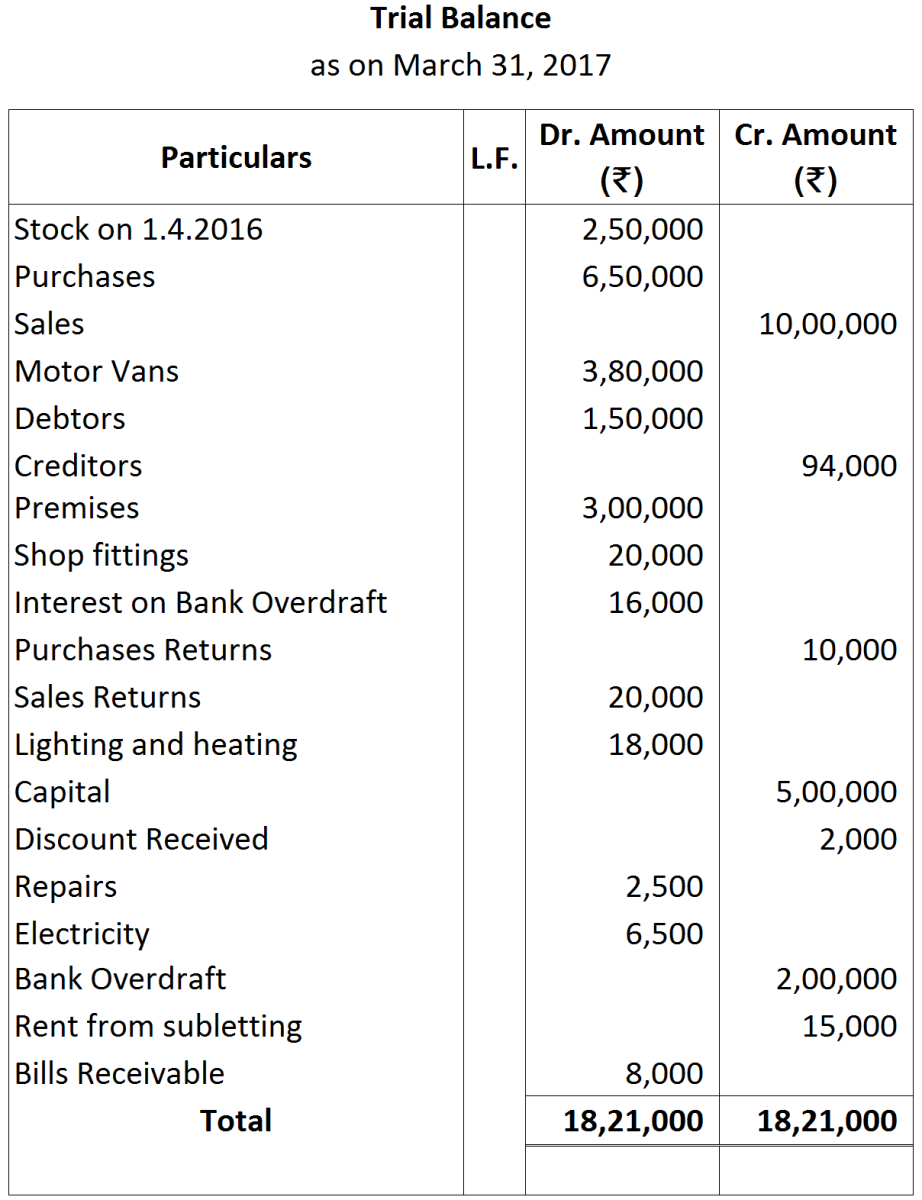
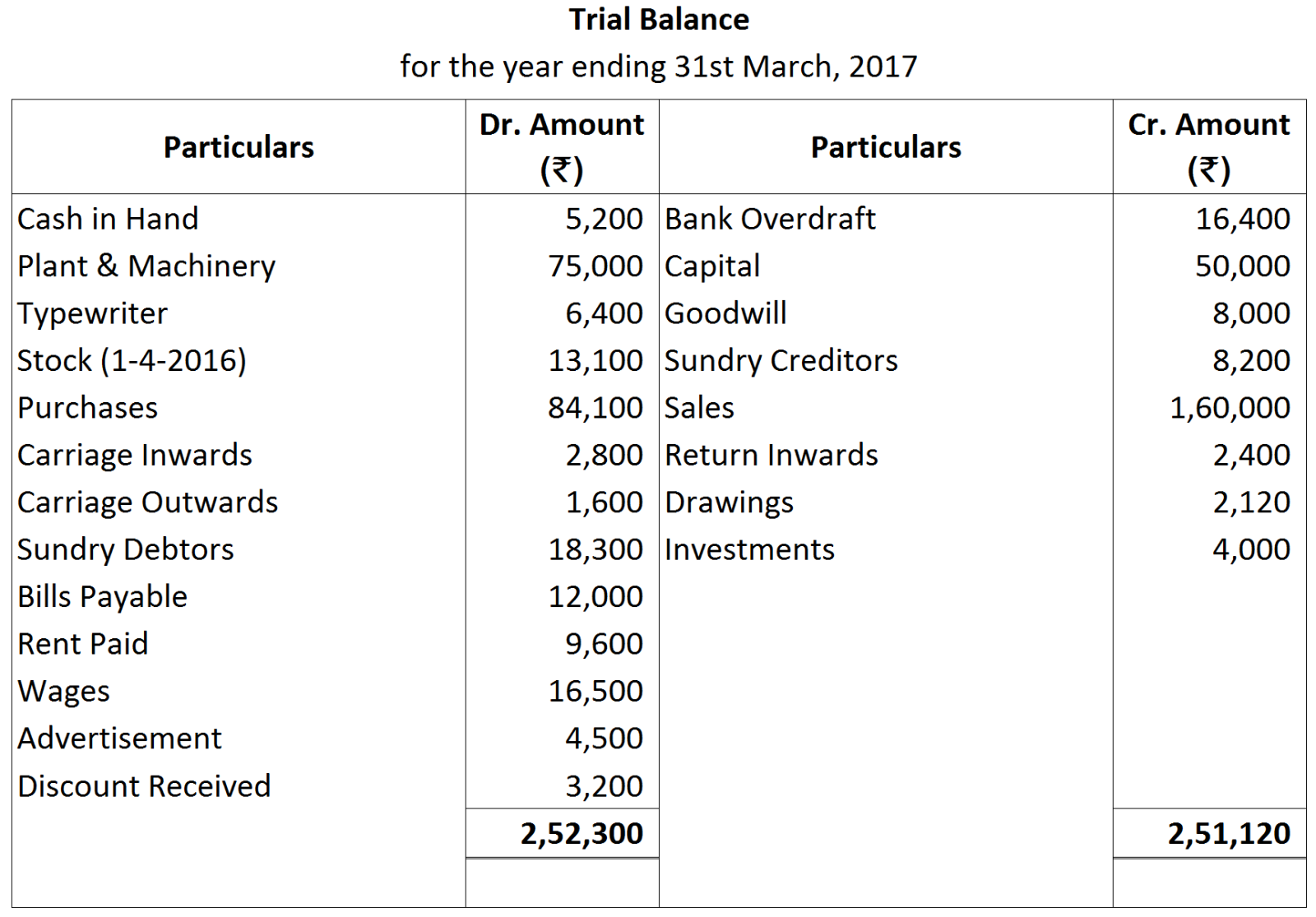
A book-keeper extracted the following Trial Balance as at 31st March, 2017:
Answer


Note: Closing Stock of ₹ 3,30,000 will not appear in Trial Balance, because it has not been accounted yet.
View full question & answer
Question 86 Marks
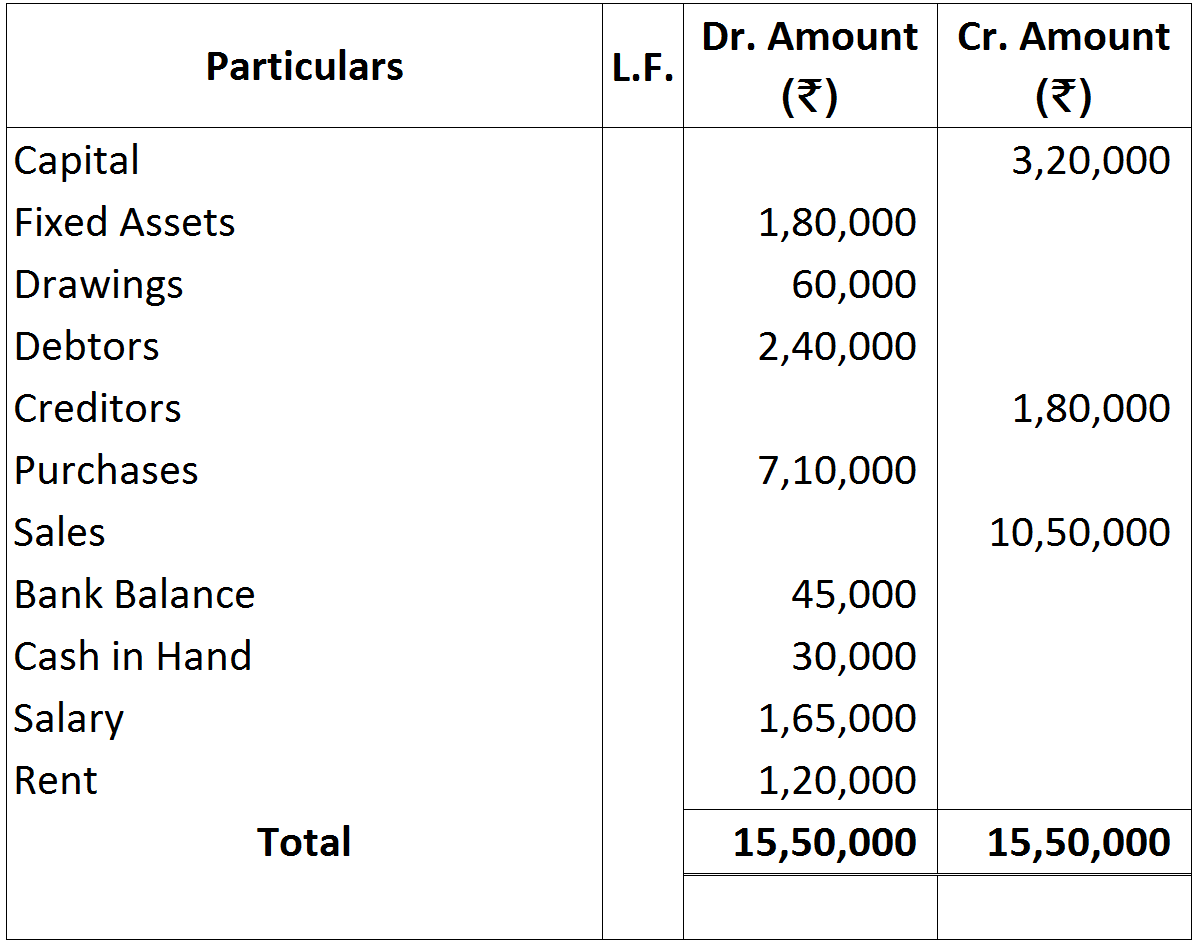
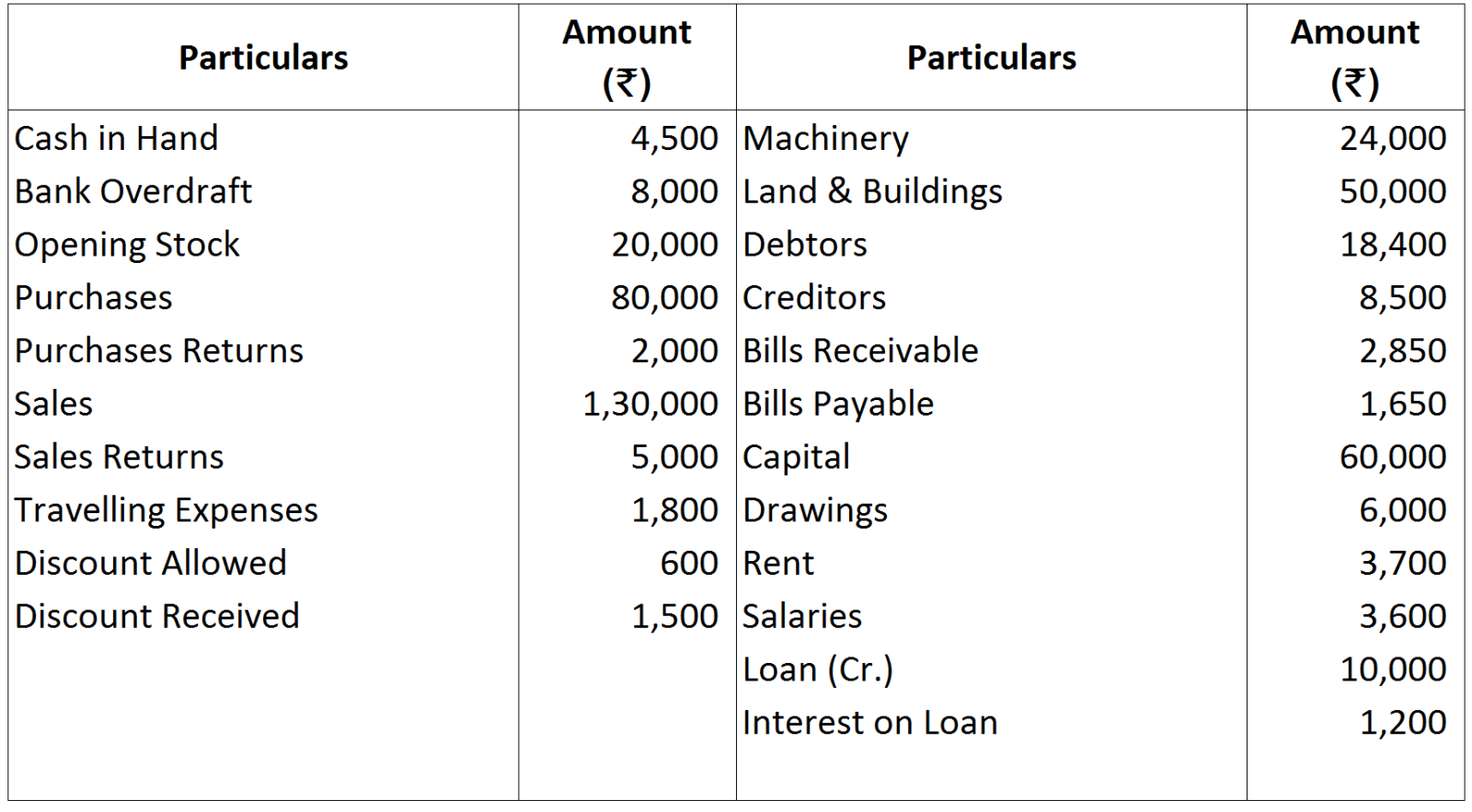
From the following balances, taken from the books of M/s Dwarka Parshad & Sons as at 31st March 2017, prepare a Trial Balance in proper form:−
View full question & answer
Question 96 Marks
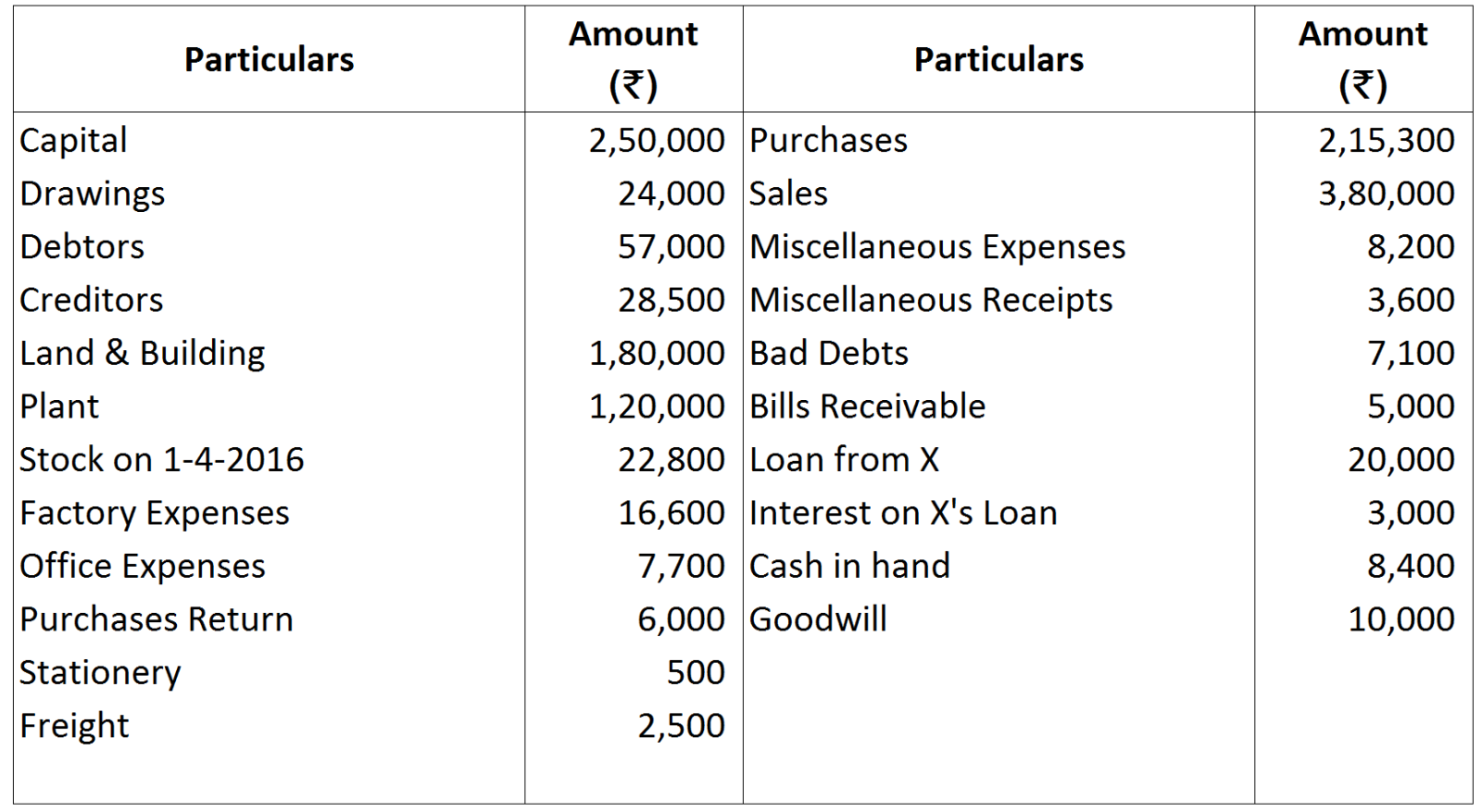
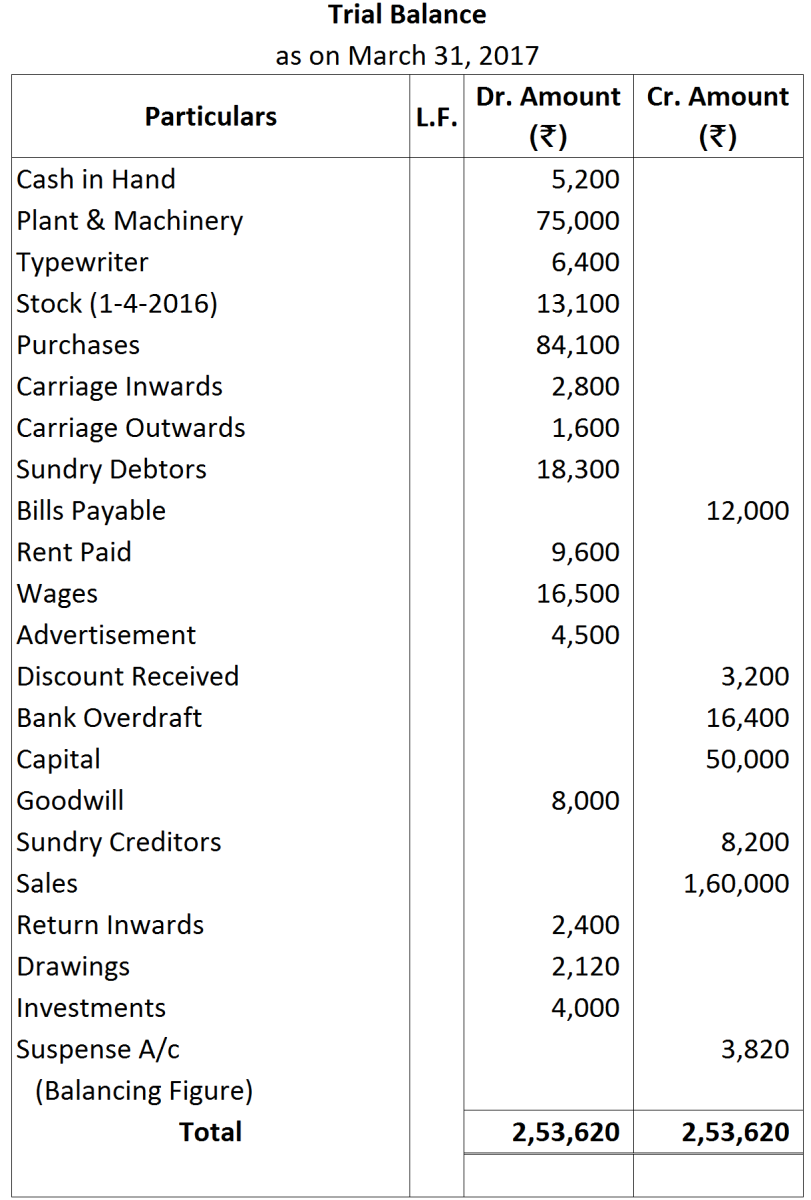
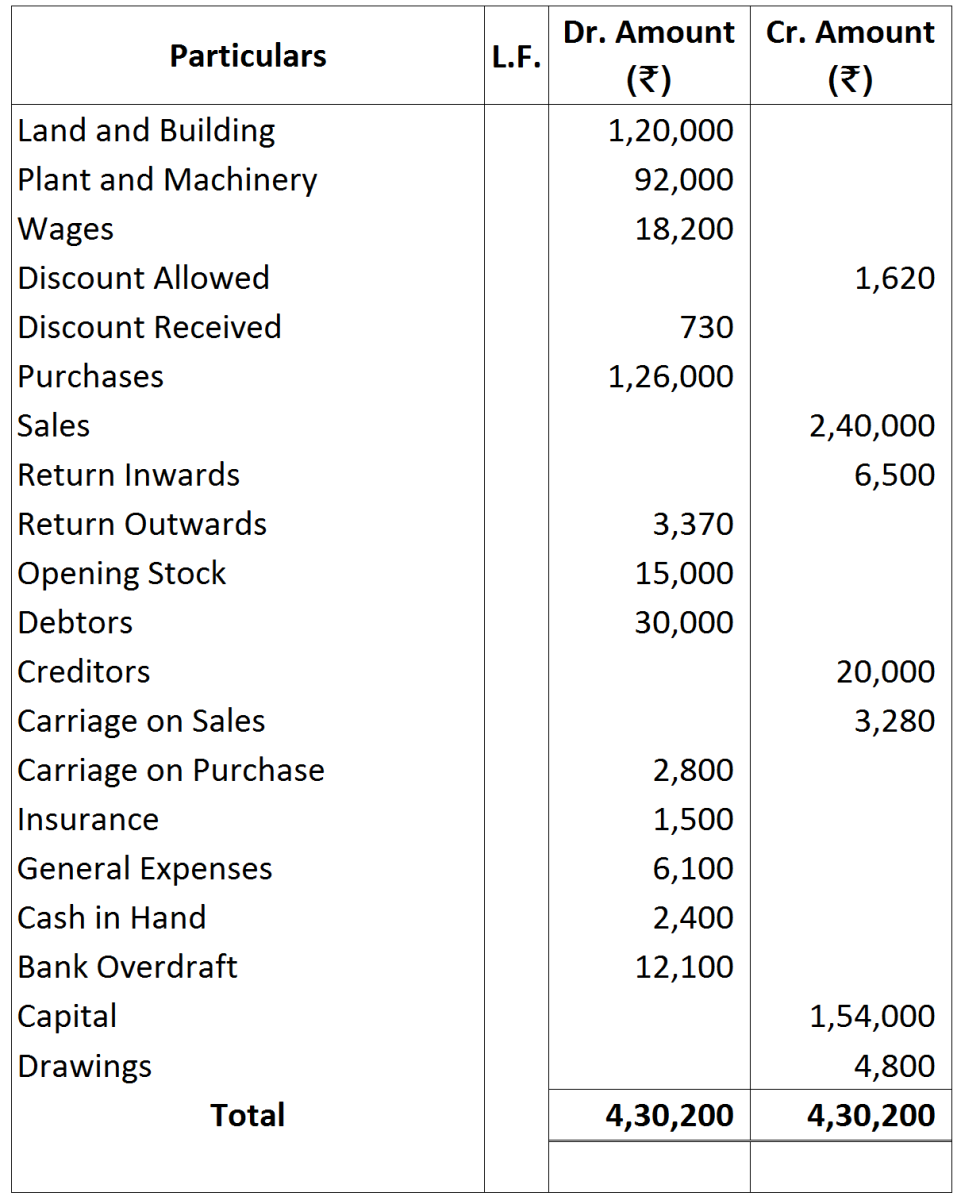
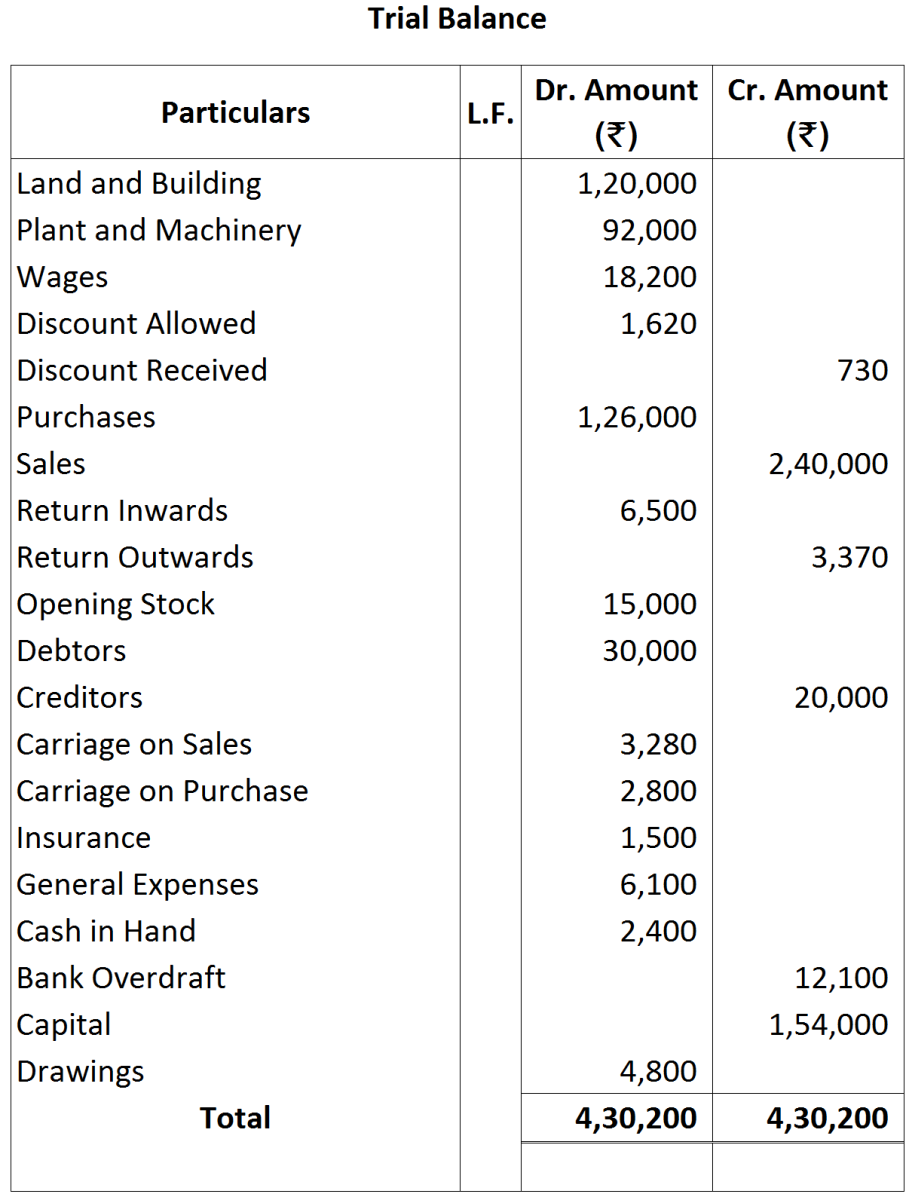
The following is the Trial Balance prepared by an inexperienced accountant. Redraft it in a correct form and give necessary notes :-
Answer

Note: Since, the Trial Balance does not tally, thus, the difference of ₹ 3,820 is transferred to the Credit Balance Column of Trial Balance.
View full question & answer
Question 106 Marks
The following trial balance has been prepared by an inexperienced accountant. Redraft it in a correct form:−
Answer
Solution is as follows:
View full question & answer
Question 116 Marks
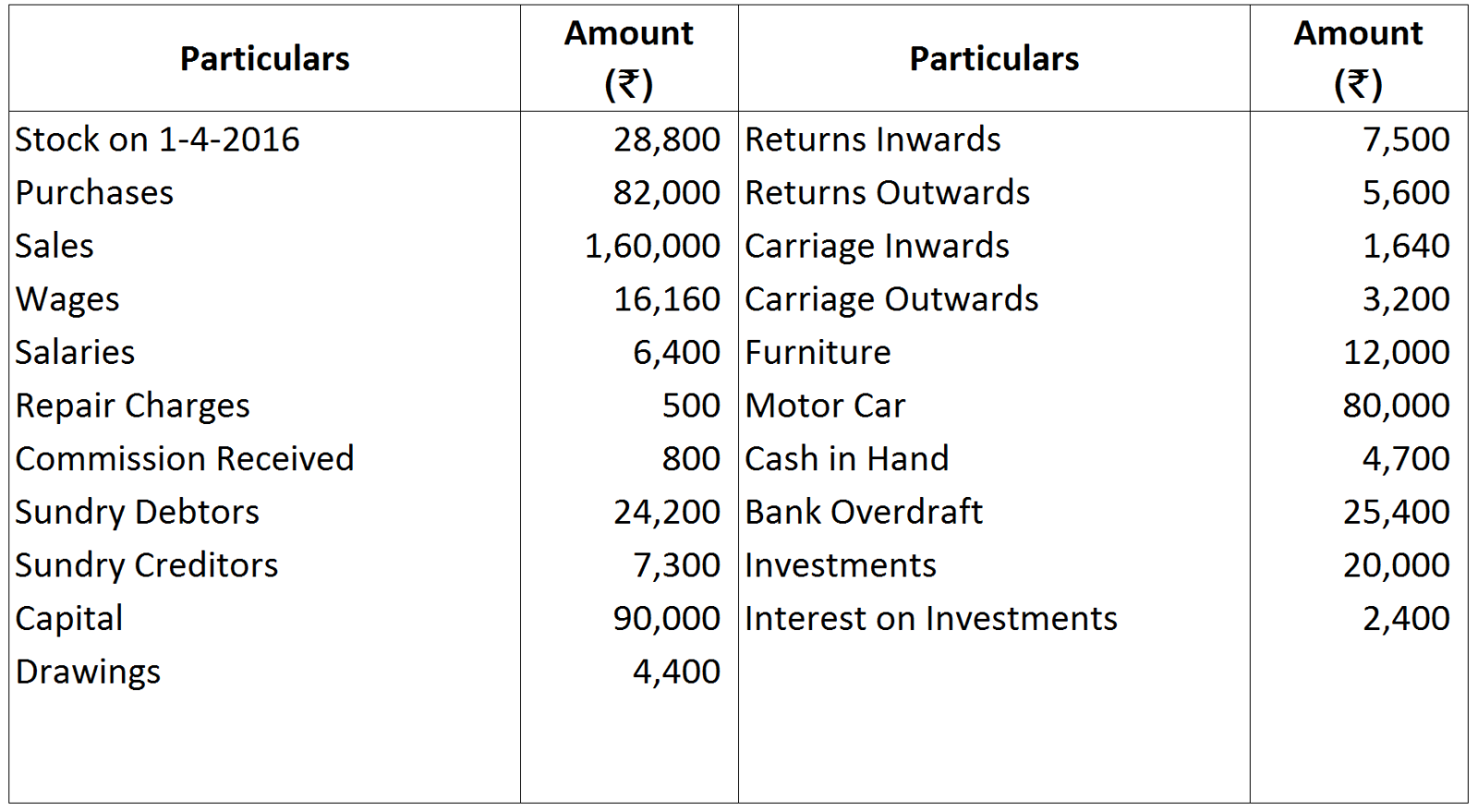
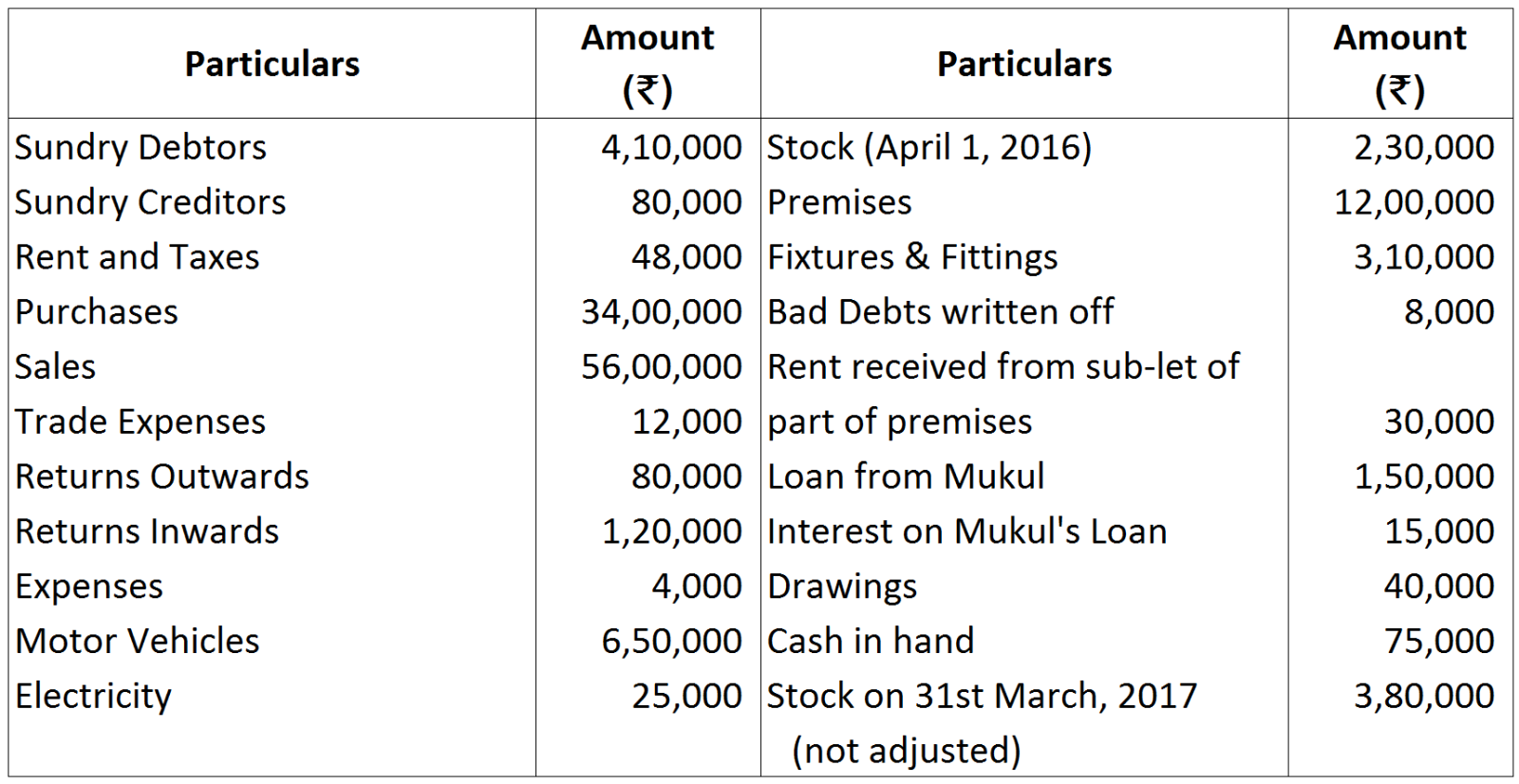
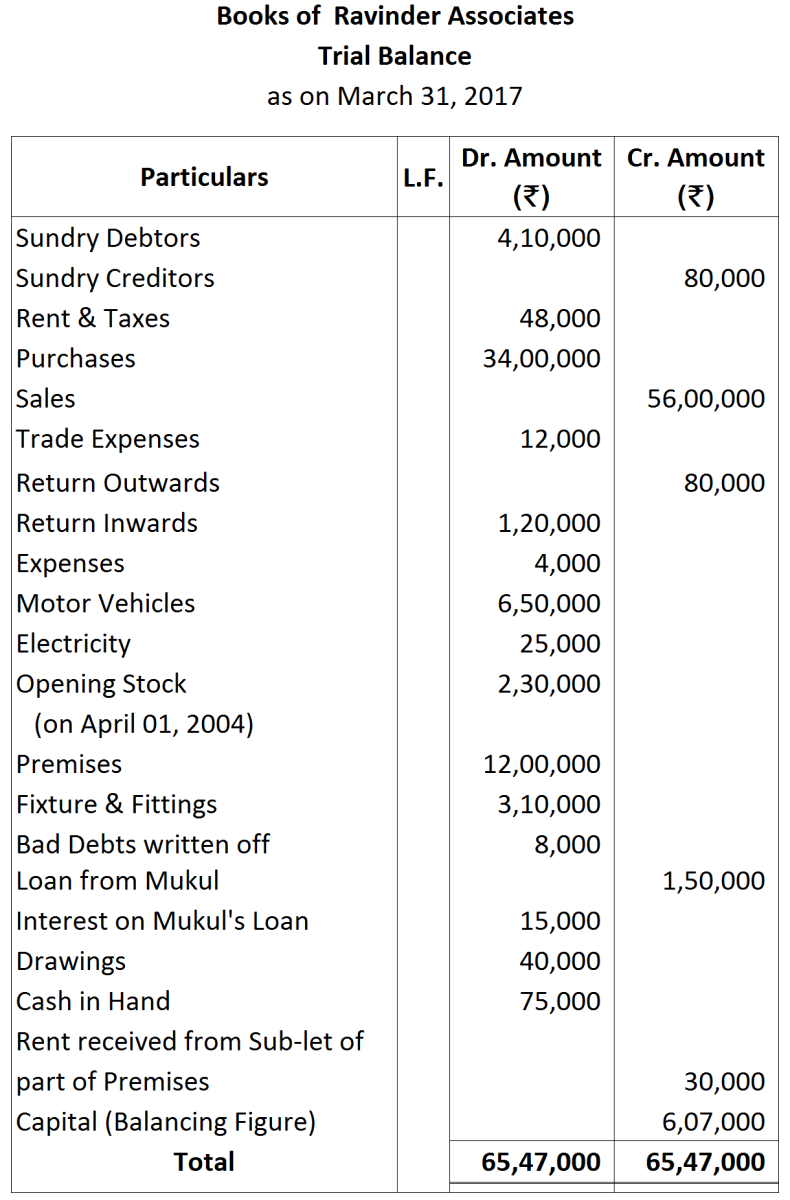
Following balances were extracted from the books of Ravinder Associates as at 31st March, 2017: You are required to prepare the trial balance treating the difference as his capital.
Answer

Note: Closing Stock of ₹ 3,80,000 will not appear in Trial Balance, because it has not been accounted yet.
View full question & answer
Question 126 Marks
Classify the under-mentioned errors into:
  1. Error of Omission
  2. Error of Commission
  3. Compensating Error
  4. Error of Principle
  1. Purchased goods from Bhardwaj on credit for ₹ 600, but were recorded in the purchase book as ₹ 6,000.
  2. Amount paid for the proprietor’s life insurance premium was debited to 'General Expenses Account'.
  3. Goods amounting to ₹ 2,000 have been returned to Chakravarti, but no entry has been made in the books.
  4. An excess debit of ₹ 4,500 has been made in the account of X, whereas Y's account has been credited by ₹ 5,000 instead of ₹ 500.
  5. Goods sold to Suresh for ₹ 650 were recorded as ₹ 560 in the Sales Book.
  6. Typewriter purchased for office use has been debited to Purchases Account.
  7. Wages paid for the construction of Building ₹ 15,000 were recorded in "Wages Account'.
  8. Goods for ₹ 500 have been taken by the proprietor for his personal use, for which no entry has been passed in the books.
Answer
Error of Omission:
  1. Goods amounting to ₹ 2,000 have been returned to Chakravarti, but no entry has been made in the books.
  1. Goods for ₹ 500 have been taken by the proprietor for his personal use, for which no entry has been passed in the books.
Error of Commission:
  1. Purchased goods from Bhardwaj on credit for ₹ 600, but were recorded in the purchase book as ₹ 6,000.
  1. Goods sold to Suresh for ₹ 650 were recorded as ₹ 560 in the Sales Book.
Compensating Error:
  1. An excess debit of ₹ 4,500 has been made in the account of X, whereas Y's account has been credited by ₹ 5,000 instead of ₹ 500.
Error of Principle:
  1. Amount paid for the proprietor’s life insurance premium was debited to 'General Expenses Account'.
  1. Typewriter purchased for office use has been debited to Purchases Account.
  1. Wages paid for the construction of Building ₹ 15,000 were recorded in "Wages Account'.
View full question & answer
Question 136 Marks
“Is Trial Balance merely a proof of Arithmetical accuracy”? Explain the errors which are not disclosed by a Trial Balance.
Answer
Trial Balance is not a conclusive proof of the absolute accuracy of the books of account. If the Trial Balance agrees, it does not mean that there are no errors in the books of account. A tallied Trial Balance means that equal debits and credits have been recorded in the books of account. Even when Trial Balance agrees, some errors may remain undetected and may not be disclosed by the Trial Balance. Thus, the limitations of a Trial Balance are:
  1. Errors of principle, i.e., errors which arise due to incorrect application of the principle of accounting are not disclosed by the Trial Balance.
  2. Compensating errors, i.e., group of errors which are committed in such a way that one mistake is compensated by the other and the Trial Balance still agrees.
  3. Transactions completely omitted from recording in the books of account cannot be detected.
  4. Recording both aspects of a transaction twice in the books of account.
  5. Posting correct amount on the correct side but in the wrong account is not reflected by the Trial Balance.
  6. Wrong amount recorded in the books of original entry and same amount is debited and credited, is not brought out by the Trial Balance.
View full question & answer
Question 146 Marks
State whether the following accounts will indicate a debit or credit balance:
  1. Drawings
  2. Advance Rent Received
  3. Bad Debts
  4. Sales Return
  5. Furniture
  6. Bank Overdraft
Answer
Drawings
Dr. Balances
Advance Rent Received
Cr. Balances
Bad Debts
Dr. Balances
Sales Return
Dr. Balances
Furniture
Dr. Balances
Bank Overdraft
Cr. Balances
View full question & answer
6 Marks Question - Account STD 11 Commerce Questions - Vidyadip