Questions

4 Marks Question

🎯

Test yourself on this topic

30 questions · timed · auto-graded

Question 14 Marks
Present the following table in the form of more than series:
Class Interval
Frequncy
10-20
12
20-30
13
30-40
18
40-50
13
50-60
12
60-70
9
70-80
8
80-90
1
Total
86
Answer
The given table in the form of more than series is shown below.
Item
Frequency (f)
More than 10
86 (total)
More than 20
86-12=74
More than 30
74-13=61
More than 40
61-18=43
More than 50
43-13=30
More than 60
30-12=18
More than 70
18-9=9
More than 80
9-8=1
View full question & answer
Question 24 Marks
Distinguish between Absolute and relative frequencies.
Answer
As frequencies shown in different B types of series discussed so far were absolute frequencies. These were shown in absolute numbers. Sometimes, it is important to know the relative importance of each class. Therefore, frequencies are shown in percentage of total observations. An example is given below:
Marks
Absolute Frequency
Relative Frequency (%)
0-10
4
20
10-20
7
35
20-30
4
20
30-40
3
15
40-50
2
10
Total
20
100
View full question & answer
Question 34 Marks
Prepare ‘less than' and 'more than' cumulative frequency series:
Marks
0-10
10-20
20-30
No.of Student
4
6
10
Answer
'Less than' cumulative series
Marks
c.f.
Less than 10
4
Less than 20
10
Less than 30
20
'More than' cumulative series
Marks
c.f.
More than 0
20
More than 10
16
More than 20
10
View full question & answer
Question 44 Marks
What is ‘loss of information’ in classified data?
Answer
‘Loss of information’ is a major drawback of the classified data. The classification or grouping of raw data into classes makes it more concise and understandable. But simultaneously there exists loss of information. The calculations involved in the classified data or the continuous series are based on the class midpoints. The items in such series cannot be exactly measured and consequently, an individual observation loses its importance during the statistical calculations. Further, the statistical calculations are based on the values of the class marks, ignoring the exact observations of the data leading to the problem of loss of information.
View full question & answer
Question 54 Marks
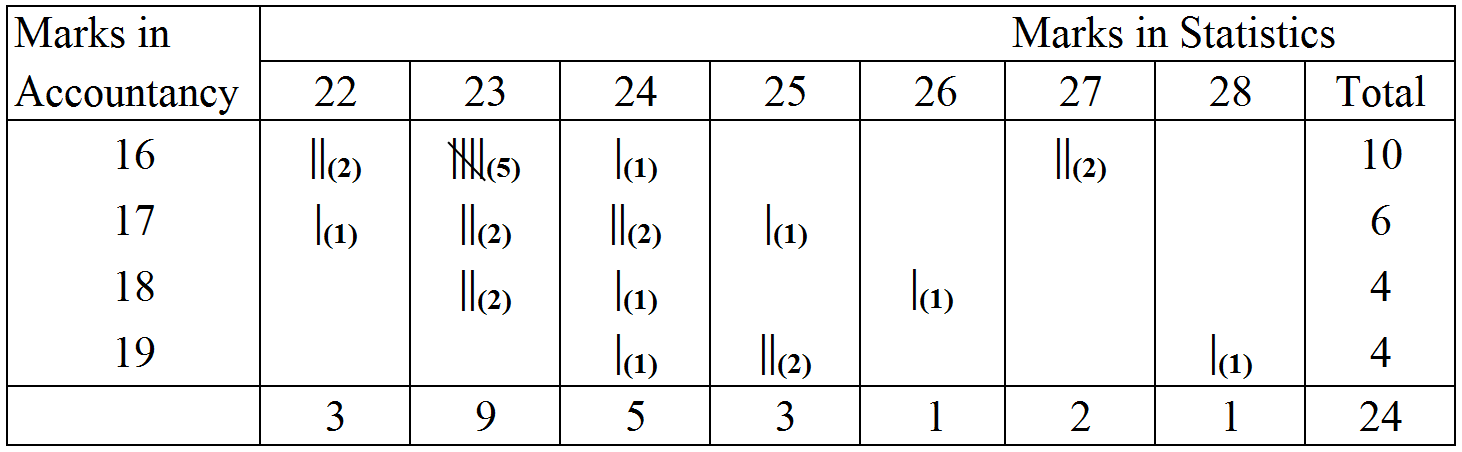
Prepare a bivariate frequency distribution for the marks by 24 examinees in Statistics and Accountancy.
Marks Marks
Statistics
Accountancy
Statistics
Accountancy
22
16
23
16
23
16
25
17
23
18
23
17
23
16
22
17
23
16
27
16
24
17
27
18
23
16
25
19
25
19
28
19
22
16
25
19
23
18
24
16
24
18
23
17
24
17
24
19
Answer
The bivariate frequency array for the given data is shown below.
View full question & answer
Question 64 Marks
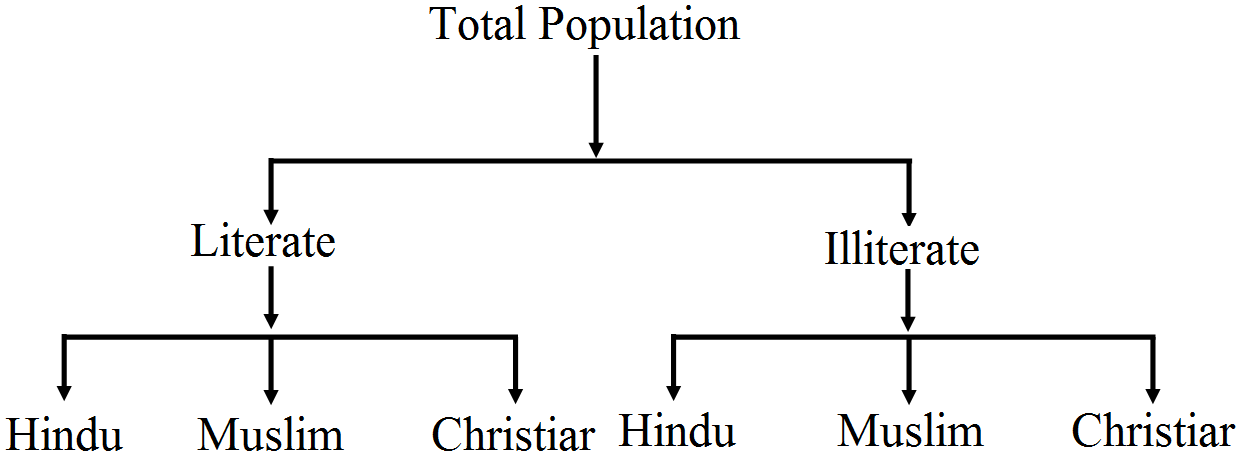
Explain the different forms of qualitative classification data.
Answer
Qualitative classification can take the following two forms:
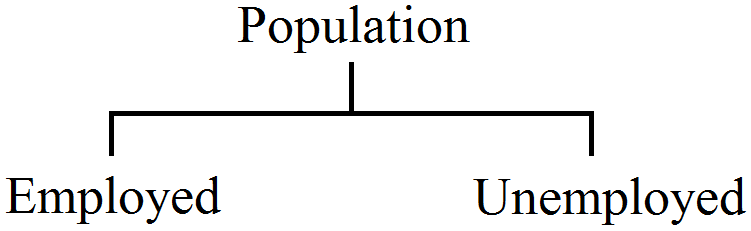
  1. Simple Classification: If the data are classified into only two classes, such a classification is termed as simple or dichotomous classification. Male-female, employed-unemployed, educated-uneducated are the examples of dichotomy.
  1. Manifold Classification: If in a classification, data involves more than one characteristic, it is called manifold classification. A qualitative classification is referred to as a manifold classification in each of the two cases explained below.
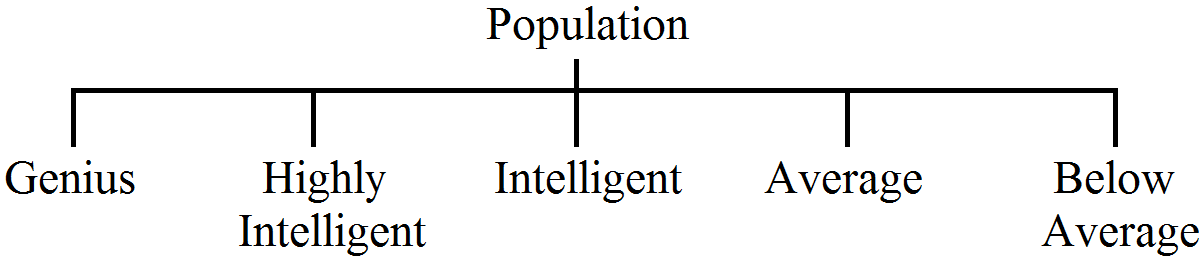
  1. When the given population is classified into more than two classes with respect to a given attribute such as intelligence, beauty, etc.
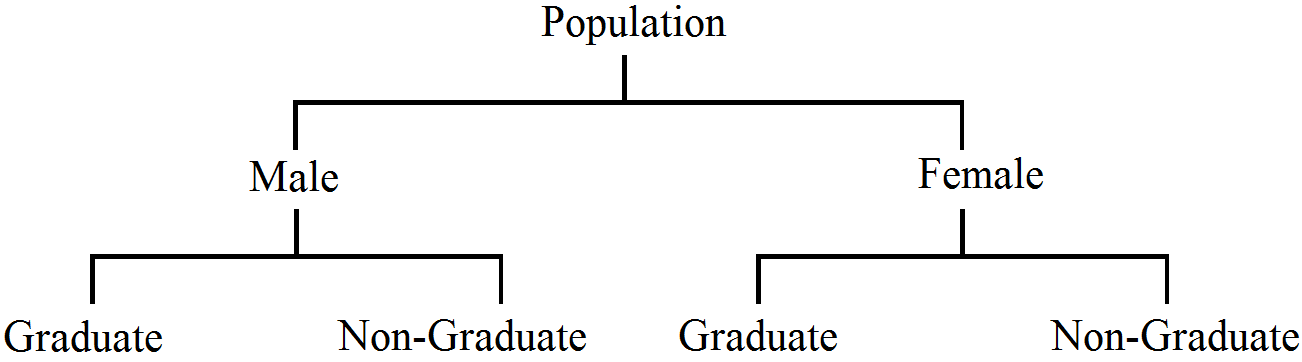
  1. When the given population is first classified into two classes and then each of these classes are further classified into two or more classes.
View full question & answer
Question 74 Marks
Define classification. What are objectives of classification?
Answer
A classification is an ordered set of related categories used to group data according to its similarities. It consists of codes and descriptors and allows survey responses to be put into meaningful categories in order to produce useful data. Its objectives are as follows:
  1. Organized data are attractive and impressive.
  2. These are simple and easily understand-able.
  3. Organization of data is useful in Comparison.
  4. It saves time effort and energy by simplifying data.
View full question & answer
Question 84 Marks
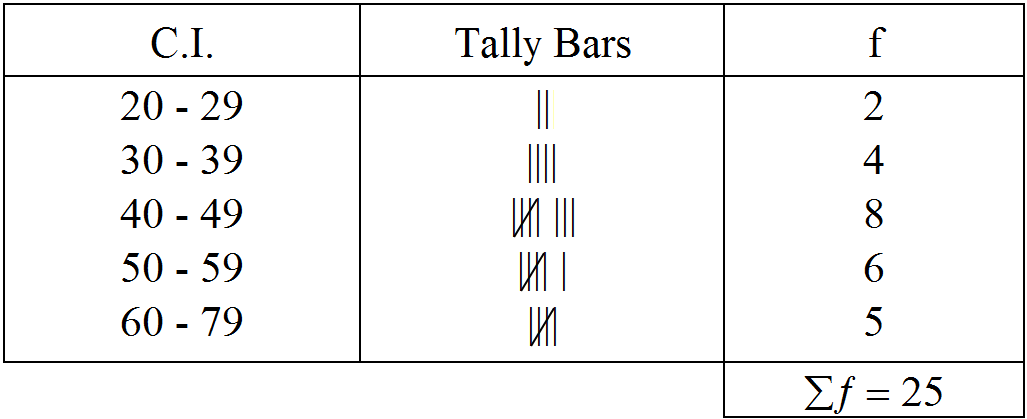
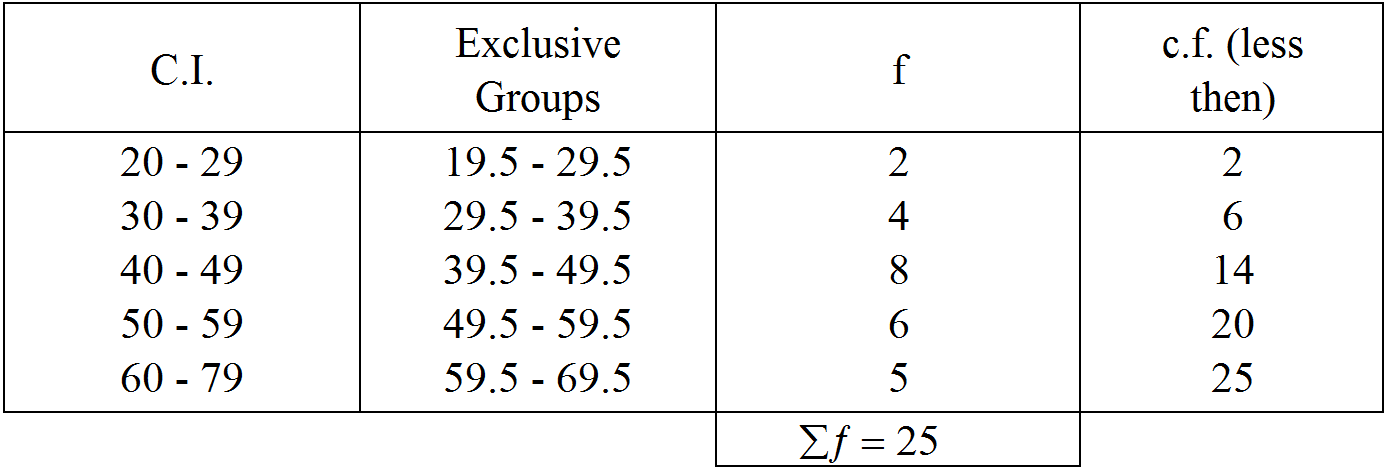
The marks obtained by 25 students in a class are as follows:
22, 28, 30, 32, 35, 37, 40, 41, 43, 44, 45, 45, 48, 49, 52, 53, 54, 56, 56, 58, 60, 62, 65, 68, 69
  1. Arrange the above data in the form of a frequency distribution taking class interval.
20-29, 30-39, 40-49, 50-59, 60-69
  1. Form the less than cumulative frequency distribution also.
View full question & answer
Question 94 Marks
Distinguish between inclusive series and exclusive series.
Answer
Differences between inclusive series and exclusive series are:
S.No.
Basic
Inclusive Series
Exclusive Series
1.
Meaning
In inclusive series, the upper class limit of one class does not become the lower class limit of the succeeding class.
In exclusive series, the upper class limit of one class becomes the lower class limit of the succeeding class.
2.
Inclusion of Values
This series includes the values corresponding to the lower class limit, upper class limit and the values falling in the range of these limits.
This series includes the values corresponding to lower class limit, but not to upper class limit. Values falling in the range of lower class limit and one less than the upper class limit are also included.
3.
Relevance in Statistical Computation
This series has no relevance for statistical computation.
This series has relevance for statistical computation.
4.
Example
Group Frequency
0-9 5
10-9 10
Group Frequency
0-10 5
10-20 10
View full question & answer
Question 104 Marks
Differentiate between inclusive and exclusive series.
Answer
Difference between Inclusive and Exclusive Series
S.No.
Basis
Inclusive Series
Exclusive Series
1.
Definition
An inclusive series is one in which there is generally a difference between the upper limit of one class interval and the lower limit of the other class interval.
An exclusive series is one in which there is generally no difference between the upper limit of one class interval and the lower limit of the other class interval.
2.
Treatment
In inclusive series, value of upper limit of a class is included in that class.
In exclusive series, value of upper limit of a class is not included in that class.
3.
Utility
It can be used only when value is in complete number.
It can be used even when value is in decimals or fractions.
4.
Counting
In inclusive series, counting is not possible without converting it into exclusive series.
Counting can be done in all cases in exclusive series.
View full question & answer
Question 114 Marks
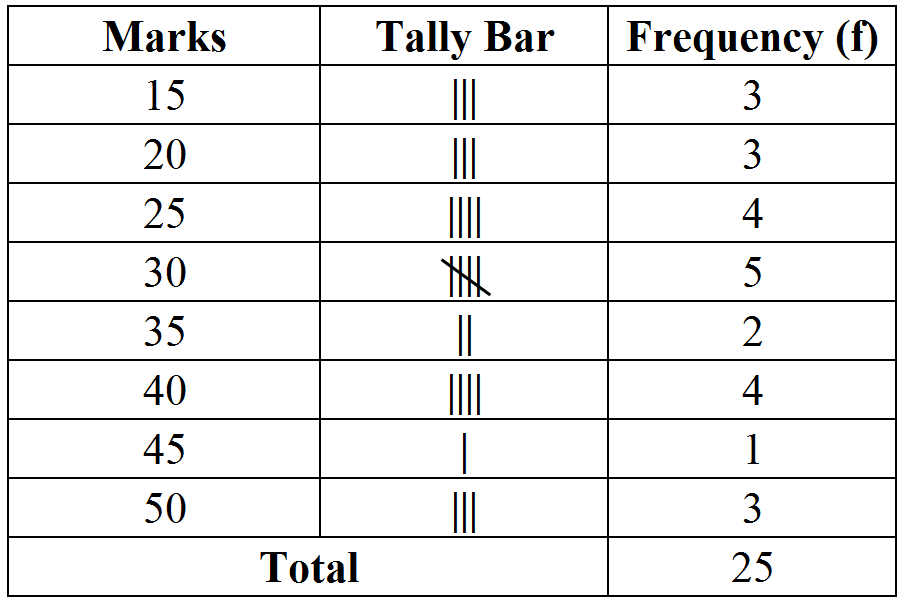
Prepare the frequency array of marks obtained by 25 students of a class in economics test 20, 15, 20, 30, 40, 25, 25, 30, 40, 20, 35, 35, 50, 15, 50, 25, 40, 40, 30, 50, 25, 30, 30, 15, 45.
Answer
As in the question marks of 25 students are given in the individual series. For converting individual series into frequency array, tally bar should be used. he frequency array of given data is shown below.
View full question & answer
Question 124 Marks
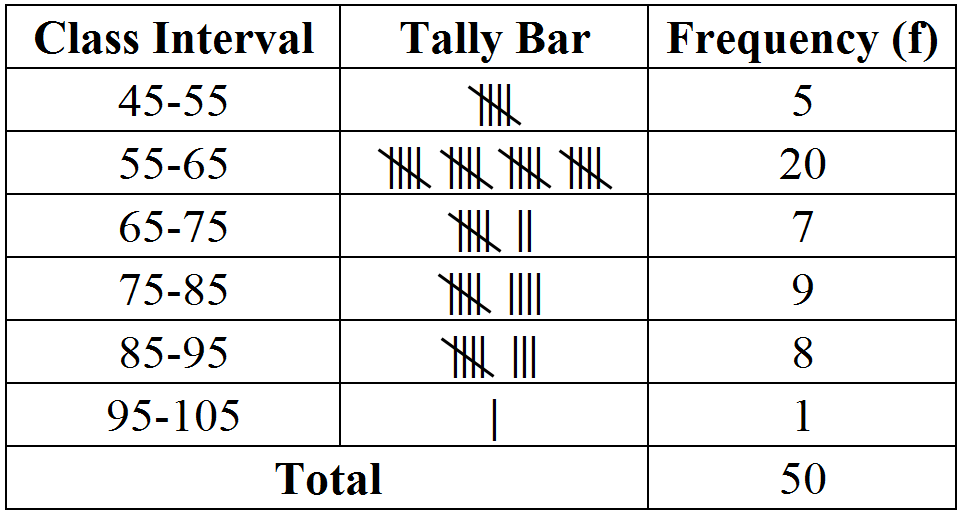
Wages of 50 workers are given. Present them in the form of exclusive frequency distribution with class interval as 45-55, 55-65, etc.
95, 92, 91, 90, 88, 82, 86, 87, 87, 88, 70, 72, 76, 77, 77, 79, 79, 79, 78, 78, 68, 67, 67, 66, 65, 63, 63, 63, 63, 64, 58, 59, 60, 60, 60, 60, 61, 62, 62, 62, 55, 55, 55, 56, 57, 54, 53, 52, 52, 50
Answer
As in the question, wages of 50 workers are given in the form of individual series. For converting individual series into frequency distribution, tally bar should be used.
The exclusive frequency distribution of given data is shown below.
View full question & answer
Question 134 Marks
From the following data, prepare simple frequency distribution on the basis of equal class interval.
Marks
Number of Students
Less than 5
7
Less than 10
20
5-15
38
15 and above
55
20-25
20
25 and above
5
30 above
1
Answer
The simple frequency distribution table on the basis of equal class interval is shown below.
Marks
Frequency
0-5
7
5-10
13[20-7]
10-15
25[38-25]
15-20
30[55-25]
20-25
20
25-30
4 [5-1]
30-35
1
Total
100
View full question & answer
Question 144 Marks
Prepare 'less than’ cumulative frequency series:
Marks 0-10 10-20 20-30
Number of Student 4 6 10
Answer
Less than' cumulative series.
Marks
Cumulative Frequency (cf)
Less than 10
4
Less than 20
10
Less than 30
20
View full question & answer
Question 154 Marks
Wages of 50 workers are given. Present them in the form of exclusive frequency distribution with class interval as 40–50.
95, 92, 91, 90, 88, 82, 86, 87, 87, 88, 70, 72, 76, 77, 77, 79, 79, 79, 78, 78, 68, 67, 67, 66, 65, 63, 63, 63, 63, 64, 58, 59, 60, 60, 60, 60, 61, 62, 62, 62, 55, 55, 55, 56, 57, 54, 53, 52, 52, 50.
Answer
Array: 50, 52, 52, 53, 54, 55, 55, 55, 56, 57 58, 59, 60, 60, 60, 60, 61, 62, 62, 62, 63, 63, 63, 63, 64, 65, 66, 67, 67, 68, 70, 72, 76, 77, 77, 78, 78, 79, 79, 79, 82, 86, 87, 87, 88, 88, 90, 91, 92, 95.
View full question & answer
Question 164 Marks
Can there be any advantage in classifying things? Explain with an example from your daily life.
Answer
Yes, there are advantages in classifying things.The following points highlight the advantages of classification:
  1. Simplification: Classification facilitates the arrangement of data in a presentable form which appears to be brief and simple for analysis.
  2. Effective: Classification enhances the usage of data as it brings out similarity within the diverse set of data. Thus, classification of things is more effective and saves time when searching for information from huge data.
For example: Books in your school library are classified according to subjects as English, Mathematics, Science, Social Studies, GK and general story books. This enables students to refer to the particular subject book for detailed study. Thus, it saves the student's valuable time and effort during the course of study.
View full question & answer
Question 174 Marks
What is a cumulative frequency distribution? What are its two types?
Answer
Cumulative Frequency series is one in which the frequencies are continuously added corresponding to each class interval of the series. It can be prepared from discrete frequency distribution as well as continuous frequency distribution. It can be of two types:
  1. Cumulative Frequency Series of less than type: It is prepared on the basis of upper limit and show how many items lie below some value.
  2. Cumulative Frequencies of more than type: These are prepared on the basis of lower limit of the classes and shows how many items lie above a given value.
Let us take an example to understand how a simple series is converted into cumulative frequency series.
Suppose we know the marks distribution of 50 students in the form of a simple continuous frequency distribution.
Marks
Frequency
0-10
4
10-20
7
20-30
4
30-40
3
40-50
2
Cumulative frequency series of less than type
Marks
Frequency
Less than 10
4
Less than 20
4 + 7 = 11
Less than 30
11 + 4 = 15
Less than 40
15 + 3 = 18
Less than 50
18 + 2 = 20
Cumulative frequency series of more than type
Marks
Frequency
More than 10
20
More than 20
20 - 4 = 16
More than 30
16-7 = 9
More than 40
9-4 = 5
More than 50
5-3 = 2
View full question & answer
Question 184 Marks
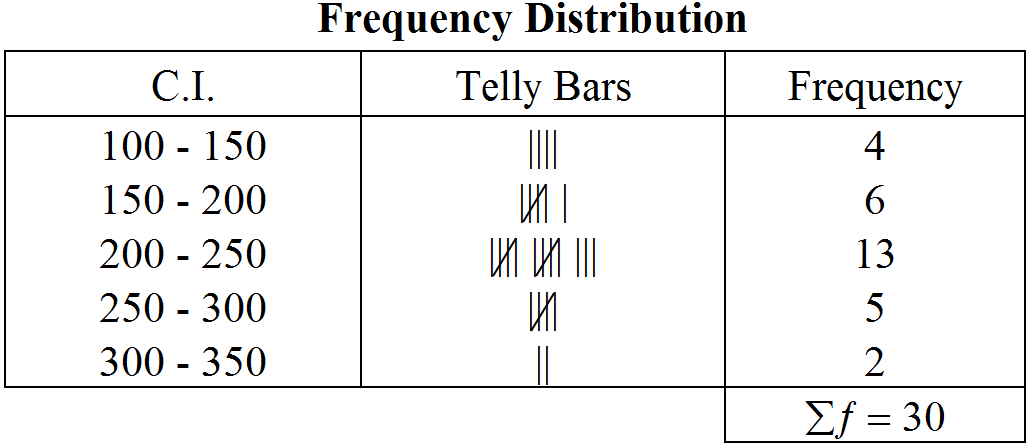
30 families in an area spend the following monthly expenditure on food:
115, 159, 196, 205, 212, 223, 256, 271, 310, 129, 335, 169, 184, 234, 245, 241, 265, 298, 144, 135, 172, 173, 229, 220, 238, 278, 243, 220, 238, 238.
  1. Prepare a frequency distribution with the class interval of.
100 - 150, 150 – 200, 200 – 250, 250 – 300, 300 – 350.
  1. Find the number of families whose monthly expenditure on food is.
  1. less than ₹ 250
  2. more tha ₹ 300
  3. between ₹ 200 and ₹ 300
Answer
  1. Array: 115, 129, 135, 144, 159, 169, 172, 173, 184, 196, 205, 212, 220, 220, 223, 229, 234, 238, 238, 238, 241, 243, 245, 256, 265, 271, 278, 298, 310, 335.
  1. Number of families having expenditure less than ₹ 250 = 13
  2. Number of families having expenditure more than ₹ 300 = 2
  3. Number of families having expenditure between ₹ 200 and ₹ 300 = 18.
View full question & answer
Question 194 Marks
What is a cumulative frequency distribution? Explain the various cumulative frequency distributions.
Answer
A cumulative frequency distribution is that in which the frequencies are progressively totalled and aggregates are shown.It can be of two types:
  1. 'Less Than' Cumulative Frequency Distribution In this frequency distribution, the frequencies of each class interval are added successively from top to bottom.
Following is an example of 'less than' cumulative frequency distribution:
Size of Items
Cumulative Frequency (CF)
Less than 10
6
Less than 20
15
Less than 30
28
Less than 40
35
  1. 'More Than' Cumulative Frequency Distribution: In this frequency distribution, the cumulative frequencies of each class interval is obtained by finding the cumulative total of frequencies starting from the highest value to the lowest value of class.
Class Interval
Cumulative Frequency (CF)
More than 0
35
More than 10
28
More than 20
15
More than 30
6
View full question & answer
Question 204 Marks
The marks obtained by 25 students in a class are as follows:
22, 28, 30, 32, 35, 37, 40, 41, 43, 44, 45, 45, 48, 49, 52, 53, 54, 56, 56, 58, 60, 62, 65, 68, 69.
  1. Arrange the above data on frequency distribution taking class intervals:
20 – 29, 30 – 39, 40 – 49, 50 – 59, 60 – 69.
  1. Form the cumulative frequency distribution also.
Answer
  1.  
  1.  
View full question & answer
Question 214 Marks
Explain the steps involved in construction of a discrete series.
Answer
Following steps are involved in construction of a discrete frequency distribution:
  1. Arrange the series in ascending or descending order: First of all, arrange the raw data in ascending or descending order.
  2. Make as many classes as many are values of variable: Place all values of the variable in the first column of the series beginning with the lowest and giving to the highest.
  3. Determine Frequency of each value: To determine frequency of a class, count, how many times a value is repeating itself. For counting, also make a column of tally bars before frequency. A vertical line is put for each repetition and after for five four lines are intersected like this.
  4. Place Frequencies: Count the bars. Write it in front of each class in frequency column.
  5. Check Mathematical Accuracy: Total the frequency column to verify if sum total of frequencies is equal to number of total observations.
View full question & answer
Question 224 Marks
What do you mean by 'classification of data'? State the different methods of classification of data.
Answer
Classification of data implies conversion of raw data into statistical series.
There are different methods of classification of data like.
  1. Spatial classification: When the raw data is classified with reference to geographical locations such as countries, states, cities etc. is known as spatial classification.
  2. Chronological classification: When the raw data can be grouped according to time, it is known as “chronological classification”. In such a classification data is classified either in ascending or in descending order w.r.t. time such as years, months, days etc.
  3. Qualitative classification: When the raw data is classified on the basis of qualities or attributes of data such as honesty, beauty, intelligence etc., it is known as qualitative classification.
  4. Quantitative classification: When the raw data is classified on the basis of quantitative measurement such as age, height, weight, sales etc., it is known as quantitative classification.
View full question & answer
Question 234 Marks
Convert the following inclusive series into exclusive series:
Class Interval
1-0
6-10
11-15
16-20
21-25
Number of Workers
10
15
20
25
30
Answer
Class Interval
Frequency (F)
0-5-5.5
10
5.5-10.
15
10.5-15.5
20
15.5-20.5
25
20.5-25.5
30
Total
100
View full question & answer
Question 244 Marks
Differentiate between spatial and choronological classification with example.
Answer
Spatial Classification: In spatial classification, data are classified according to geographical areas. Example: Statewise classification of production of food grains in India:
State
Production of food grains
(in tons)
Orissa
A.P
U.P
Assam
3,00,000
2,50,000
22,00,000
1,00,00,000
Chronological classification:
In this type of classification the data are classified according to different time periods. Example: Population of India for different time periods. Profits of a business establishment over different years.
Year
Population (in crores)
1921
24.8
1931
27.3
1941
31.8
1951
35.6
 
View full question & answer
Question 254 Marks
Following are the marks obtained by 20 students in an English test:
5, 16, 17, 17, 20, 21, 22, 22, 22, 25, 25, 26, 26, 30, 31, 31, 34, 35, 42, 48 Prepare a frequency distribution taking class interval of 10 using exclusive and inclusive method.
View full question & answer
Question 264 Marks
Convert the following into ordinary frequency distribution:
  1.  
Less than
25
30
35
40
45
50
f
8
22
50
85
105
12
  1.  
More than
0
10
20
30
40
50
f
50
46
40
20
11
4
Answer
  1.  
CI.
Frequency
20-25
8
25-30
14
30-35
28
35-40
35
40-45
20
45-50
15
 
$\Sigma\text{f}=120$
  1.  
CI.
Frequency
0-10
4
10-20
6
20-30
20
30-40
9
40-50
7
50-60
4
 
$\Sigma\text{f}=50$
View full question & answer
Question 274 Marks
What are real class limits? How are they computed?
Answer
The real class limits of a frequency distribution are referred to as class boundaries. In an exclusive frequency distribution, the class limits and class boundaries are one and the same, but in inclusive frequency distribution, the class boundaries are computed as below.Lower Class Boundary = $\text{Lower Class Limit -}\frac{1}{2}\text{d}$
Upper Class Boundary = $\text{Upper Class Limit +}\frac{1}{2}\text{d},$
Where d is the difference between the lower limit of a group and upper limit of the preceding group.
View full question & answer
Question 284 Marks
If the class marks (mid-points) in a grouped frequency distribution of weights (in kgs) of a group of students are 75, 84, 93, 102, 111, 120, 129 Find out.
  1. Width of the class/ size of the class interval.
  2. The class limits assuming that weights are measured to the nearest kilograms.
  3. The class boundaries.
Answer
  1. Width of the Class = Difference of Two Consecutive (Mid - Values)
= 84 - 75 or 93 - 84
= 9
  1. The class limits are 71-79, 80-88, 89-97, 98-106, 107-115, 116-124, 125 -133
  2. The class boundaries are:
  1. $75-\frac{9}{2},75+\frac{9}{2}\text{i,e.,}70.5-79.5$
  2. $84-\frac{9}{2},84+\frac{9}{2}\text{i,e.,}79.5-88.5$
  3. $93-\frac{9}{2},93+\frac{9}{2}\text{i.e.,}88.5-97.5$
  4. $102-\frac{9}{2},102+\frac{9}{2}\text{i.e.,}97.5-106.5$
  5. $111-\frac{9}{2},111+\frac{9}{2}\text{i.e.,106.5-115.5}$
  6. $120-\frac{9}{2},120+\frac{9}{2}\text{i.e.,11.5-124.5}$
  7. $129-\frac{9}{2},129+\frac{9}{2}\text{i.e.,}124.5-133.5$
View full question & answer
Question 294 Marks
Differentiate between quantitative and qualitative classification.
Answer
  1. Quantitative classification: In quantitative classification the data are classified according to some characteristics that can be measured numerically such as height, weight, production, income, marks secured by the students etc.
Example: Students of a college may be classified according to there weights as given in the table
Weight (in kg)
No of students
30-40
20
40-50
25
50-60
40
60-70
45
  1. Qualitative classification: In qualitative classification the data are classified on the basis of attributes or quality such as sex, colour of hair, literacy, religion etc.
View full question & answer
Question 304 Marks
Convert the following inclusive class interval into exclusive class interval.
Inclusive Class Interval
Frequency
0-99
2
100-199
4
200-299
5
300-399
6
400-499
3
500-599
5
Total
25
Answer
The exclusive class interval table of given form is shown below.
Exclusive Class Interval
Frequency (f)
0-99.5
2
99.5-199.5
4
199.5-299.5
5
299.5-399.5
6
399.5-499.5
3
499.5-599.5
5
Total
25
In this case as lower limit of first class is zero, hence 0.5 will not be subtracted from it.
View full question & answer