Questions

SQ (3 Marks)

🎯

Test yourself on this topic

35 questions · timed · auto-graded

Question 13 Marks
Agricultural technology was very primitive. Why?
Answer
In the very beginning, agricultural technology was rather primitive. There was only an alternative of wooden plough, drawn by a team of oxen for the peasants. Wooden plough could only scratch the surface of the earth. So, agricultural produce was not upto the mark. It was also labour intensive. Fields could be dug only once in four years. Crop rotation method was not effective. Land was divided into two parts; on one part, winter wheat was planted while other part was left fallow. As a result, soil deteriorated slowly. Famines were natural phenomena. Frequent famines led to the miserable life for the poor. In this way, we can say that agricultural policy was rather primitive.
View full question & answer
Question 23 Marks
Knights became a distinct group under medieval European society. Why?
Answer
From the 9th century, there were frequent localised wars among different factions. Amateur soldiers were not sufficient. There was the need of good cavalry. Thereafter, a new section of people-the Knights grew. They were linked with the lords. The lord gave the knight a piece of land, i.e. fief. It extended between 1,000 and 2,000 acres or more. It also comprised a house for the knight and his family, a church and other establishments to house his dependants. The knight paid his lord a regular fee and promised for him to fight in war. In this way, the knights became a distinct group in the medieval European society.
View full question & answer
Question 33 Marks
Discuss the causes of the development of cities in medieval Europe.
Answer
  1. The emergence of feudalism was accompanied by the decline of trade and towns with the gradual decline of feudalism, particularly from the 11th century onward.
  2. Towards the end of the Middle Age, the rise of the middle class led to the emergence of towns. The economic prosperity of the class helped in the development of cities in medieval Europe.
  3. East-west contact also encouraged trade and commerce. As a result, art and crafts centres were established. In course of time, these centres became towns.
View full question & answer
Question 43 Marks
Discuss the growth of town after the decline of Roman empire.
Answer
After the decline of Roman empire, the towns were completely destroyed. Most of the ancient Roman towns bore a deserted look. With the increase of agriculture the largest portion of population depended on agriculture. Towns began to flourish again. To sell their grains, the peasants now needed a place. They also needed a place where they could buy tools and clothes. Consequently, it led to the growth of small towns, churches, roads, etc.
View full question & answer
Question 53 Marks
Which values enhanced the status of nobility?
Answer
The values which enhanced the status of nobility were:
  1. Their wealth.
  2. Their social status.
  3. Their political image.
  4. Their property.
  5. Their judicial role.
View full question & answer
Question 63 Marks
What do you understand by manor? Describe in brief.
Answer
The noble enjoyed a special status in the society. He had a complete control over his property. He was the lord of all the people settled on his land. He occupied vast tracts of land which had its own dwellings, private fields, and pastures. His house was called manor. Peasants cultivated his private lands. Whenever required in battle they were also expected to act as foot soldiers.
View full question & answer
Question 73 Marks
Describe a few characteristics of feudal system.
Answer
Characteristics of feudal system:
  1. Nobles were vassals to the kings.
  2. The peasants were vassals to the nobles.
  3. The lord could protect the vassal loyal to him.
  4. Vassals would receive a written charter or even a clod of earth as a symbol of the land being given to him by his lord.
View full question & answer
Question 83 Marks
Discuss the social changes that had taken way to the development of monarchy-feudal system.
Answer
Social changes that had taken way to the development of monarchy-feudal system were:
  1. Decreasing rate of economic growth had given chance to the monarch to consolidate their power.
  2. Strong infantry equipped with gun and artillery helped the monarch to establish their monarchy.
View full question & answer
Question 93 Marks
Discuss the following:
  1. Serf
  2. Monk
  3. Cathedrals
Answer
  1. Serf: Serf occupied a distinct place in medieval Europe. They did a lot for the development of agriculture. They cultivated plots of land which belonged to the lord. A large portion of its product had to be given to the lord. They were not allowed to leave the estate without the prior permission of their lords. The lord could only decide about the marriage of their serfs.
  2. Monk: A group of deeply religious people chose to lead the life of isolation. They lived in religious communities called abbeys or monasteries. Monks took vows to remain in the monasteries for the rest of their lives. They spent most of their time in prayer, meditations and studies. Men or women could also lead such sort of life. Men became monks and women became nuns. There were separate monasteries for men and women. Monks and nuns did not marry.
  3. Cathedrals: Large churches were called cathedrals. They were built in France. Different groups of people contributed a lot to their monasteries, particularly the rich merchants. Cathedrals were built of stone. They were designed in such a way so that the priest's voice could be heard within the hall where a large number of people gathered. Stained glass windows narrated the stories in the Bible through pictures. Illiterate people could also read it.
View full question & answer
Question 103 Marks
Enumerate the two merits and demerits of medieval monasteries in Europe.
Answer
Merits of the medieval monasteries:
  1. Medieval monasteries were the only centres of learning during the medieval period.
  2. The monks who resided in the monasteries initially led to a very pious life and also served the people.
Demerits of the medieval monasteries:
  1. Soon the monasteries began to acquire land and amass wealth. Within no time, they became a seat of exploitation rather than of service.
  2. The monks led a pious life in the beginning but with passage of time, they led a scandalous life.
View full question & answer
Question 113 Marks
Discuss the impact of environment on European agriculture.
Answer
The entire Europe was covered with huge and dense forests between fifth to tenth centuries. It was but natural that there was less land available for agriculture. The conditions of peasants were miserable. Now they started to takerefuge in the forest. There was cold climatic condition in entire Europe. The yield of the crops reduced to a large extent. But in 11th century, climatic conditions of Europe changed. It entered into a warm phase. Average temperatures increased. It had a huge impact on agriculture. There was longer growing seasons for the agriculturists. Fertility of the soil also increased and hence, the production naturally increased.
View full question & answer
Question 123 Marks
Describe the merits and demerits of feudal system.
Answer
Merits of the feudal system:
  1. Common people were provided security of life and property.
  2. Law and order was maintained in their territories.
Demerits of the feudal system:
  1. There were mutual conflicts among feudal lords to expand their own states. That is why peace and order in the society got disturbed.
  2. The feudal system proved to be an obstacle in the growth of political unity.
View full question & answer
Question 133 Marks
Discuss the categories of cultivators under feudalism during the medieval age in Europe.
Answer
There were two categories of cultivators in the feudal system, during the age in Europe.They were free peasants and serfs:
  1. Free Peasants: They held their farms as tenants of the lord. This category of peasants did not work for their lords.
  2. Serfs: Serfs were the lowest category of peasants. They were just like slaves of their masters. They had not only to work on the fields of their lords and gave them a part of their produce but also to perform such petty jobs as building or repairing their houses, roads, etc. They received no wages. They were not allowed to leave the state without the permission of their lord.
View full question & answer
Question 143 Marks
How was European society divided under the feudal system? Explain. Write in brief the reasons of their development.
Answer
European society under feudal system was divided into the following heads:
  1. Feudal class: The king occupied the highest rank. He gave land to a number of lords. These lords distributed their land to the Barons. King's vassals were the Dukes and Earls. They showed their loyalty to the king. During war period, the king was free to take military help from their vassals.
  2. The peasants: They formed the largest group in the society. They were put into the category of lowest class. They were divided into a number of classes.
  3. New class: It was the emergence of middle class. Reasons of their development: With the invention of trade and industries the rise of middle class emerged in the cities.
View full question & answer
Question 153 Marks
How did plague affect trade and cities?
Answer
  1. With the expansion of trade in the 13th and 14th centuries, ships carrying goods from distant countries had started arriving in European ports. Rats came alongwith ships carrying away the infection of bubonic plague. After the outbreak of plague, cities became the hardest hit. In enclosed communities like monasteries, when one individual contracted the plague none survived.
  2. The plague took its worst toll among infants, the young and the elderly.
  3. As the horrible impact of plague the population of Europe, 73 millions in 1300, stood reduced to 45 millions in 1400.
  4. Depopulation caused the shortage of labour. Imbalance was created between agriculturalists and manufacturers.
View full question & answer
Question 163 Marks
Why did the rich people donate their money to churches?
Answer
The rich people donated their money to churches. The large churches were known as cathedrals. They were being built in France and belonged to monasteries. Different groups of people gave their immense contribution by their labour, materials and money for their construction. It took many years in its completion. After its completion, they became centres of pilgrimage.
View full question & answer
Question 173 Marks
What was the position of Pope in the medieval Europe?
Answer
The Pope enjoyed a respectable position in the society during the medieval period in Europe. He was considered to be the spiritual representative of Jesus Christ. He interfered into the internal affairs of the Christian kings and their subjects. Nobody could dare to challenge the authority of Pope.
View full question & answer
Question 183 Marks
What is the political importance of the feudal system?
Answer
Political importance of the feudal system:
  1. Nobles provided protection to their people.
  2. They also maintained peace and harmony in their regions.
  3. The feeling of mutual understanding and co-operation among the people was also created.
  4. Through manorial system, the feudal lords provided economic provision.
View full question & answer
Question 193 Marks
Imagine and describe a day in the life of a craftsman in a medieval French town.
Answer
Students are advised to answer this question with the help of their teacher. Following guidelines are given to complete this task.
  1. Trading guilds controlled and supervised their activities and took great care of their needs.
  2. Craftsmen worked under the supervision of guilds. They were skilled persons.
View full question & answer
Question 203 Marks
What do you understand by Guild?
Answer
Guild was the basis of economic organisation. Each craft or industry was organised into a guild. It was also an association. Quality of the product, sale and its price were controlled by the Guild. The Guild hall was the distinct feature of every town. In it, the heads of all trade organisations formally met. Guards patrolled the town walls and musicians were called to play at feasts and in civic processions. Innkeepers looked after travellers.
View full question & answer
Question 213 Marks
Discuss the political changes which occurred during $15th$ and $16th$ centuries in Europe.
Answer
The political changes that occurred during $15th$ and $16th$ centuries were as follows:
  1. European kings strengthened their military as well as financial power during $15th$ and $16th$ centuries. They created powerful new states. These were much significant for Europe. Economic changes were also occurring. Historians have, therefore, called these kings “the new monarchs”.
  2. Louis XI in France, Maximilian in Austria, Henry VII in England and Isabelle and
  3. Ferdinand in Spain were absolutist rulers. They initiated the process of organizing standing armies, permanent bureaucracy and national taxation. In Spain and Portugal, they began to play a role in European expansior ansion overseas.
  4. Rulers dispensed with the system of feudal levies for their armies and introduced professionally trained infantry equipped with guns and siege artillery directly under their control.
  5. The social changes started to take place in the $12th$ and $13th$ centuries after the triumph of monarchies. The dissolution of the feudal system of lordship vassalage, and the slow rate of economic growth had given the first opportunity to kings to increase their control over their powerful and not so powerful subjects.
  6. With the increase in taxes, the treasury of monarchs filled. They had enough revenues to support larger armies. They also defended and expanded their frontiers and ruthlessly destroyed the internal bickerings. Without resistance from the aristocracy, centralisation could not be done. In England, the rebellions occurred in $1497, 1536, 1547, 1549,$ and $1553$ simultaneously.
  7. In France, Louis XI $(1461-83)$ waged a long struggle against dukes and princes. In the $16th$ century, the religious wars in France were a contrast between royal privileges and regional liberties.
  8. The king was now the centre of an elaborate courtier society and a network of patron-client relationships.
  9. All monarchies, whether weak or powerful, needed the cooperation of those who could command authority. It did not matter whether they were weak or strong. Patronage became the means of ensuring cooperation. It could also be obtained by means of money.
  10. For ensuring survival, the nobility managed a tactical shift. They quickly transformed themselves into loyalists. Loyal absolutism has been called a modified form of feudalism. The lords were given permanent position in the administrative service. Now they started dominating the political scene.
View full question & answer
Question 223 Marks
Why do you think the people of new towns were considered of fourth order? Explain.
Answer
The people of new towns were considered of fourth order because of the following:
  1. These newly flourished towns were developed with the fair and small market centres, as a result of expansion of trade.
  2. The social and the political conditions of the people were totally different from the people who belonged to the former three orders.
  3. There were banks and lawyers in these towns. There was a distinct economic organisation in the form of guild. Each trade and craft industry was organised into a guild.
  4. Craftsmen found it easier to settle in the towns as goods could be produced and traded for food.
  5. The rich traders and merchants developed better than the nobility. They were generous to the people and engaged in trade related activities.
  6. Later on cathedral towns began to develop, which belonged to monastery and rich merchants.
View full question & answer
Question 233 Marks
We also caused to be painted, by the exquisite hands of many masters from different regions, a splendid variety of new windows. Because these windows are very valuable on account of their wonderful execution and the profuse expenditure of painted glass and sapphire glass, we appointed an official master craftsman for their protection, and also a goldsmith-who would receive their allowances, namely, coins from the altar and flour from the common storehouse of the brethren, and who would never neglect their duty to look after these.Questions:
  1. Who was appointed for the protection of windows?
  2. Windows were precious. How?
  3. Who would receive their allowances, namely coins?
Answer
  1. An official master craftsman was appointed for the protection of windows.
  2. Windows were precious on account of their wonderful execution and the profuse expenditure of painted glass and sapphire glass.
  3. A goldsmith would receive their allowances.
View full question & answer
Question 243 Marks
Why did knights become a distinct group, and when did they decline?
Answer
  1. From the ninth century, frequent localized wars in Europe demanded good cavalry because the amateur peasant-soldiers could not provide better defense.
  2. A new section of people, the knights, provided the cavalry. They were linked to the lords who were under the control of the king.
  3. The lord gave the knight a piece of land (called 'fief') and promised to protect it.
  4. The knights declined when the feudal order started declining.
View full question & answer
Question 253 Marks
Discuss the major drawbacks of feudalism which prevailed in medieval Europe.
Answer
The major drawbacks of feudalism which prevailed in medieval Europe were as follows:
  1. It divided the country into small fiefs held by the feudal lords. They were selfish. They cared more for themselves and ignored the interests of the country as a whole. Hence, feudalism gave a blow to national unity.
  2. The central government became very weak. The feudal lords became more powerful and supreme. The vassals ignored the order of the king. The king was entirely dependent on feudal lords both for military and money. Sometimes they asserted their independence and king could not control them.
  3. Feudalism encouraged rebellions and wars. The power of the lords was increasing day by day and the kings were becoming more and more weak. This encouraged rebellious tendency among the nobles. The nobles were also eager to get new lands. So there was constant warfare among them. It destroyed peace and security and created chaos and confusion in the society.
  4. Feudalism was responsible for the defective military organization. Every lord organised his army in his own way. Their weapons and methods of lighting also differed as a result of national crisis.
  5. Feudalism led to maladministration of justice. Every lord had his own court and laws. He decided the cases and punished the people for the same crime that varied from estate to estate.
View full question & answer
Question 263 Marks
What was the function of medieval monasteries?
Answer
The word ‘monastery’ is derived from the Greek word ‘monos’, meaning someone who lives alone.
  1. From small communities of 10 or 20 men/ women, monasteries grew to communities often of several hundred, with large buildings and landed estates, with attached schools or colleges and hospitals.
  2. They contributed to the development of the arts. Abbess Hildegard was a gifted musician, and did much to develop the practice of community singing of prayers in church.
  3. From the thirteenth century, some groups of monks-called friars-chose not to be based in a monastery but to move from place to place, preaching to the people and living on charity.
View full question & answer
Question 273 Marks
Read the following passages and answer the questions that follow:
In Benedictine monasteries, there was a manuscript with 73 chapters of rules which were followed by monks for many centuries.
Here are some of the rules they had to follow:
Chapter 6: Permission to speak should rarely be granted to monks.
Chapter 7: Humility means obedience.
Chapter 33: No monk should own private property.
Chapter 47: Idleness is the enemy of the soul, so friars and sisters should be occupied at certain times in manual labour, and at fixed hours in sacred reading.
Chapter 48:The monastery should be laid out in such a way that all necessities be found within its bounds: water, mill, garden, workshops.
Questions:
  1. What does humility mean?
  2. What does chapter 47 say?
  3. What sort of values are reflected in this chapter?
Answer
  1. Humility means obedience.
  2. Chapter 47 says that idleness is the enemy of the soul, so friars and sisters should be occupied at certain times in manual labour and at fixed hours in a sacred reading.
  3. Humanity, truthfulness, etc.
View full question & answer
Question 283 Marks
How did technological changes affect agriculture during $11th$ century?
Answer
Technological changes affected agriculture in many ways:
  1. Wooden ploughs were replaced with heavy iron-tipped ploughs.
  2. The method of harnessing animals to the plough improved which enabled animals to exert greater power. Horses were now better shod with iron horseshoes. It prevented foot decay.
  3. The increased use of wind and water energy for agriculture enhanced agricultural production.
  4. The most innovative change was the switch from a two-field to a three field system.Now, peasants could use a field two years out of three if they planted it with one crop in autumn and a different crop in spring a year and a half later.
  5. Now the farmers could plant one with wheat or rye, the second in spring to raise peas, beans and lentils and the other part was left fallow.
As a result, there was an immediate increase in the amount of food produced from each unit of land. Food production almost doubled. There were better opportunities for cultivators. They could now produce more food for less land. The average size of peasants' farm shrank from about $100$ acres to $20$ to $30$ acres. As a result of holding, smaller lands could be more efficiently cultivated. It also reduced the amount of labour.
The new technological changes cost a lot of money.
View full question & answer
Question 293 Marks
What were the causes that led to the decline of feudalism in Europe?
Answer
From the eighth to twelfth century CE, feudalism prospered in Europe. There was a steep decline of feudalism in Europe.The following causes led to its downfall:
  1. Rise of the powerful monarchies: Powerful monarchies paved the way for the decline of feudalism. It rose in France, Spain and England.
  2. Rise of nationalism: Education spread in the nation. The spread of education aroused the spirit of nationalism among the educated middle class. But the feudal lords were quite opposed to nationalism. That was why the educated people turned against feudalism. They could not tolerate its existence. They were to the side of their ruler and not with the lords. The result was that rulers became more and more powerful.
  3. Rise of the middle class: New inventions encouraged trade and industry. The result was the emergence of the middle class in towns and cities. The middle class desired peace for the promotion of commerce, industry and crafts. They wanted to get rid of the nobles who were always engaged in constant wars.
View full question & answer
Question 303 Marks
Describe two features of early feudal society in France.
Answer
Two features of early feudal society:
  1. The lord enjoyed special status. His order was supreme. Nobody could deny his order.
  2. It was based on the lord peasant’s relationship. The peasants offered labor in the service of the service of their lord.
  3. Early society was divided into three orders. These order were the priests, nobles and the peasants. In reality the nobility played a very dominating role in the society.
View full question & answer
Question 313 Marks
Which causes were responsible for the rise of middle class?
Answer
The causes responsible for the rise of the middle class were:
  1. In the crusade, a lot of feudal lords had been killed.
  2. The growth of commerce and trade made the trading class quite rich and prosperous. They, in turn, sought the favour of king and helped him, whenever needed.
  3. The wealthy merchants and rich traders got many towns and cities freed from the clutches of feudal control.
  4. The new cities soon grew into centres of trade, commerce and education and consequently gave rise to the new classes.
  5. New classes of the rich merchants patronised art, science, literature and education.
View full question & answer
Question 323 Marks
Why did Europe's economic progress slow down by the early 13th century”? Give reasons?
Answer
Europe's economic progress slowed down due to the following reasons:
  1. The warm summers of the last 300 years had given way to bitterly cold summers in Northern Europe by the end of 13th century. It became quite difficult to grow crops on higher ground. Storms and flood destroyed the entire crops, which resulted into less income in taxes for government.
  2. Before thirteenth century, the climatic conditions had led to the large scale reclamation of the land of forests and pastures for agriculture. Intensive ploughing had exhausted the fertility of soil. The shortage of pastures reduced the number of cattle. Europe was hit by severe famines between 1315 and 1317. By 1320s, there occurred massive cattle deaths.
  3. Trade was hit by a severe shortage of metal money because of the shortfall in silver mines in Austria and Serbia. It forced the governments to reduce the silver content of the currency, and to mix it with cheaper metals.
  4. With the expansion of trade in the thirteenth and fourteenth centuries, ships carrying goods from distant countries had started arriving in European ports. Alongwith the ships came rats with deadly bubonic plague infection (the Black Death). Western Europe was isolated in earlier centuries, but was hit by the epidemic between 1347 and 1350.
  5. As a result, the trade centres and cities were hit. In enclosed communities like monasteries and covents, when one individual contracted the plague, a lot of people got affected to it. The plague took its worst toll among infants, the young and elderly.
View full question & answer
Question 333 Marks
Discuss the achievements of the nation-states.
Answer
The nation-states are known for achievements.Some of them were:
  1. The rise of nation-states crushed the power of the lords and this made people free from their excesses.
  2. They paved way for setting up peace.
  3. They taught the people to give support to their kings.
  4. They infused the spirit of nationalism among the people of different classes.
  5. They took remarkable steps for the consolidation of the economy of states.
  6. They contributed a lot in the development of language, literature and architecture.
View full question & answer
Question 343 Marks
Discuss in detail about the emergence of cathedrals.
Answer
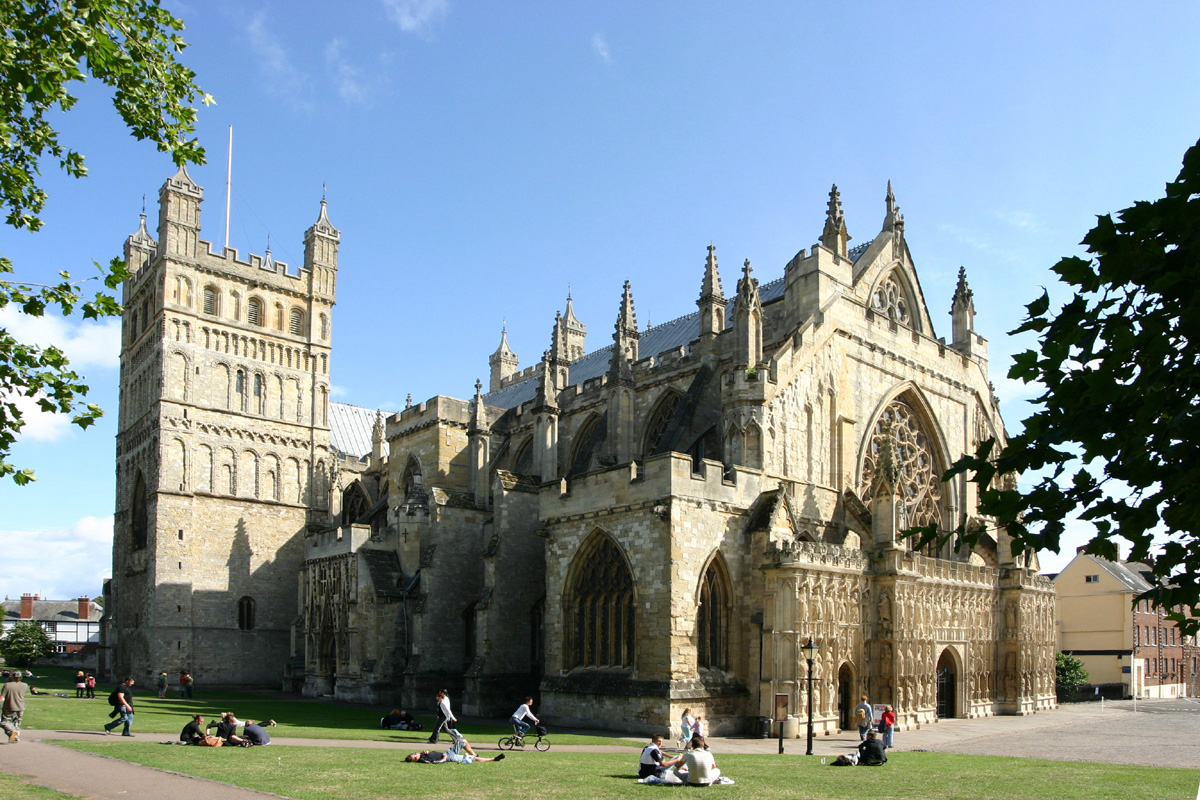
From 12th century, large churches were built in France. They were known as cathedrals. These belonged to monasteries. Various groups of people contributed a lot to their construction in the form of labour, material and money. Alongwith it, the rich merchants also spent money by making donations to churches. Cathedrals took many years in their completion. After their completion, they became the centres of pilgrimage. Small towns also grew a lot. The speciality of the design of cathedrals was that the voice of priest could be clearly heard within the hall where a number of people gathered. Their voice could be heard even from a far off distance.
For windows stained glass was used. During the day, the sunlight would make them radiant for people inside the cathedral, and after sunset the light candles would make them visible to people outside. The stained glass windows narrated the stories in the Bible through pictures, which even the illiterate people could read.
View full question & answer
Question 353 Marks
What do you understand by Labour Rent?
Answer
In the estate of the lords, the serfs had to work along with his family members for at least 3 or more days. Income generated from this labour is known as Labour Rent.
View full question & answer
SQ (3 Marks) - History STD 11 Humanities Questions - Vidyadip