Questions

4 Marks Question

🎯

Test yourself on this topic

21 questions · timed · auto-graded

Question 14 Marks
Explain any two points of importance of ‘consumer protection’ from the point of view of business and any two points from the point of view of consumers.
Answer
Importance of 'consumer protection' from business point of view:
  1. Long-term Interest of Business: Enlightened businesses realise that it is in their long-term interest to satisfy their customers. Satisfied customers not only lead to repeat sales but also provide good feedback to prospective customers and thus, help in increasing the customer-base of business.
  2. Business uses Society’s Resources: Business organisations use resources which belong to the society. They, thus, have a responsibility to supply such products and render such services which are in public interest and would not impair public confidence in them.
Importance of 'consumer protection' from consumer point of view:
  1. Consumer Ignorance: In the light of widespread ignorance ofbconsumers about their rights and reliefs available to them, it becomes necessary to educate them about the same so as to achieve consumer awareness.
  2. Unorganised Consumers: Consumers need to be organised in the form of consumer organisations which would take care of their interests. Though, in India, we do have consumer organisations which are working in this direction, adequate protection is required to be given to consumers till these organisations become powerful enough to protect and promote the interests of consumers.
View full question & answer
Question 24 Marks
Explain the concept of ‘consumer protection’ and any three points of importance from the point of view of consumers.
Answer
Importance of consumers protection from consumer point of view:
  1. Consumer Ignorance: In the light of widespread ignorance ofbconsumers about their rights and reliefs available to them, it becomes necessary to educate them about the same so as to achieve consumer awareness.
  2. Unorganised Consumers: Consumers need to be organised in the form of consumer organisations which would take care of their interests. Though, in India, we do have consumer organisations which are working in this direction, adequate protection is required to be given to consumers till these organisations become powerful enough to protect and promote the interests of consumers.
  3. Widespread Exploitation of Consumers: Consumers might be exploited by unscrupulous, exploitative and unfair trade practices like defective and unsafe products, adulteration, false and misleading advertising, hoarding, black-marketing etc. Consumers need protection against such malpractices of the sellers.
View full question & answer
Question 34 Marks
Explain the following ‘Rights of Consumers’:
  1. Right to be informed.
  2. Right to seek redressal.
Answer
  1. Right to be informed: The consumer has a right to have complete information about the product he intends to buy such as ingredients, date of manufacture, price, quantity etc. It is because of this reason that the legal framework in India requires the manufacturers to provide such information on the package and label of the product.
  2. Right to seek redressal: The consumer has a right to get relief in case the product or service falls short of his expectations. The Consumer Protection Act provides relief to customers such as replacement of product, removal of defect in the product, compensation for any loss or injury suffered by the consumer.
View full question & answer
Question 44 Marks
Explain The following ‘Rights’ of consumers:
  1. Right to be Heard.
  2. Right to seek Redressal.
Answer
  1. Right to be Heard: The consumer has right to file a complaint and to be head in case of dissatisfaction with a product or a service. It is because of this reason many firms have set up their own consumer service and grievance cells.
  2. Right to Seek Redressal: The consumer has a right to get relief in case the product or service falls short of his expectations. The Consumer Protection Act provides relief to customers such as replacement of product, removal of defect in the product, compensation for any loss or injury suffered by the consumer.
View full question & answer
Question 54 Marks
Explain any four responsibilities of the consumer to safeguard his interests.
Answer
Responsibilities of the consumer to safeguard his interests:
  1. Be aware about various goods and services available in the market so that an intelligent and wise choice can be made.
  2. Buy only standardised goods as they provide quality assurance. Thus, look for ISI mark on electrical goods, FPO mark on food products, Hallmark on jewellery etc.
  3. Learn about the risks associated with products and services, follow manufacturer’s instructions and use the products safely.
  4. Read labels carefully so as to have information about prices, net weight, manufacturing and expiry dates, etc.
  5. Assert yourself to ensure that you get a fair deal.
  6. Be honest in your dealings. Choose only from legal source and discourage unscrupulous practices like black-marketing, hoarding etc.
  7. Ask for a cash memo on purchase of goods or services. This would serve as a proof of the purchase made.
  8. File a complaint in an appropriate consumer forum in case of a shortcoming in the quality of goods purchased or services availed. Do not fail to take an action even when the amount involved is small.
  9. Form consumer societies which would play an active part in educating consumers and safeguarding their interests.
  10. Respect the environment. Avoid waste, littering and contributing to pollution.
View full question & answer
Question 64 Marks
Explain the following rights of a consumer:
  1. Right to choose.
  2. Right to be informed.
Answer
  1. Right to Choose: The consumer has the freedom to choose from a variety of products at competitive prices. This implies that the marketers should offer a wide variety of products in terms of quality, brand, prices, size, etc. and allow the consumer to make a choice from amongst these.
  2. Right to be Informed: The consumer has a right to have complete information about the product he intends to buy including its ingredients, date of manufacture, price, quantity, directions for use, etc. It is because of this reason that the legal framework in India requires the manufactures to provide such information on the package and label of the product.
View full question & answer
Question 74 Marks
Explain the following rights of a consumer as provided under Consumers Protection Act, 1986:
  1. Right to choose.
  2. Right to consumer education.
Answer
  1. Right to Safety: The consumer has a right to be protected against goods and services which are hazardous to life and health. For instance, electrical appliances which are manufactured with substandard products or do not conform to the safety norms might cause serious injury. Thus, consumers are educated that they should use electrical appliances which are ISI marked as this would be an assurance of such products meeting quality specifications.
  2. Right to be Heard: The consumer has a right to file a complaint and to be heard in case of dissatisfaction with a good or a service. It is because of this reason that many enlightened business firms have set up their own consumer service and grievance cells. Many consumer organisations are also working towards this direction and helping consumers in redressal of their grievances.
View full question & answer
Question 84 Marks
Explain the following rights of a consumer as provided under Consumers Protection Act,1986:
  1. Right to Safety.
  2. Right to be Heard.
Answer
  1. Right to Safety: The consumer has a right to be protected against goods and services which are hazardous to life and health. For instance, electrical appliances which are manufactured with substandard products or do not conform to the safety norms might cause serious injury. Thus, consumers are educated that they should use electrical appliances which are ISI marked as this would be an assurance of such products meeting quality specifications.
  2. Right to be Heard: The consumer has a right to file a complaint and to be heard in case of dissatisfaction with a good or a service. It is because of this reason that many enlightened business firms have set up their own consumer service and grievance cells. Many consumer organisations are also working towards this direction and helping consumers in redressal of their grievances.
View full question & answer
Question 94 Marks
Explain the following rights of a consumer as provided under Consumers Protection Act, 1986:
  1. Right to be informed.
  2. Right to seek redressal.
Answer
  1. Right to be Informed: The consumer has a right to have complete information about the product he intends to buy including its ingredients, date of manufacture, price, quantity, directions for use, etc. It is because of this reason that the legal framework in India requires the manufactures to provide such information on the package and label of the product.
  2. Right to seek Redressal: The consumer has a right to get relief in case the product or service falls short of his expectations. The Consumer Protection Act provides a number of reliefs to the consumers including replacement of the product, removal of defect in the product, compensation paid for any loss or injury suffered by the consumer, etc.
View full question & answer
Question 104 Marks
Explain any four points of importance of consumer protection from the point of view of business.
Answer
Importance of consumer protection from the point of view of business are:
  1. Long term interest of business: Sound business firms realize that it is in their long-term interest to satisfy their customer. Satisfied customers ensures sales and good feedback to prospective customers thus increasing customer base and long-terms.
  2. Business use society s resources: Businessmen use resources that belong to society Therefore, business have a responsibility towards the society to supply good quality products and services.
  3. Social responsibility: Business has a social responsibility towards various groups, consumers are most important of them. Thus the business has a social responsibility of making available good quality goods at a reasonable prices to the consumers.
  4. Moral justification: It is the moral duty of a business to take care consumers’ interests and avoid any form of consumer exploitation and unfair trade practices like defective and unsafe products, adulteration, false and misleading advertising, black-marketing, etc.
View full question & answer
Question 114 Marks
Explain the following rights of the consumers:
  1. Right to Safety.
  2. Right to Consumer Education.
Answer
  1. Right to Safety: The consumer has a right to be protected against goods and services which are hazardous to life and health. For instance, electrical appliances which are manufactured with substandard products or do not conform to the safety norms might cause serious injury. Thus, consumers are educated that they should use electrical appliances which are ISI marked as this would be an assurance of such products meeting quality specifications.
  2. Right to Consumer Education: The consumer has a right to acquire knowledge and to be a well informed consumer throughout life. He should be aware about his rights and the reliefs available to him in case of a product or service falling short of his expectations. Many consumer organisations and some enlightened businesses are taking an active part in educating consumers in this respect.
View full question & answer
Question 124 Marks
Explain the following rights of the consumers:
  1. Right to safety.
  2. Right to choose.
Answer
Right to safety:
  1. Right to be protected against goods and services which are hazardous to life and health.
  2. Right to get protection against the risks caused due to the use of sub - standard products or products that do not conform to the safety norms.
Right to choose:
  1. The consumer has the freedom to choose from a variety of products at competitive prices.
  2. Marketers should offer a wide variety of product in terms of quality, price, size etc. to enable the consumer to make the choice.
View full question & answer
Question 134 Marks
Explain any four functions of Consumer Organisations and Nongovernment Organisations (NGO’s) for protecting and promoting the interest of consumers.
Answer
Functions of Consumer Organisations and Non-government Organisations (NGO’s) for protecting and promoting the interest of consumers are:
  1. Educating the general public about consumer rights.
  2. Publishing periodicals and other publications.
  3. Carrying out comparative testing of consumer products.
  4. Encouraging consumers to strongly protest and take action against unscrupulous, exploitative and unfair trade practises of sellers.
  5. Providing legal assistance to consumers.
  6. Filing complaints in appropriate consumer courts on behalf of the consumers.
  7. Taking initiative in filing cases in consumer courts in the interest of the general public.
View full question & answer
Question 144 Marks
Explain the following rights of a consumer:
  1. Right to safety.
  2. Right to consumer education.
Answer
  1. Right to Safety: The consumer has a right to be protected against goods and services which are hazardous to life and health. For instance, electrical appliances which are manufactured with substandard products or do not conform to the safety norms might cause serious injury. Thus, consumers are educated that they should use electrical appliances which are ISI marked as this would be an assurance of such products meeting quality specifications.
  2. Right to Consumer Education: The consumer has a right to acquire knowledge and to be a well informed consumer throughout life. He should be aware about his rights and the reliefs available to him in case of a product or service falling short of his expectations. Many consumer organisations and some enlightened businesses are taking an active part in educating consumers in this respect.
View full question & answer
Question 154 Marks
Explain any two points of importance of ‘consumer protection’ from the point of view of business and any two points from the point of view of consumers.
Answer
  1. Importance of ‘Consumer Protection’ from the point of view of Business:
  1. Long-term Interest of Business: Every business wants to enjoy long existence. This is possible only when business firms provide absolute satisfaction to the consumers. Paying attention to the satisfaction of consumers is nothing but consumer’s protection.
  2. Business Uses Society’s Resources: Every business uses various resources, e.g., material, machinery, human, capital, etc. All these resources are supplied by society. From this point of view, it becomes the responsibility of business to provide better facilities to society. By doing this and through the medium of consumer protection business gets an opportunities to discharge its responsibility towards society.
  1. Importance of ‘Consumer Protection’ from the point of view of Consumers:
  1. Consumer’s Ignorance: Generally, the consumer are not aware of their rights. It is only because of this ignorance that they cannot raise their voice against their exploitation rampart in the market. Therefore, it has become necessary in public interest that they should be educated about their rights so that they become activated.
  2. Unorganised Consumers: Consumers are unorganised. A single consumer raising his voice against exploitation is not as effective as the voice of an organised consumers’ body can be. Consumers protection encourages the consumers to organise themselves.
View full question & answer
Question 164 Marks
Enumerate the various Acts passed by the Government of India which help in protection of consumers’ interests.
Answer
The Indian legal framework consists of a number of regulations which provide protection to consumers.Some of these regulations are as under:
  1. The Consumer Protection Act, 1986:
The Act provides safeguards to consumers against defective goods, deficient services, unfair trade practices etc.
  1. The Contract Act, 1982:
The Act lays down the conditions in which the promises made by parties to a contract will be binding on each other.
  1. The Sale of Goods Act, 1930:
The Act provides some safeguards and reliefs to the buyers of the goods in case, the goods purchased do not comply with express or implied conditions or warranties.
  1. The Essential Commodities Act, 1955:
The Act aims at controlling, I (reduction, supply, distribution and price of essential commodities.
  1. The Agricultural Produce (Grading and marking) Act, 1937:
The Act prescribes grade standards for agricultural commodities and livestock products.
  1. The Prevention of Food Adulteration Act, 1954:
The Act aims to check adulteration of foods articles and ensure their purity, so as to maintain public health.
  1. The Standards of Weights and Measures Act, 1976:
It provides protection to consumers against the malpractice of under-weight or under-measure.
  1. The Trade Marks Act, 1999:
The Act prevents the use of fraudulent marks on products and thus provides protection to the consumers against such products.
  1. The Competition Act, 2002:
The Act provides protection to the consumers in case of practices adopted by business firms which hamper competition in the market.
  1. The Bureau of Indian Standard Act, 1986:
The bureau has two major activities: formulation of quality standards for goods and their certification through the BIS certification scheme. The bureau has also set up a grievance cell, where consumers can make a complaint about quality of products carrying the ISI mark.
View full question & answer
Question 174 Marks
Explain the importance of consumer protection from the point of view of a business.
Answer
A business cannot survive without paying attention on protecting the consumer’s interest and adequately satisfying them.This is important because of the following reasons:
  1. Long Term Interest of Business:
Business firms should aim at long term profit maximisation through customer satisfaction. Satisfied customers not only lead to repeat sales but also provide good
feedback to prospective customers and thus help in increasing the customer base of business.
  1. Business uses Society’s Resources:
Business organisation uses resources which belong to the society, thus they have a responsibility to supply such products and render such services which are in public interest.
  1. Social Responsibility:
A business has social responsibility towards various interest groups. Business organisations make money by selling goods and providing services to consumers. Thus, consumers form an important group among the many stakeholders of business and like other stakeholders; their interest has to be well taken care of.
  1. Moral Justification:
The moral duty of any business is to take care of consumer’s interest and securing them from exploitation. Thus, a business must avoid insecure loss, exploitation and unfair trade practices like defective and unsafe products, adulteration, false and misleading advertising hoarding, black marketing etc.
  1. Government Intervention:
A business engaging in any form of exploitation time trade practices would invite government intervention or action. Thus, it is advisable that business organisation voluntarily resort to such practices, where the customers need and interests will be taken care of.
View full question & answer
Question 184 Marks
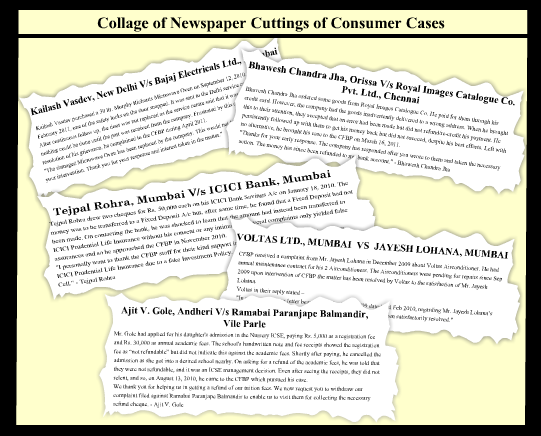
Collect some newspaper cuttings of some consumer cases and the rulings given therein.
Answer

  1. Kailash Vasdev, New Delhi V/s Bajaj Electricals Ltd., Mumbai:
In the given case the concerned person brought a Morphy Richards oven in Sep 2010. In Feb 2011 the safety lock on the door of the oven snapped. In this regard Mr. Kailash approached the service centre of Bajaj Electricals. Even after repeated follow-ups the service centre did not replace the damaged part. He then approached the consumer forum in April 2011.

After the hearing of case judgment was passed in favor of Kailash Vasdev and the company had to replace the oven.
  1. Tejpal Rohra, Mumbai V/s ICICI Bank, Mumbai:
In January 2010 Mr. Tejpal drew two cheques of Rs 50,000 each from his ICICI saving bank account to be transferred to a fixed deposit account. However, the bank, without intimating Mr. Tejpal transferred the amount to ICICI prudential life insurance. Even after repeated complaints with the management no action was taken. In November 2010 Mr. Tejpal then approached the consumer forum.

The bank was directed to give back the invested amount from ICICI prudential life insurance.
  1. Voltas Ltd., Mumbai VS Jayesh Lohana, Mumbai:
A complaint was filed by Mr. Jayesh Lohana stating that as promised Voltas ltd. did not provide him the annual maintenance on the purchased air conditioner.

A complaint was then filed with the consumer forum who then directed Voltas ltd. to provide the said services.
  1. Bhawesh Chandra Jha, Orissa V/s Royal Images Catalogue Co. Pvt. Ltd., Chennai:
Mr. Bhavesh had ordered some goods from Royal Images Catalogue Co. Pvt. Ltd. The payment was made with credit card. However, the goods were delivered at the wrong address. On complaining about the same the company accepted the mistake but did not refund the amount.

Mr. Bhawesh then approached the consumer forum which directed the company to refund the amount paid.
  1. Ajit V. Gole, Andheri V/s Ramabai Paranjape Balmandir, Vile Parle:
Mr. Ajit V. Gole admitted his daughter in Ramabai Paranjape Balmandir. He also paid the required registration fees (Rs 3,000) and academic fees (Rs 30,000). While it was clearly mentioned in the receipt that the registration fees is non-refundable no such statement was mentioned for academic fees. After some time Mr. Ajit Gole cancelled the admission and asked for refund of academic fees. However, the school refused to refund the fees.

Mr. Ajit then approached the consumer forum which then directed the school to refund the said amount.
View full question & answer
Question 194 Marks
A shopkeeper sold you some spices, claiming that those were pure. Later a laboratory test showed that those were adulterated.
What precautions should you have taken before buying and what remedies are available to you for the wrong act?
Answer
You should have been conscious about the quality of the product by checking the AGMARK and should have obtained the cash memo.Now the following remedies are available:
  1. Removing the defects of the product.
  2. Replacing the defective product with the right product.
  3. Returning the price of the product.
  4. Compensating by way of paying compensation, etc.
View full question & answer
Question 204 Marks
Explain the role of consumer organisations and NGOs in protecting and promoting consumers’ interests.
Answer
Consumer organisation and NGOs perform several functions for the protection and promotion of interest of consumers.In India, these associations are performing lots of functions some of them are:
  1. Educating the general public about consumer rights by organising training programmes, seminars and workshops.
  2. Publishing periodicals and other publications to impart knowledge about consumer problems, legal reporting, and reliefs available and other – matters of interest.
  3. Carrying out comparative testing of consumer products in accredited laboratories to test relative qualities of competing brands and publishing the test results for the benefit of consumers.
  4. Encouraging consumers to strongly protest and take an action against unscrupulous, exploitation and unfair trade practices of sellers.
  5. Providing legal assistance to consumers by providing aid, legal advice etc in seeking legal remedy.
  6. Filing complaints in appropriate consumer courts on behalf of the consumers.
  7. Taking an initiative in filing cases in consumer court in the interest of the general public, not for any individual.
View full question & answer
Question 214 Marks
What are the responsibilities of a consumer?
Answer
A consumer should keep in mind the following responsibilities while purchasing, using and consuming goods and services:
  1. Be aware about various goods and services available in the market, so that an intelligent and wise choice can be made.
  2. Buy only standardised goods as they provide quality assurance. Thus, look for ISI mark on electrical goods, FPO mark on food products and Hallmark on jewellary etc.
  3. Learn about the risks associated with products and services.
  4. Read labels carefully, so as to have information about prices, weight, manufacturing and expiry dates etc.
  5. Assert yourself to get a fair deal.
  6. Be honest in your dealings. Choose only from legal goods and services.
  7. Ask for a cash-memo on purchase of goods and services. This would serve as a proof of the purchase made.
  8. File a complaint in an appropriate consumer forum in case of a shortcoming in the quality of goods purchased or services availed.
  9. Form consumer societies which would play an active part in educating consumers and safeguarding their interests.
  10. Respect the environment; avoid waste, littering and contributing to pollution.
View full question & answer
4 Marks Question - Business Studies STD 12 Commerce Questions - Vidyadip