Questions

5 Marks Question

🎯

Test yourself on this topic

10 questions · timed · auto-graded

Question 15 Marks
Discuss the procedure and benefits of Vajrasana in brief.
Answer
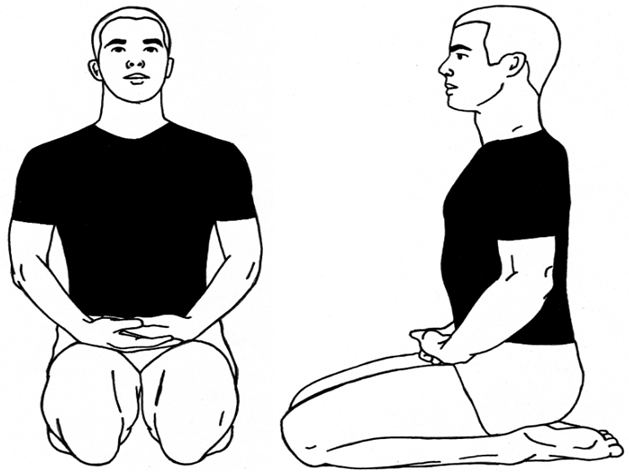
Procedure: It is a meditative asana. Kneel down on the ground or floor with your knees, ankles and toes touching the ground. Your toes should be stretched backwards. Now, place your palms of your hands on the knees. The upper body should be straight. At this time, the breathing should be deep, even and slow. Then, expand your chest forward and puII your abdominal portion inwards.
Benefits
  1. It is helpful in improving concentration.
  2. It is helpful in curing dysentery, back pain and chest diseases.
  3. It enhances memory power.
  4. It alleviates the problems related to menstruation.
  5. It removes mental stress.
  6. It strengthens the pelvic muscles.
  7. It cures postural defects.
  8. It prevents hernia and helps to relieve piles.
  9. It is the best asana for people suffering from sciatica and sacral infections.
  10. It helps in reducing the hip fat.
  11. It gives relief from constipation, acidity and increases the efficiency of the digestive system.
View full question & answer
Question 25 Marks
What do you mean by obesity? Discuss the benefits and contraindications of Pada Hastasana and Vajrasano.
Answer
Obesity is that conditton of the body in which the amount of fat increases to extreme levels.
Pada Hastasana.
Benefits:
  1. Pada Hastasana makes the body very flexible. It stretches the back and leg muscles.
  2. It helps to eliminate excess belly fat.
  3. It improves digestion and reduces constipation. It cures many stomach ailments.
  4. It makes the spine flexible and tones the nerves.
  5. It improves blood circulation.
Contraindications.
The individuals who have back pain should avoid this asana. At least, they should not bend forward fully. They can bend themselves only as far as comfortable.
Vajrasana.
Benefits:
  1. It is helpful in improving concentration.
  2. It is helpful in curing dysentery, back pain and chest diseases.
  3. It enhances memory power.
  4. It cures the problems related to menstruation.
  5. It cures mental stress.
  6. It strengthens the pelvic muscles.
  7. It removes postural defects.
  8. It prevents hernia and gives relieffrom piles.
  9. It is the best asana for people suffering from sciatica and sacral infections.
  10. It helps in reducing hip fat.
  11. It gives relief from constipation, acidity and increases the efficiency of the digestive system.
Contraindicstions:
  1. A person suffering from joint pain should not perform Vajrasana.
  2. The individuals who have any spinal column problem should not perform uajrosanw.
  3. The individuals who have some difficulty in movement should do uajrasanc with a lot of care.
View full question & answer
Question 35 Marks
What do you mean by Back Pain? Discuss the procedure and benefits of Shalabhasana.
Answer
The pain which is felt in the back usually originates from the bones, joints, muscles, nerves, etc. It may be in the cervical, thoracic or lumbar region. It may be spontaneous or can be chronic. It can be constant, affecting one region or radiate to other parts such as arms, hips or legs. It may give a feeling of burning sensation. Sometimes numbness may be felt in the legs or arms. In fact, back pain is not only the problem of our country but it is also prevalent all over the world. As a matter of fact, nine out of ten persons experience back pain at least once in their life. That is why it is said that back pain is a common complaint or problem throughout the world. Due to this problem the affected persons are not able to do their work smoothly and efficiently. Even there are a number of cases when people start absenting themselves from their work. Though it is not a serious problem, it may be painful, especially when it radiates to arms or legs.
Procedure of Shalabhasana: In order to perform shalabhasana, lie down in prostrate position. Spread the thigh backwards. Hold your fists and extend arms. Keep your fists under the thigh and then raise your legs slowly as high as you can. For best results hold this position for 2 or 3 minutes and then lower your Iegs slowly. Repeat the same action for 3 to 5 times.
Beneflts:
  1. It provides relief to persons who have mild sciatica and slipped disc problem.
  2. It strengthens the muscles of the spine, buttocks and back of the arms and legs
  3. It improves posture.
  4. It stimulates abdominal organs.
  5. It helps in relieving stress.
  6. It alleviates lower back pain.
  7. It helps in removing constipation.
View full question & answer
Question 45 Marks
Describe the benefits and contraindications of Tadasana.
Answer
Benefits:
  1. It is helpful in developing physical and mental balance.
  2. It reduces obesity.
  3. It cures constipation.
  4. It cures digestive problems.
  5. It improves body posture.
  6. It alleviates sciatica.
  7. It is an excellent asana for those who wants to enhance their height.
  8. It is beneficial in treating hypertension.

Contraindications:
  1. If you have low blood pressure you should not do this asana.
  2. In case of headaches or insomnia you should avoid doing this asana.
  3. Individuals, who suffer from blood circulation problems such as faulty valves, should not perform this asana.
View full question & answer
Question 55 Marks
Discuss the procedure, benefits and contraindications of Trikonsana and Ardha Matsyendrasana.
Answer
Trikonasana.
Propedure: First of all stand with your legs apart. Then raise the arms sideways up to the shoulder level. Bend the trunk sideways and raise the right hand upward. Touch the ground with left hand behind left foot. After some time, do the same asana with opposite arm in the same way.
Benefits:
  1. It strengthens the legs, knees, arms and chest.
  2. lt helps in improving digestion and stimulates all the abdominal organs.
  3. It increases mental and physical equilibrium.
  4. It reduces stress, anxiety, back pain and sciatica.
  5. It helps in increasing height.
  6. It helps in reducing the excess body weight.
  7. It enhances blood circulation.
  8. It is also helpful in reducing excess fat around the waistline
Contraindications:
  1. If you are suffering from diarrhoea, low or high blood pressure, back injury or migraine, avoid doing trikonasana.
  2. The individual having cervical spondylosis should not perform this asana.
Ardhmatseyendrasana
Procedure: The left heel is kept under the right thigh and right leg is crossed over the left thigh. After that hold the right toe with left hand and turn your head and back to the right side. In this position move the trunk sideways. Then, perform the same asana in the reverse position.
Benefits:
  1. It keeps gall bladder and the prostate gland healthy.
  2. It enhances the stretchability of back muscles.
  3. It alleviates digestive ailments.
  4. It regulates the secretion of adrenaline and bile and thus is recommended in yogic management of diabetes.
  5. It is also helpful in treating sinusitis, bronchitis, constipation, menstrual disorders, urinary tract disorders and cervical spondylitis.
Contraindications
  1. Women, who are two or three months pregnant should avoid this asana.
  2. The individuals, who suffer from peptic ulcer, hernia or hypothyroidism should perform this asana only under expert guidance.
  3. The individuals who have the problem of sciatica or slipped disc may benefit from this asana but they need to take great care while doing this asana.
View full question & answer
Question 65 Marks
Discuss asanas as preventive measures in detail.
Answer
According to Pataljali, asana means, "Striram sukham aasanam" i.e., "that position which is comfortable and steady". In Brahamanopanishad, "To sit in a comfortable position or posture for everlasting period is called asana".
Benefits of Asanas for Prevention of Diseases:
  1. Bones and Joints Become Strong: As a result of performing asanas regularly, the bones, cartilages and ligaments become strong. Along with this, the height of children is enhanced. The joints are able to bear more pressure. Asanas also enhance the flexibility of joints. The flexibility of spine is also enhanced. Postural deformities can also be prevented and corrected. Arthritis is also cured by performing asanas. Due to spinal injuries, problems like back pain, sciatica and cervical pain develop. By performing asanas these problems are greatly controlled.
  2. Muscles Become Strong: By performing asanas regularly, muscles of the body become strong' The efficiency of muscles increases. Fat does not accumulate in the body.
  3. Circulation of Blood Becomes Normal: As a result of practicing asanas regularly, the stroke volume as well as cardiac output increase because cardiac muscles start working more strongly and efficiently. Blood circulation is improved and blood pressure normalises and stabilises. The level of blood cholesterol reduces. By performing asanas, the lactic acid and acid phosphate are excreted from muscles quickly and easily which reduces fatigue.
  4. Respiratory Organs Become Efficient: By doing asanas regularly, the respiratory organs become efficient. The vital air capacity increases up to 6000 cc. The size of the lungs and chest also enhances. As a result of doing asanas, the will power becomes strong and various diseases such as cough, asthma and cancer of trachea can be prevented.
  5. Efficiency of Digestive System Increases: By performing asanas regularly, all the organs of digestive system of our body begin to work effectively. The absorption of food becomes efficient. The storage of bile in gaII bladder in concentrated form is enhanced., appetite increases, stomach and intestines are also strengthened. Constipation, indigestion and gas trouble are reduced.
  6. Nervous System Strengthens: As a result of regular practice of asanas, our nervous system strengthens. The working efficiency of synapse enhances. The neuro-muscular coordination increases. Activities of our body will be done expending less energy. The secretion of adrenaline remains good. The secretion of adrenaline depends on sympathetic nervous system. The reaction time also reduces. Mental power also improves. Memory improves and feeling of disappointment reduces. Regular practice of asanas reduces anxiety and stress. It also reduces sleep disorders.
  7. Glandular Activity is Stimulated and Regulated Properly: By doing asanas regularly, the glandular activity is stimulated and regulated properly. Glands start producing hormones in sufficient quantity which are collected and kept so that they may be utilised at the time of need. The demand of insulin reduces. Indeed, regular practice of asanas improve diabetes management. Asanas help in maintaining a balanced development of our body.
  8. Efficiency of Excretory System Enhances: Regular practice of asanas enhances the efficiency of aII the excretory organs. As a result, the waste products such as
  9. Lactic acid, acid phosphate, urea, uric acid, sulphates, etc., are excreted quickly and properly which in turn help in delaying fatigue.
  10. Immune System is Strengthened: By carrying out regular practice of asanas, our immune system is strengthened. We, as a result, become less prone to various communicable diseases.
In conclusion, it can be said that regular practice of asanas is helpful in preventing various diseases, especially the ones that are related to our lifestyle.
View full question & answer
Question 75 Marks
Elaborate the procedure and benefits of Tadasana and Pawanmuktasana.
Answer
Procedure of Tadasana: Stand up in attention position. Lift your arms upwards. Stretch your hands upwards. Raise your heels, and come on your toes. Also pull up your body upwards. After some time breathe out slowly and come to the previous position. Repeat the same exercise 10 to 15 tirnes. Benefite
  1. It is helpful in developing physical and mental balance.
  2. It reduces obesity.
  3. It cures constipation.
  4. It cures digestive problems.
  5. It improves body posture.
  6. It alleviates sciatica.
  7. It is an excellent asana for those who wants to enhance their height.
  8. It is beneficial in treating hypertension.
Proeedure of Pawanmuktasana: Lie down on your back on a plain surface. Keep your feet together and place your arms beside your body. Take a deep breath' When you exhale bring your knees towards your chest. At the same time press your thighs on your abdomen. Clasp your hands around your legs. Hold the asana when you breathe normally. Every time you inhale, ensure that you loosen the grip. Exhale and release the pose after you rock and roll from side to side about 3 times.Benefits:
  1. It eases the tension in lower back.
  2. It enhances the blood circulation in pelvic area.
  3. It helps in reducing the fats of thighs, buttocks and abdominal area.
  4. It strengthens the abdominal muscles. It also massages the intestines and organs of the digestive system which helps in releasing the gas and thus improves digestion.
  5. It relieves constipation.
View full question & answer
Question 85 Marks
What is hypertension? Discuss the benefits and contraindications of Vojrosona and Ardho Chokrasana.
Answer
Hypertension means increased blood pressure. It has become a worldwide health problem because a great number of people are facing the problem of hypertension throughout the world. Though it is a fact that blood pressure increases with the advancement of age. In yesteryears, hypertension used to be considered a middle-age problem but nowadays, youngsters also suffer from this problem due to their faulty lifestyles.
In fact, the main function of the heart is to supply pure blood to the various parts of the body through arteries. When the heart contracts, it pushes the blood through blood vessels and consequently the blood pressure increases in arteries. This pressure is known as systolic blood pressure. It is represented by the first number. The pressure between two heartbeats is called diastolic blood pressure. It is represented by the bottom or the second number. These two numbers of blood pressure are measured in mmHg. Unit means millimeter of Mercury. The normal blood pressure of an adult is considered 120/ 80mmHg. A person whose blood pressure readings are beyond 140/ 90mmHg, is said to be having hypertension.
Vojrasana.
Benefits:
  1. It is helpful in improving concentration.
  2. It is helpful in curing dysentery, back pain and chest diseases.
  3. It enhances memory power.
  4. It alleviates the problems related to menstruation.
  5. It removes mental stress.
  6. It strengthens the pelvic muscles.
  7. It cures postural defects.
  8. It prevents hernia and helps to relieve piles.
  9. It is the best asana for people suffering from sciatica and sacral infections.
  10. It helps in reducing the hip fat.
  11. It gives relief from constipation, acidity and increases the efficiency of the digestive system.
Contraindications:
  1. A person suffering from joint pain should not perform Vojrasana.
  2. The individuals who have any spinal column problem should not perform Vojrasana.
  3. The individuals who have some difficulty in movement should practice Vojrasana with a Iot of care.
Ardho Chokrasana.
Benefits:
  1. It helps to make ankles, thigh, shoulders, chest, spine and abdomen stronger.
  2. It relieves stress and tension
  3. It improves digestion.
  4. It cures menstrual disorders.
  5. It cures pain in legs.
  6. It reduces fat in the waist and thigh.
  7. It helps to alleviate upper back pain.
  8. It relieves stress in the neck and shoulders.
Contraindieations:
  1. Avoid performing this asana if you have migraine, headache, Iow blood pressure, diarrhoea and insomnia.
  2. Avoid doing this asana if you have peptic ulcer and hernia.
  3. Avoid this asana in case of hip or spinal problems.
  4. Pregnant women should avoid doing this asana.
View full question & answer
Question 95 Marks
Explain about any two asanas which are beneficial in preventing as well as curing asthma.
Answer
Asthma can be prevented as well as cured if the following asanas are practiced regularly.
Sukhasana
Procedure: Sit down with the legs straight in front of the body. After that bend the right leg and place the foot under the left thigh. Then bend the left leg and keep the foot under the right thigh. Place the hands on the knees. Chin should be in. Keep the head, neck and back straight, close the eyes. Relax your body.
Benefits:
  1. It facilitates mental and physical balance without causing strain or pain.
  2. It stretches and lengthens spine.'
  3. It calms your mind.
  4. It enhances your peace of mind.
  5. It reduces anxiety, stress and mental fatigue.
  6. It helps in improving body posture.
  7. It provides gentle massage to knees, calf muscles and thighs.
  8. It spreads a sense of calmness throughout your body and mind.
Chakrasana:
Procedure: In this asana, the figure of the body becomes like a chakra, therefore, this asana is called chakrasana. First of all, lie down on your back. Fix your hands firmly on the ground. Then raise the middle portion of your body upwards. Raise it as high as possible, so that your body is in semi-circle position. Then keep your head downwards between your hands. In the beginning, keep this position for one minute and then after some days do it for 3 to 5 minutes.
Benefits:
  1. It cures back pain.
  2. It cures any pain in kidneys.
  3. It is helpful in removing obesity.
  4. It prevents the problem of hernia.
  5. It stimulates pituitary and thyroid glands.
  6. It cures infertility, asthma and osteoporosis.
  7. It gives relief from stress and reduces depression.
  8. The semi-circular position makes the dorsal side of the body to stretch making the chest to expand.
Thus, more fresh oxygen is made available.
View full question & answer
Question 105 Marks
What do you mean by Asthma? Explain the procedure, benefits and contraindications of Chakrasana.
Answer
Asthma is a disease of lungs in which the airways become blocked or narrowed causing difficulty in breathing. In asthma, the airways also swell up and produce extra mucus. It usually triggers coughing, wheezing or whistling and shortness of breath. The coughing usually occurs at night or early in the morning. The excessive amount of mucus in the passage further narrows the airways because it is sticky and thick. For some people it can be a minor nuisance, whereas for others it can be a major problem that can hinder their daily activities and usually leads to a life threatening asthma attack. Asthma is such a disease that it cannot be cured or treated but its symptoms can be controlled. Asthma can be allergic and non-allergic. Asthma may be due to genetic factor. There are substances that cause allergies (allergens) Iike irritants in the air including smoke from cigarettes, wood-fires, strong fumes, sprays, perfumes or scented soaps, etc., respiratory infections such as cold, flu, sore throat and sinus infections, exercising in cold air (exercise-induced asthma) and some medications such as beta blockers, asprin, non-steroid anti inflammatory drugs, etc.
Procedure of Chakrasana: In this asana, the figure of the body becomes like a chakra, therefore, this asana is called chakrasana. First of all, lie down on your back.'Fix your hands firmly on the ground. Then raise the middle portion of your body upwards. Raise it as high as possible, so that your body is in semi-circle position. Then keep your head downwards between your hands. In the beginning, keep this position for one minute and then after some days do it for 3 to 5 minutes.
Benefits:
  1. It cures back pain.
  2. It cures any pain in kidneys.
  3. It is helpful in removing obesity.
  4. It prevents the problem of hernia.
  5. It stimulates pituitary and thyroid glands.
  6. It cures infertility, asthma and osteoporosis.
  7. It gives relief from stress and reduces depression.
  8. The semi-circular position makes the dorsal side of the body to stretch making the chest to expand. Thus, more fresh oxygen is made available.
Contraindications:
  1. If you suffer from headache or high blood pressure you should not perform this asana.
  2. Don't perform this asana in case of shoulder impingement.
  3. Do not perform this asana if you have tendonitis in the wrists.
  4. Individuals who suffer from serious spinal column ailments such as cervical and lumbar spondylitis should avoid this asana.
View full question & answer